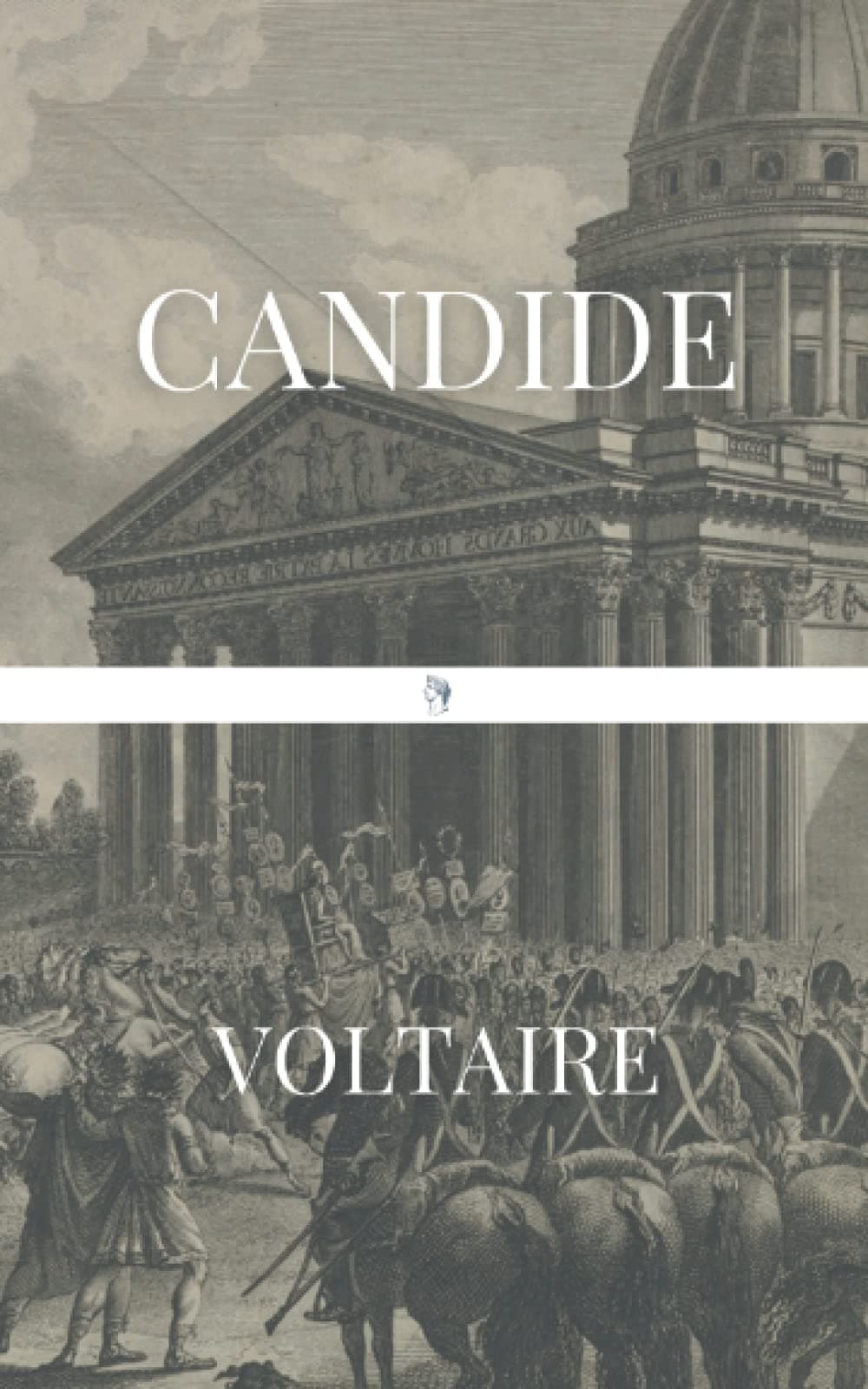
Candide
“We must cultivate our garden.”
Candide Summary
Young Candide, raised in the castle of the Baron Thunder-ten-Tronckh, has been taught by his tutor Pangloss that this is "the best of all possible worlds." Then he is kicked out of the castle for kissing the Baron's daughter, and the real education begins. What follows is a picaresque nightmare: Candide is conscripted into the Bulgarian army, flogged nearly to death, shipwrecked, caught in the Lisbon earthquake, nearly burned at the stake by the Inquisition, and chased across three continents—all while Pangloss, ever the optimist, insists that every catastrophe is for the best.
Voltaire's savage little masterpiece is a guided missile aimed at the philosophy of Leibnizian optimism, but its targets are far broader: religious fanaticism, slavery, war, colonial brutality, and the bottomless capacity of human beings for cruelty. Written in a style of deadpan absurdity that anticipates Monty Python by two centuries, Candide packs more wit, horror, and moral outrage into its slim pages than most novels manage in a thousand.
Why Read Candide?
Candide is the most dangerous book of the Enlightenment—a hand grenade disguised as a fairy tale. In fewer than a hundred pages, Voltaire demolishes every comfortable illusion about divine providence, human progress, and the inherent goodness of the world. He does it not with solemn argument but with laughter—the kind of laughter that catches in your throat when you realize how accurately it describes the world you live in.
The genius of Candide is its ending. After witnessing every horror the world can produce, Candide does not despair and does not philosophize. He simply says: we must cultivate our garden. It is the most modest and radical conclusion in all of literature—a rejection of grand systems in favor of quiet, useful work. Nearly three centuries later, in a world still racked by the same cruelties Voltaire cataloged, that advice has never felt more essential.
About Voltaire
Voltaire (1694–1778), born François-Marie Arouet, was the supreme wit of the European Enlightenment—philosopher, historian, playwright, novelist, and relentless crusader against tyranny, bigotry, and superstition. He was imprisoned in the Bastille, exiled to England, and expelled from France, but nothing could silence his pen. His correspondence alone runs to over twenty thousand letters.
Candide, written in three days according to legend, is the distillation of everything Voltaire believed: that reason must triumph over dogma, that cruelty must be exposed and mocked, and that the only honest response to an imperfect world is to get to work improving it. He remains the patron saint of intellectual courage and the proof that a single sharp mind can change the conversation of an entire civilization.
Reading Guide
Ranked #79 among the greatest books of all time, Candide by Voltaire has earned its place in the literary canon. Originally written in French and published in 1759, this accessible read from France continues to resonate with readers today.
This book belongs to our Society & Satire and Philosophy & Faith collections, where you can discover more books that share its spirit and themes.
If you enjoy accessible reads like this one, you might also like The Great Gatsby, The Catcher in the Rye, or Pride and Prejudice.
From the Society & Satire Collection
If you enjoyed Candide, discover more masterpieces that share its spirit.
 #9View Book
Don Quixote
Miguel de Cervantes
High•35-40 hours #12View Book
Pride and Prejudice
Jane Austen
Accessible•10-12 hours #22View Book
Madame Bovary
Gustave Flaubert
Moderate•12-15 hours #30View Book
Middlemarch
George Eliot
High•30-35 hours
Browse more collections