The Portrait of a Lady
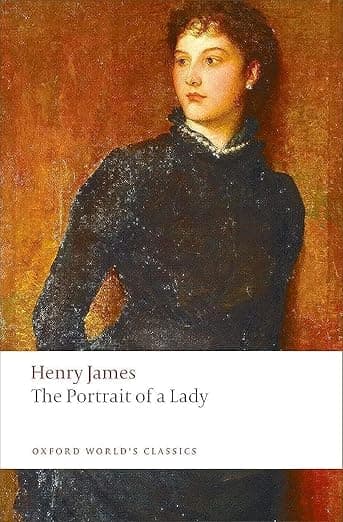
“Her mind was to be his—attached to his own like a small garden-plot to a deer-park.”
The Portrait of a Lady Summary
Isabel Archer is a young American woman of intelligence, beauty, and fierce independence who arrives in England determined to live life on her own terms. When a generous inheritance frees her from economic necessity, she refuses two perfectly good suitors—the English Lord Warburton and the robust American industrialist Caspar Goodwood—because she cannot bear to have her freedom circumscribed. Instead, she falls under the spell of Gilbert Osmond, an expatriate aesthete living in Florence, a man of exquisite taste and no fortune, who seems to embody the refinement she craves.
James's great novel is a trap that closes with agonizing slowness. Osmond, who appears to be a vessel of culture and sensibility, is revealed as a monster of egotism who wants Isabel not as a partner but as an ornament. The Portrait of a Lady is the story of a brilliant woman who exercises her freedom to choose—and chooses wrong. It is a novel about the terrible cost of misreading character, and about the prison that marriage could become for a woman in the nineteenth century.
Why Read The Portrait of a Lady?
The Portrait of a Lady is the greatest novel about a woman's mind ever written by a man—and one of the greatest novels about freedom in any language. Henry James achieves something extraordinary: he makes the interior life of a single consciousness as gripping as any adventure story. The famous Chapter 42, in which Isabel sits alone by a dying fire and thinks, is one of the most riveting scenes in literature—and nothing happens in it except thought.
Isabel Archer is a heroine for all time because her dilemma is universal. She wants to be free, but she discovers that freedom without wisdom is merely the liberty to make catastrophic mistakes. James does not rescue her; he respects her too much for that. The novel's devastating final pages leave Isabel walking back into the trap she has recognized—and the reader must decide whether this is defeat or a form of moral courage that transcends escape.
About Henry James
Henry James (1843–1916) was born in New York City into a wealthy, intellectual family—his brother William James became America's foremost philosopher—and spent most of his adult life in England, becoming a British citizen in the last year of his life. He is the supreme analyst of consciousness in English-language fiction, the writer who made the novel an instrument of psychological precision.
James's vast body of work—including The Portrait of a Lady, The Wings of the Dove, The Ambassadors, and The Golden Bowl—explores the collision between American innocence and European sophistication with a subtlety that has never been equaled. His late style, famously dense and sinuous, divided readers then and divides them now, but his influence on the modern novel is immeasurable. He taught fiction how to think.
Reading Guide
Ranked #78 among the greatest books of all time, The Portrait of a Lady by Henry James has earned its place in the literary canon. Originally written in English and published in 1881, this challenging read from United States continues to resonate with readers today.
This book belongs to our Love & Loss and Society & Satire collections, where you can discover more books that share its spirit and themes.
If you enjoy challenging reads like this one, you might also like Ulysses, Moby-Dick, or Lolita.
From the Love & Loss Collection
If you enjoyed The Portrait of a Lady, discover more masterpieces that share its spirit.
 #3View Book
The Great Gatsby
F. Scott Fitzgerald
Accessible•5-6 hours #10View Book
Anna Karenina
Leo Tolstoy
High•30-35 hours #12View Book
Pride and Prejudice
Jane Austen
Accessible•10-12 hours #15View Book
Wuthering Heights
Emily Brontë
Moderate•10-12 hours
Browse more collections