Canon Compass
Back to All Books
Modern Mind

The Modern Mind

In the wake of the 20th century, the old ways of telling stories no longer made sense. The Modernists picked up the pieces and built something new. They rejected the polite, linear narratives of the past to explore the fragmented, subjective, and often confusing reality of the human mind.

These books invite you to step inside the stream of consciousness, to experience time not as a clock ticking but as a fluid river of memory and sensation. From the streets of Joyce's Dublin to the absurdist nightmares of Kafka, these masterpieces prove that the most profound adventures happen inside our own heads.
#1
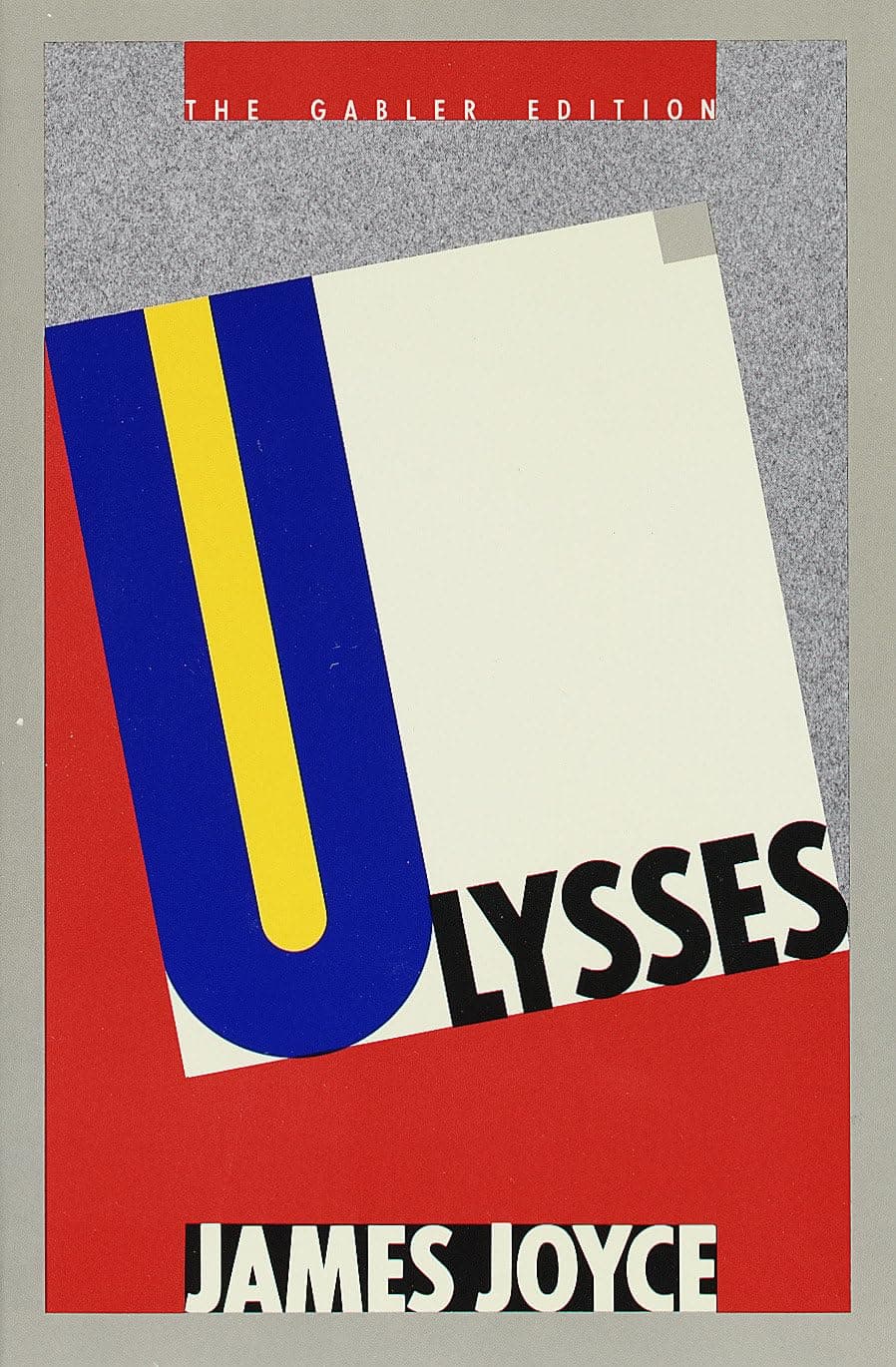
Cover of Ulysses

Ulysses

by James Joyce

Unfolding over a single day—June 16, 1904—in Dublin, Ulysses is a kaleidoscopic journey through the human mind that revolutionized the novel form. The story follows three central characters: Leopold Bloom, a Jewish advertising canvasser; his wife Molly, a singer; and Stephen Dedalus, a young intellectual and aspiring writer. Structurally mirroring Homer's Odyssey, each of the novel's eighteen episodes corresponds to a specific adventure of Odysseus, transforming the banal events of an ordinary day—buying soap, attending a funeral, eating a sandwich—into an epic of mythological proportions. Joyce deploys a dazzling array of literary styles to capture the texture of reality, from newspaper headlines and stage play dialogue to the famous stream-of-consciousness technique. This approach allows us to hear the characters' unfiltered thoughts, revealing the chaotic, bawdy, and beautiful flow of their inner lives. It is not just a story about Dublin; it is a comprehensive encyclopedia of the city and a profound exploration of memory, grief, nationalism, and the human body.

Modern Mind
Epics
#2
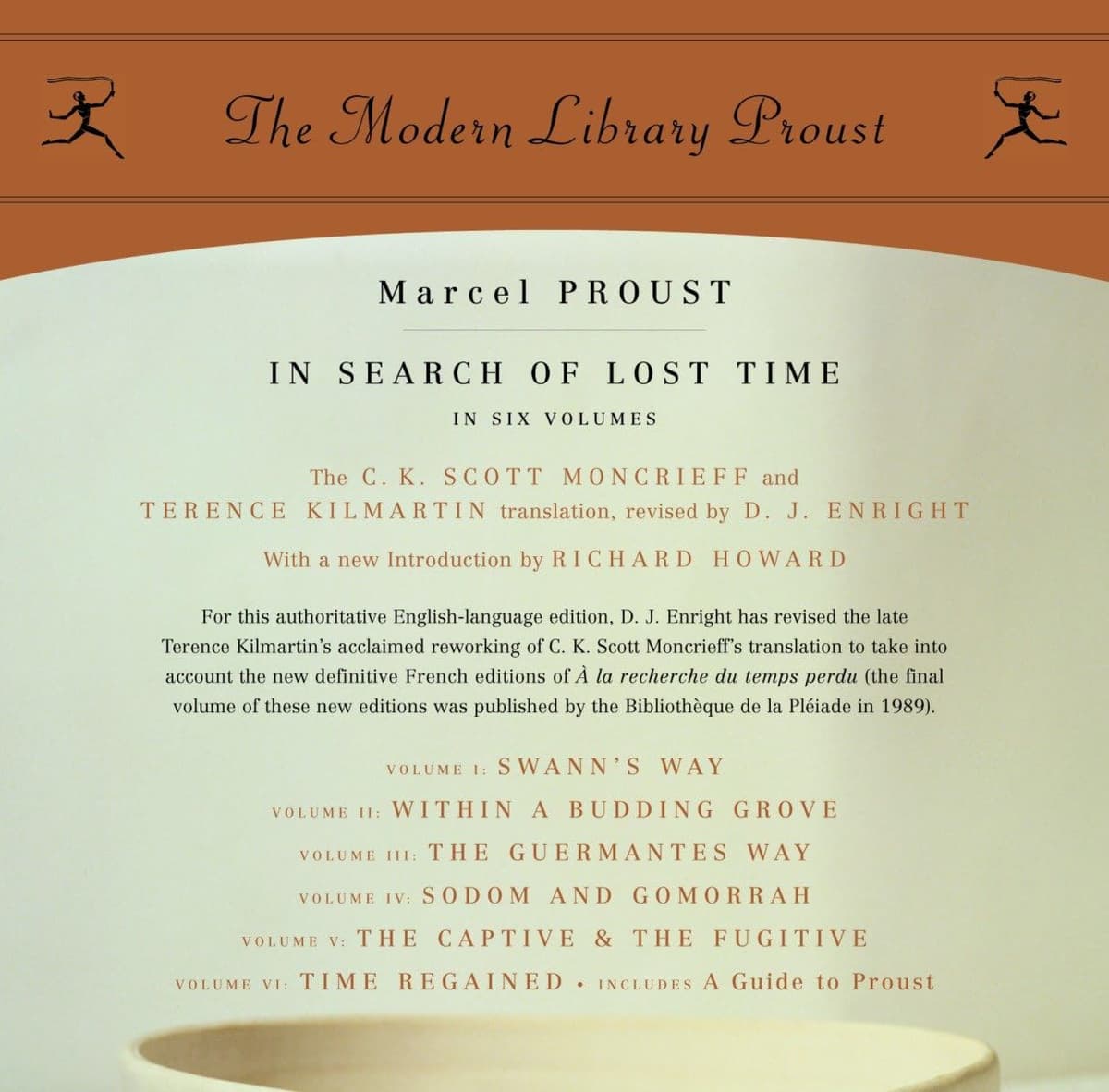
Cover of In Search of Lost Time

In Search of Lost Time

by Marcel Proust

The ultimate exploration of memory, time, and art. Proust's monumental cathedral of words dissects the human condition with microscopic precision. The novel follows the narrator's life from childhood in the village of Combray to adulthood in the glittering salons of Parisian society, exploring themes of love, jealousy, and the passage of time. At its heart is the concept of 'involuntary memory'—most famously illustrated by the 'madeleine moment,' where the taste of a cake dipped in tea unlocks a vast, detailed recollection of the past. Proust argues that the past is never truly dead; it lives on in our sensations and can be recaptured through art. The novel is a race against time itself, as the narrator seeks to fix his life in words before it fades into oblivion.

Modern Mind
#8
Cover of The Sound and the Fury

The Sound and the Fury

by William Faulkner

A tragedy of biblical proportions set in the decaying American South. Faulkner peels back the layers of time to reveal a family poisoned by history, sexuality, and the loss of honor. The novel focuses on the Compson family, former aristocrats who are spiraling into financial and moral ruin. The story is told through four distinct sections, each with a different narrator and style. The first is told by Benjy, a cognitively disabled man for whom time has no meaning; the second by Quentin, a suicidal Harvard student obsessed with his sister's purity; the third by Jason, a cruel and bitter cynic; and the fourth by an omniscient narrator focusing on Dilsey, the family's black servant who is the only source of love and stability. It is a radical experiment in perspective.

Modern Mind
#13
Cover of Lolita

Lolita

by Vladimir Nabokov

A monster with the voice of a poet. The novel is the memoir of Humbert Humbert, a brilliant European scholar who becomes obsessed with a twelve-year-old American girl, Dolores Haze, whom he nicknames 'Lolita.' After marrying her mother to get close to her, he embarks on a cross-country road trip with his captive stepdaughter. Nabokov constructs a dazzling hall of mirrors, using Humbert's seductive, high-flown language to distract the reader from the horror of his crimes. It is a satire of American culture, a detective story, and a tragedy, all wrapped in prose of iridescent beauty. It challenges the reader to separate the art from the artist, and the beauty of the telling from the ugliness of the tale.

Modern Mind
American Spirit
#20
Cover of The Trial

The Trial

by Franz Kafka

The ultimate nightmare of bureaucracy and the defining novel of the 20th century. Josef K., a bank officer, is arrested one morning for a crime that is never explained to him. He is released but told he is under investigation. He spends the rest of the novel trying to navigate a court system that is invisible, illogical, and impossible to escape. The harder he tries to prove his innocence, the more guilty he seems. The court meets in attics; the judges are corrupt; the laws are secret. It is a terrifying vision of a world where the individual is crushed by a faceless system. It is not just a story; it is a prophecy of the modern state, exploring the terrifying realization that logic is no defense against power.

Modern Mind
Speculative Futures
#21
Cover of The Stranger

The Stranger

by Albert Camus

The manifesto of the absurd. Under the blinding Algerian sun, nothing matters. Meursault, a French settler, walks along a beach and kills a man—not out of malice, but because of the sun, the heat, and a terrifying indifference. He refuses to pretend to feel emotions he doesn't have, even at his mother's funeral. The novel is a trial not just of a murder, but of a soul. Society condemns Meursault not because he is a killer, but because he is a stranger to their rules. He is the ultimate outsider, a man who would rather die than lie about his feelings. It is a chilling, hypnotic portrait of a universe stripped of meaning.

Modern Mind
Philosophy & Faith
#27
Cover of The Magic Mountain

The Magic Mountain

by Thomas Mann

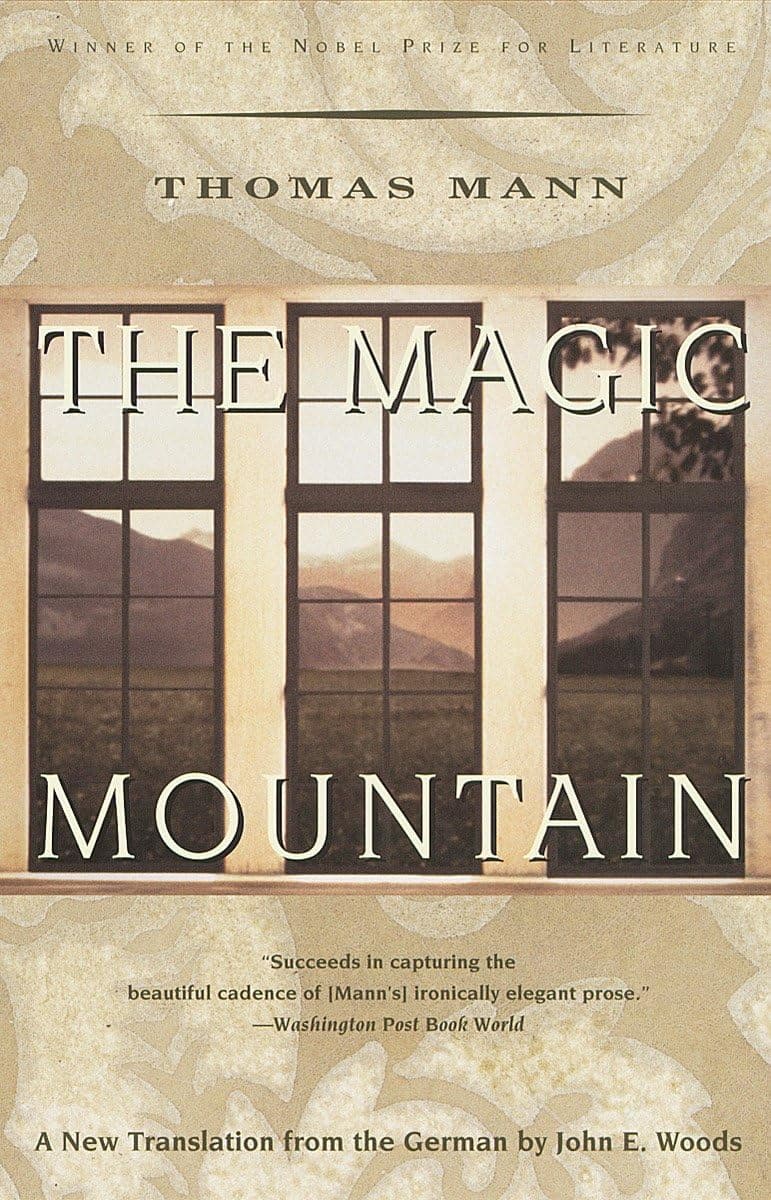
A novel of ideas set high in the frozen silence of the Swiss Alps. Hans Castorp, an ordinary young engineer, visits his cousin at a tuberculosis sanatorium for a three-week stay but ends up remaining for seven years. Isolated from the 'flatland' of normal life below, the patients engage in endless, feverish debates about time, illness, philosophy, and politics while Europe marches blindly toward the catastrophe of World War I. The sanatorium becomes a microcosm of European civilization on the brink of collapse. Castorp is torn between two mentors: the humanist Freemason Settembrini, who believes in reason and progress, and the Jesuit terror-visionary Naphta, who preaches religious totalitarianism. It is a story about the education of a soul, exploring how we find meaning when removed from the flow of time and duty.

Modern Mind
Speculative Futures
#28
Cover of To the Lighthouse

To the Lighthouse

by Virginia Woolf

A luminous meditation on marriage, childhood, and the passage of time. The novel follows the Ramsay family's visits to the Isle of Skye in Scotland. There is little plot in the traditional sense; instead, Woolf captures the shifting tides of consciousness—the unspoken thoughts, the fleeting moments of connection, and the devastating impact of time and war on a family. The book is divided into three sections: 'The Window,' detailing a single day of domestic life; 'Time Passes,' a radical experiment where ten years fly by in a few pages of empty hallways and decaying furniture; and 'The Lighthouse,' where the remaining family members return to complete a journey postponed years earlier. It is a ghost story without ghosts, haunted by the memory of the matriarch Mrs. Ramsay.

Modern Mind