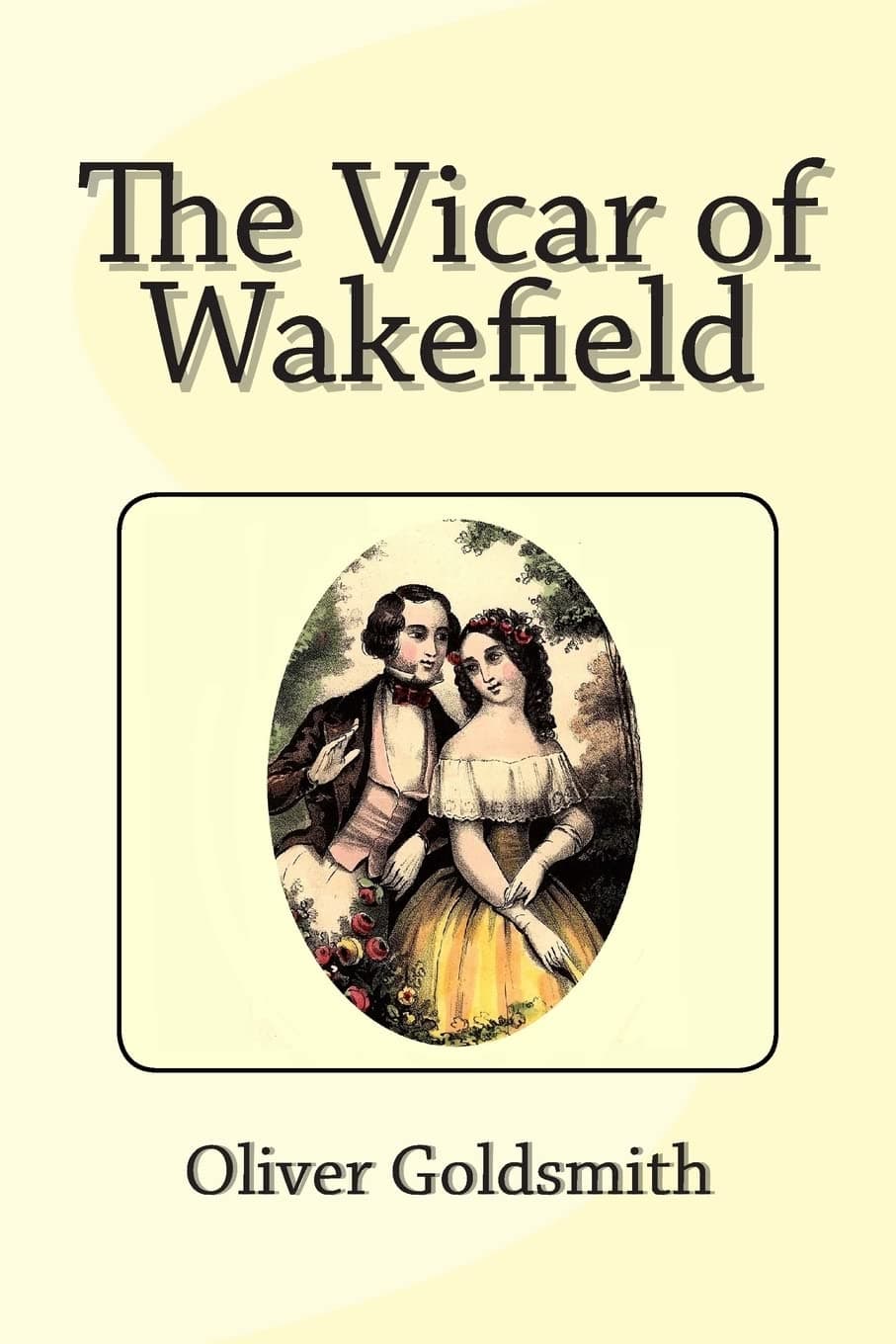
The Vicar of Wakefield
“I was ever of opinion, that the honest man who married and brought up a large family, did more service than he who continued single, and only talked of population.”
The Vicar of Wakefield Summary
The Vicar of Wakefield tells the story of Dr. Charles Primrose, a gentle, unworldly clergyman who narrates his family's descent from comfortable prosperity into a cascade of misfortunes with unfailing good humor and trusting innocence. When the Primrose family loses its fortune through a merchant's bankruptcy, they relocate to a modest living in the country, where the vicar's wife Deborah and their six children attempt to maintain their dignity. Their new landlord, the libertine Squire Thornhill, begins to pursue the eldest daughter Olivia, while his uncle Sir William Thornhill watches from disguise. Disaster upon disaster follows: Olivia is seduced and abandoned, the family home burns to the ground, the vicar is thrown into debtor's prison, and his son George is arrested. Yet through every catastrophe, Dr. Primrose maintains his faith, his kindness, and his slightly ridiculous optimism, preaching sermons to his fellow prisoners and refusing to surrender his belief in Providence even as the evidence mounts against it.
Oliver Goldsmith's beloved novel occupies a unique place in English literature—simultaneously a sentimental domestic tale and a sly parody of sentimental domestic tales. The vicar's gentle naivety makes him both endearing and comic; his philosophical digressions and trusting nature invite both sympathy and laughter. The novel's seemingly implausible happy ending, in which every wrong is righted with fairy-tale swiftness, has been read as both sincere reassurance and ironic commentary on the conventions of fiction itself. Written with Goldsmith's characteristic warmth, clarity, and understated wit, The Vicar of Wakefield was admired by Goethe, who featured it prominently in The Sorrows of Young Werther, and it remains one of the most charming and deceptively simple novels of the eighteenth century.
Why Read The Vicar of Wakefield?
The Vicar of Wakefield offers something increasingly rare in literature: a portrait of genuine goodness that is neither naive nor boring. Dr. Primrose is one of the most lovable characters in English fiction, a man whose faith and decency are tested by every conceivable misfortune yet who never becomes bitter, self-pitying, or dull. Goldsmith writes with a lightness and warmth that makes even the darkest passages of the story feel illuminated by human kindness. You will laugh at the vicar's foibles, admire his resilience, and find yourself unexpectedly moved by his stubborn belief that the world, despite all evidence, is governed by justice.
This novel also rewards the attentive reader with layers of irony and ambiguity that lurk beneath its gentle surface. Is Goldsmith endorsing his vicar's innocent worldview or gently mocking it? Is the improbable happy ending a triumph of faith or a satire on literary convention? These questions have kept readers and critics engaged for over two centuries. Short, elegant, and endlessly re-readable, The Vicar of Wakefield is the perfect introduction to eighteenth-century fiction and a reminder that simplicity of style can conceal extraordinary depths of feeling and intelligence.
About Oliver Goldsmith
Oliver Goldsmith was born around 1728 in Ireland, the son of an Anglican clergyman whose modest circumstances and generous spirit would later inspire the character of Dr. Primrose. He studied at Trinity College Dublin with little distinction, attempted and abandoned careers in medicine, law, and the church, and wandered through Europe largely on foot before settling in London, where he scraped together a living as a hack writer, essayist, and literary journalist. His improvidence was legendary—Samuel Johnson once had to sell the manuscript of The Vicar of Wakefield to rescue Goldsmith from arrest for debt.
Despite his chaotic personal life, Goldsmith produced some of the most beloved works of the eighteenth century across multiple genres. His poem The Deserted Village remains one of the finest pastoral elegies in English; his comedy She Stoops to Conquer is still performed worldwide; and The Vicar of Wakefield became one of the most widely read novels of its era. He was a founding member of Samuel Johnson's Literary Club and a friend to Joshua Reynolds, Edmund Burke, and David Garrick. Goldsmith died in 1774 at the age of forty-five, deeply in debt but universally mourned. Johnson's epitaph declared that he adorned everything he touched, and his ability to combine humor, pathos, and moral seriousness in seemingly effortless prose has ensured his lasting place in the English literary canon.
Reading Guide
Ranked #367 among the greatest books of all time, The Vicar of Wakefield by Oliver Goldsmith has earned its place in the literary canon. Originally written in English and published in 1766, this moderate read from United Kingdom continues to resonate with readers today.
This book belongs to our Society & Satire collection, where you can discover more books that share its spirit and themes.
If you enjoy moderate reads like this one, you might also like One Hundred Years of Solitude, Nineteen Eighty-Four, or Wuthering Heights.
From the Society & Satire Collection
If you enjoyed The Vicar of Wakefield, discover more masterpieces that share its spirit.
 #9View Book
Don Quixote
Miguel de Cervantes
High•35-40 hours #12View Book
Pride and Prejudice
Jane Austen
Accessible•10-12 hours #22View Book
Madame Bovary
Gustave Flaubert
Moderate•12-15 hours #30View Book
Middlemarch
George Eliot
High•30-35 hours
Browse more collections