The Princess of Cleves
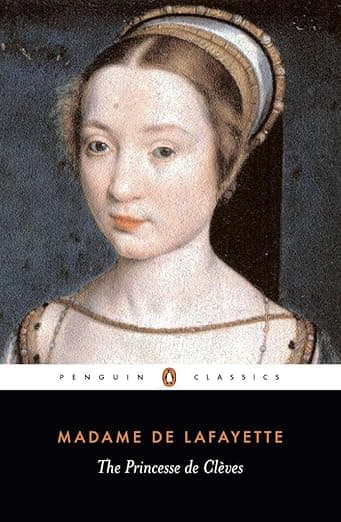
“I confess that passions may lead me, but they cannot blind me.”
The Princess of Cleves Summary
Set amid the glittering court of Henri II in sixteenth-century France, The Princess of Cleves follows the beautiful young Mademoiselle de Chartres as she enters Parisian high society, marries the Prince of Cleves, and struggles against an overwhelming passion for the Duc de Nemours. Her mother, Madame de Chartres, has raised her to prize virtue above all else, and the princess initially resists her attraction to Nemours even as court gossip, masked balls, and stolen glances draw them closer. In a scene of extraordinary psychological daring, she confesses her feelings for another man to her husband, hoping honesty will fortify her resolve. The confession, however, destroys the Prince of Cleves, who falls ill from jealousy and dies believing himself betrayed. Now free to marry Nemours, the princess instead renounces him entirely, choosing solitude and eventually entering a convent, convinced that passion inevitably leads to suffering.
Widely regarded as the first modern psychological novel, Madame de La Fayette's masterpiece transforms the conventions of seventeenth-century romance into a rigorous examination of desire, duty, and self-knowledge. The novel's revolutionary achievement lies in its interiority: rather than external adventures, the true drama unfolds within the princess's consciousness as she analyzes her own emotions with almost clinical precision. La Fayette uses the ornate setting of the Valois court both as a theater of social performance and as a mirror for the hidden turmoil beneath aristocratic composure. The princess's final refusal of Nemours shocked contemporary readers and continues to provoke debate, raising enduring questions about whether renunciation represents heroic self-mastery or tragic self-denial. The novel's influence on French literature is immeasurable, establishing the interior life as fiction's most fertile territory.
Why Read The Princess of Cleves?
This slender novel from 1678 invented the psychological fiction that would dominate Western literature for the next three centuries. Before La Fayette, novels were sprawling romances full of abductions and duels; after her, they became investigations of the human heart. The Princess of Cleves offers a heroine whose inner conflict between passion and principle feels startlingly contemporary, and the famous confession scene remains one of the most electrifying moments in all of fiction. Every subsequent novel that privileges interiority over plot owes something to this book.
Reading it gives you access to one of literature's most nuanced explorations of desire and self-discipline. La Fayette writes with crystalline elegance, and her portrait of court society reveals how social performance and private feeling exist in constant, agonizing tension. The novel is brief, its prose is luminous, and its ending will stay with you as one of the most debated conclusions in literary history. Whether you see the princess's final renunciation as a triumph of autonomy or a surrender to fear, you will find yourself turning the question over long after the last page. It is essential reading for anyone interested in the origins of the modern novel.
About Madame de La Fayette
Marie-Madeleine Pioche de la Vergne, Comtesse de La Fayette (1634-1693), was born into the minor French nobility and raised in Paris, where she received an exceptional education. She married the Comte de La Fayette in 1655 but soon returned to Paris, where she became a central figure in the literary salons of the period and a close friend of the moralist La Rochefoucauld, whose influence on her psychological acuity was profound. She published anonymously, as was customary for aristocratic women writers of the era.
The Princess of Cleves, published in 1678, is universally recognized as a watershed in the history of the novel. By centering narrative interest on the interior struggles of a single consciousness rather than on external adventures, La Fayette established the template for psychological realism that would later be developed by writers from Stendhal to Henry James to Virginia Woolf. Her other works include Zayde and The Princess of Montpensier, but it is The Princess of Cleves that secured her place as one of the most influential prose writers in the French language. Her achievement is all the more remarkable given the constraints placed on women authors in seventeenth-century France, and her novel remains a touchstone for discussions of gender, agency, and literary innovation.
Reading Guide
Ranked #267 among the greatest books of all time, The Princess of Cleves by Madame de La Fayette has earned its place in the literary canon. Originally written in French and published in 1678, this moderate read from France continues to resonate with readers today.
This book belongs to our Love & Loss and Society & Satire collections, where you can discover more books that share its spirit and themes.
If you enjoy moderate reads like this one, you might also like One Hundred Years of Solitude, Nineteen Eighty-Four, or Wuthering Heights.
From the Love & Loss Collection
If you enjoyed The Princess of Cleves, discover more masterpieces that share its spirit.
 #3View Book
The Great Gatsby
F. Scott Fitzgerald
Accessible•5-6 hours #10View Book
Anna Karenina
Leo Tolstoy
High•30-35 hours #12View Book
Pride and Prejudice
Jane Austen
Accessible•10-12 hours #15View Book
Wuthering Heights
Emily Brontë
Moderate•10-12 hours
Browse more collections