The Human Comedy
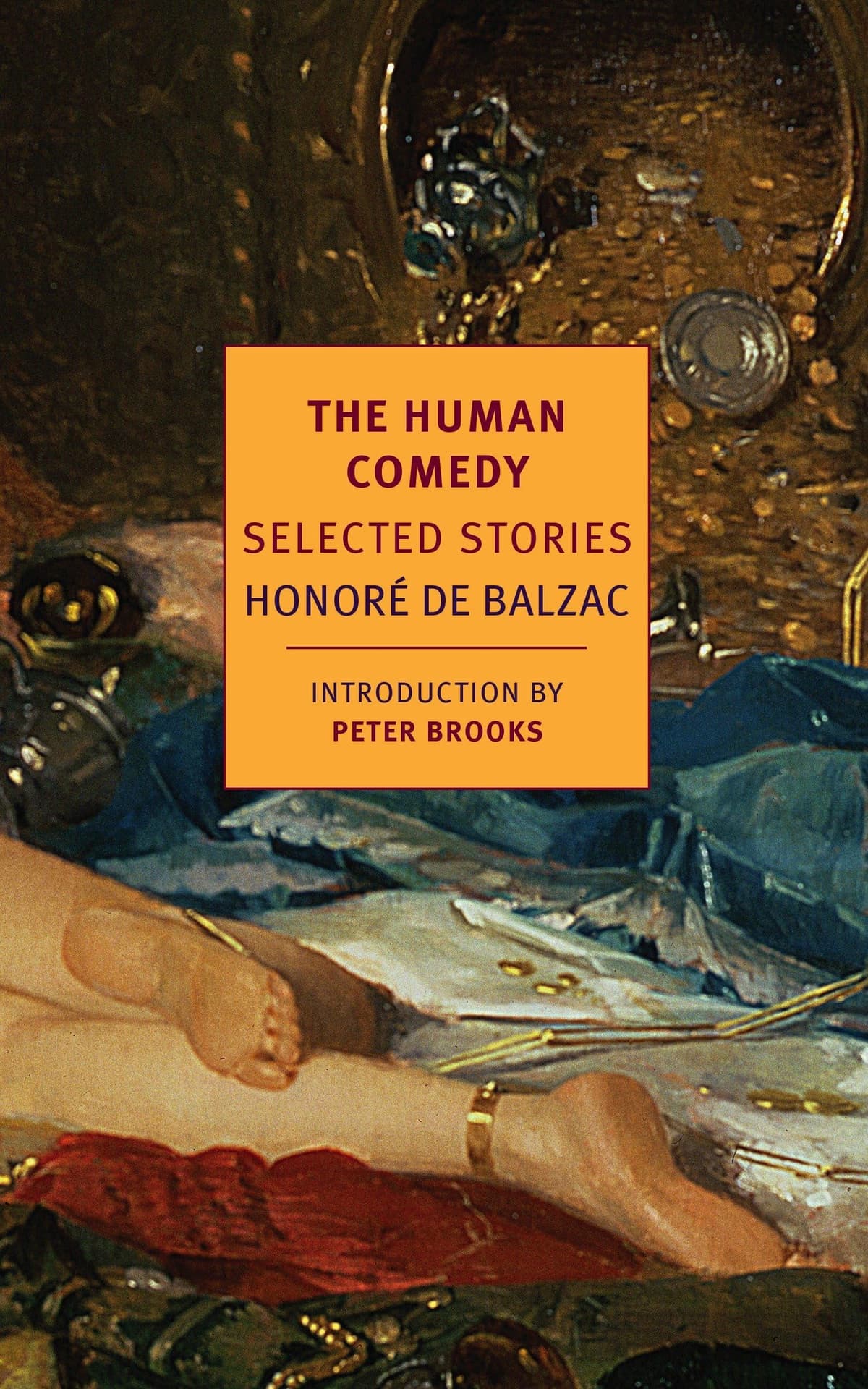
“Behind every great fortune there is a crime.”
The Human Comedy Summary
The Human Comedy is not a single novel but a vast, interconnected cycle of more than ninety novels and short stories that together form a panoramic portrait of French society from the fall of Napoleon through the July Monarchy. Balzac organized this monumental project into three broad sections: Studies of Manners, which examines every level of society from Parisian salons to provincial backwaters; Philosophical Studies, which explore the metaphysical forces driving human behavior; and Analytical Studies, which dissect social institutions like marriage. Recurring characters move through different works, aging, rising, and falling across the entire tapestry. Figures like the criminal mastermind Vautrin, the miser Pere Goriot, the ambitious Rastignac, and the perfumer Cesar Birotteau appear and reappear in different roles, creating a fictional universe of extraordinary depth and coherence.
Balzac's ambition was nothing less than to be the secretary of French society, documenting its customs, passions, and corruptions with the rigor of a natural historian. Money is the great engine of his world: fortunes are made and lost, marriages are brokered like business deals, and social climbing is pursued with ruthless calculation. Yet within this materialist framework, Balzac creates characters of immense vitality and psychological complexity, driven by obsessions that elevate them to tragic grandeur. The Human Comedy influenced virtually every major novelist who followed, from Dickens and Dostoevsky to Proust and Faulkner, and its technique of the recurring character across multiple works revolutionized the possibilities of fiction. It remains the most ambitious single-authored fictional project in Western literature.
Why Read The Human Comedy?
No single author has ever attempted anything on this scale and succeeded so brilliantly. Entering the world of The Human Comedy means gaining access to a complete civilization, rendered with an obsessive attention to detail that encompasses everything from the texture of wallpaper in a boarding house to the machinations of Parisian banking. Balzac does not merely describe French society; he anatomizes it, laying bare the desires, vanities, and desperate calculations that drive human beings at every level of the social hierarchy. The recurring character technique means that figures glimpsed briefly in one novel become the protagonists of another, creating a reading experience of extraordinary cumulative power.
While the sheer size of the project can seem daunting, each individual novel stands on its own as a compelling work of fiction. Pere Goriot, Lost Illusions, Cousin Bette, and Eugenie Grandet are masterpieces by any standard, and they serve as perfect entry points into the larger cycle. Once inside, the interconnections between stories become addictive, rewarding the attentive reader with a depth of world-building that rivals any modern literary universe. Balzac invented the template for how fiction can capture the totality of a society, and every ambitious novelist since has worked in his shadow.
About Honoré de Balzac
Honore de Balzac was born in Tours, France, in 1799 and moved to Paris as a young man, determined to make his fortune through literature. After years of failed business ventures and pseudonymous hack writing that left him perpetually in debt, he published Les Chouans in 1829 and quickly established himself as the most prolific and popular novelist in France. He worked with legendary intensity, often writing for fifteen or more hours a day fueled by enormous quantities of coffee, producing the vast interconnected cycle he called La Comedie humaine.
Balzac's personal life mirrored the dramas of his fiction: he was perpetually pursued by creditors, launched doomed business schemes, and conducted a famous seventeen-year correspondence with the Polish countess Ewelina Hanska, whom he finally married just five months before his death in 1850 at the age of fifty-one. His influence on the novel is incalculable. He pioneered literary realism, invented the recurring character technique, and demonstrated that fiction could serve as a comprehensive document of social life. Writers from Flaubert and Zola to Proust and Henry James acknowledged their debt to his example, and his work remains the benchmark against which all panoramic social fiction is measured.
Reading Guide
Ranked #328 among the greatest books of all time, The Human Comedy by Honoré de Balzac has earned its place in the literary canon. Originally written in French and published in 1830, this challenging read from France continues to resonate with readers today.
This book belongs to our Society & Satire collection, where you can discover more books that share its spirit and themes.
If you enjoy challenging reads like this one, you might also like Ulysses, Moby-Dick, or Lolita.
From the Society & Satire Collection
If you enjoyed The Human Comedy, discover more masterpieces that share its spirit.
 #9View Book
Don Quixote
Miguel de Cervantes
High•35-40 hours #12View Book
Pride and Prejudice
Jane Austen
Accessible•10-12 hours #22View Book
Madame Bovary
Gustave Flaubert
Moderate•12-15 hours #30View Book
Middlemarch
George Eliot
High•30-35 hours
Browse more collections