Sister Carrie
“When a girl leaves her home at eighteen, she does one of two things. Either she falls into saving hands and becomes better, or she rapidly assumes the cosmopolitan standard of virtue and becomes worse.”
Sister Carrie Summary
Caroline Meeber, an eighteen-year-old girl from small-town Wisconsin, boards a train to Chicago in search of a better life. Initially taken in by her stern, working-class sister, Carrie finds factory labor exhausting and demeaning, and she quickly falls under the influence of Charles Drouet, a charming traveling salesman who sets her up as his mistress. Through Drouet, she meets George Hurstwood, a prosperous and sophisticated manager of a fashionable saloon, and their mutual attraction ignites an affair that shatters Hurstwood's respectable life. After stealing money from his employer's safe in a moment of desperate impulse, Hurstwood flees with Carrie to New York, where their fortunes diverge with pitiless symmetry. Carrie discovers a talent for acting and rises to become a Broadway sensation, while Hurstwood spirals into unemployment, poverty, and eventual suicide in a Bowery flophouse.
Dreiser's debut novel broke decisively with the genteel tradition of American fiction by presenting desire, materialism, and moral compromise without judgment or sentimentality. Carrie is neither condemned for her sexual transgressions nor celebrated as a heroine; she simply follows the current of her appetites and ambitions, a creature of the modern city shaped by forces she barely comprehends. Hurstwood's decline is rendered with a naturalistic precision that anticipates the great Depression-era novels. The book was effectively suppressed by its own publisher in 1900 for its frank treatment of sexuality and its refusal to punish its fallen woman, but it emerged in subsequent decades as a landmark of American literary naturalism and a defining portrait of urban America at the dawn of the consumer age.
Why Read Sister Carrie?
Opening this novel means stepping into the raw, churning energy of American cities at the moment they were transforming the nation. Dreiser captures Chicago and New York with an almost documentary intensity, rendering the department stores, theaters, sweatshops, and flophouses that defined turn-of-the-century urban life. Carrie's story is the quintessential American narrative of reinvention, but Dreiser strips it of comforting moralizing. There are no easy lessons here about virtue rewarded or vice punished, only the relentless machinery of desire and circumstance grinding people into new shapes.
The novel's treatment of Hurstwood's decline remains one of the most harrowing descents in American fiction, a step-by-step chronicle of how a respectable man loses everything and disappears into the anonymous misery of the city. Dreiser writes about money and want with a frankness that was shocking in 1900 and remains bracingly honest today. Sister Carrie is essential reading for anyone who wants to understand the roots of American consumer culture, the fiction of social mobility, and the literary tradition that would produce Fitzgerald, Steinbeck, and Richard Wright.
About Theodore Dreiser
Theodore Dreiser was born in 1871 in Terre Haute, Indiana, one of thirteen children in a poor German-American family whose struggles with poverty and respectability deeply shaped his fiction. He worked as a journalist in Chicago, St. Louis, and New York before publishing Sister Carrie in 1900, a novel whose frank treatment of sexuality and ambition led its publisher to suppress it. Undeterred, Dreiser went on to write An American Tragedy, Jennie Gerhardt, and the Cowperwood trilogy, becoming the leading figure of American literary naturalism.
Dreiser's prose style, often criticized as clumsy and overwrought, possesses a cumulative power that few American writers have matched. His refusal to sentimentalize or moralize about human behavior opened the door for virtually every subsequent generation of American realists. He was a controversial public figure throughout his life, championing left-wing causes and clashing with censors. He died in 1945, shortly after completing The Bulwark and The Stoic. Despite periodic critical neglect, Dreiser is now recognized as one of the essential American novelists, a writer whose unsparing vision of capitalism, desire, and social stratification laid the groundwork for modern American fiction.
Reading Guide
Ranked #329 among the greatest books of all time, Sister Carrie by Theodore Dreiser has earned its place in the literary canon. Originally written in English and published in 1900, this moderate read from United States continues to resonate with readers today.
This book belongs to our American Spirit and Society & Satire collections, where you can discover more books that share its spirit and themes.
If you enjoy moderate reads like this one, you might also like One Hundred Years of Solitude, Nineteen Eighty-Four, or Wuthering Heights.
From the American Spirit Collection
If you enjoyed Sister Carrie, discover more masterpieces that share its spirit.
 #3View Book
The Great Gatsby
F. Scott Fitzgerald
Accessible•5-6 hours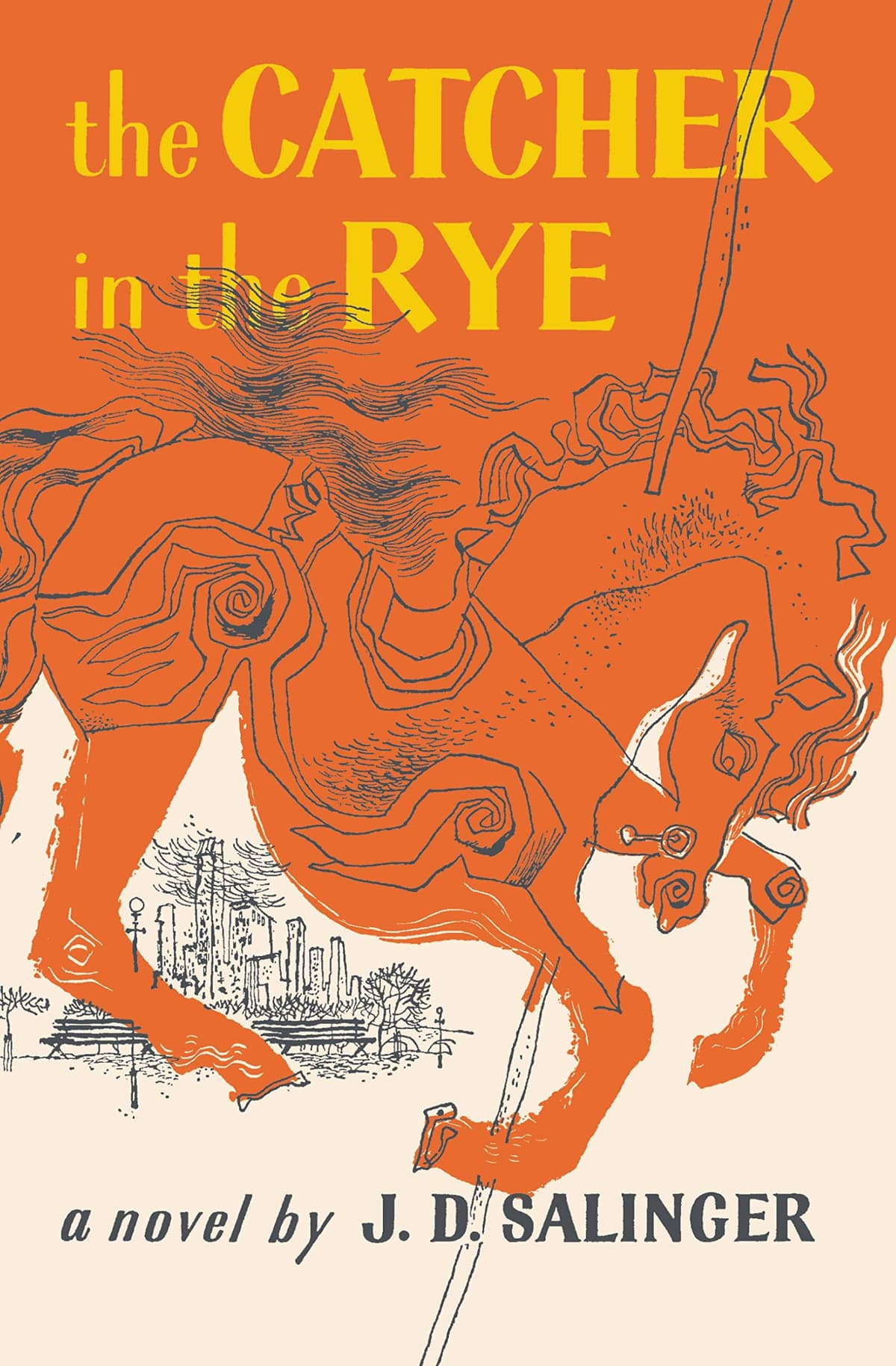 #4View Book
The Catcher in the Rye
J. D. Salinger
Accessible•6-8 hours #13View Book
Lolita
Vladimir Nabokov
Challenging•12-15 hours #17View Book
To Kill a Mockingbird
Harper Lee
Accessible•8-10 hours
Browse more collections