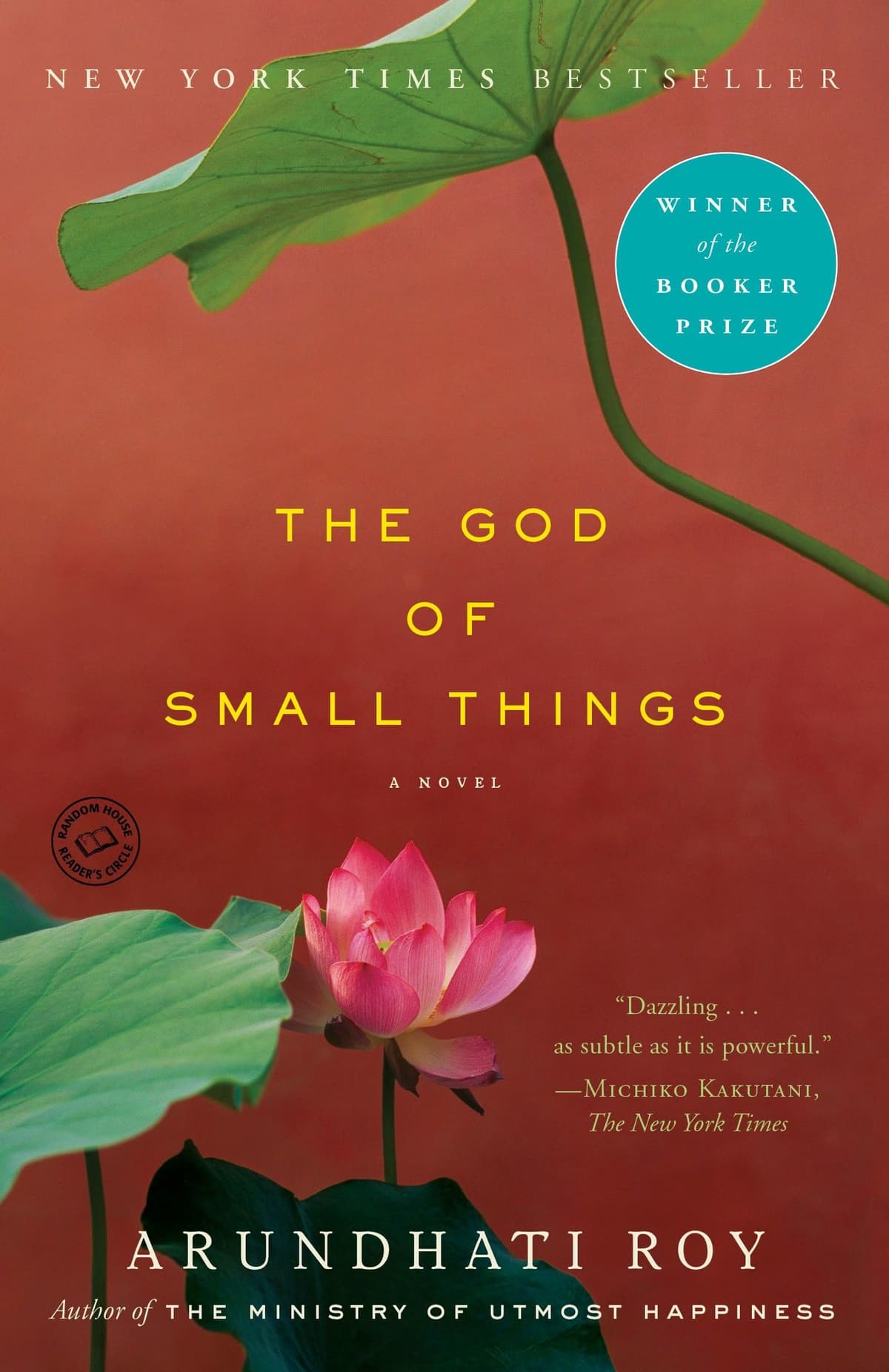
The God of Small Things
“That's what careless words do. They make people love you a little less.”
The God of Small Things Summary
The God of Small Things unfolds in the lush, sweltering landscape of Ayemenem, Kerala, where the tropical air is thick with the scent of rotting fruit and the hum of insects. At its center are Rahel and Estha, dizygotic twins who share a bond so intimate it seems to exist beyond language, and whose childhood is shattered by a series of events during a single catastrophic December in 1969. Their mother Ammu, a divorced woman in a society that has no place for her, begins a forbidden love affair with Velutha, an Untouchable carpenter of extraordinary skill and gentleness who works at the family's pickle factory. When the affair is discovered, the full machinery of caste, class, and family respectability is unleashed with devastating consequences: Velutha is beaten to death by police, the twins' young cousin Sophie Mol drowns in the river, and Ammu is cast out to die alone. Roy tells the story in fragmented, non-linear time, moving between the children's perspective in 1969 and the broken adults they have become in 1993, when Rahel returns to Ayemenem and the twins must reckon with the wreckage of their lives.
Arundhati Roy's Booker Prize-winning debut is a novel of astonishing linguistic invention and emotional ferocity. Her prose is incantatory, playful, and precise—she coins compound words, capitalizes phrases to give them the weight of commandments, and renders a child's perception of the world with a vividness that makes the familiar strange and the strange heartbreaking. The God of Small Things is a devastating critique of India's caste system, a love story that defies every boundary society erects, and a meditation on how the small, private transgressions of desire can be crushed by the vast, impersonal forces of history and tradition. It is a novel about the Love Laws—who should be loved, and how, and how much—and the terrible price of breaking them.
Why Read The God of Small Things?
The God of Small Things is one of those novels that rewires your senses. Arundhati Roy writes in a language so lush and inventive that you can feel the heat of Kerala pressing against your skin, taste the mango pickle, hear the river rising in the monsoon darkness. Her prose does things that prose is not supposed to be able to do—it captures the way children think in fragments and repetitions, the way trauma loops and echoes through decades, the way a single moment of tenderness can hold within it the seeds of absolute destruction. This is a novel that will make you weep not because it manipulates your emotions but because it tells the truth about how love and cruelty coexist in the same human heart.
But The God of Small Things is more than a feat of style. It is a furious, unflinching indictment of the caste system and the social hierarchies that determine who is permitted to love and who must be punished for the crime of desire. Roy shows you how the personal is always political, how a mother's love affair and a child's confusion are shaped by forces as vast as colonialism, Marxism, and centuries of ingrained prejudice. If you want to understand modern India, if you want to experience what language can do when wielded by a writer of genuine genius, if you want a novel that will haunt you for years—this is the book.
About Arundhati Roy
Arundhati Roy was born in 1961 in Shillong, Meghalaya, India, to a Syrian Christian mother from Kerala and a Bengali Hindu tea planter. Her parents divorced when she was young, and she was raised by her mother, Mary Roy, a women's rights activist who successfully challenged the Syrian Christian inheritance laws in the Supreme Court of India. Roy studied architecture at the Delhi School of Architecture and briefly worked in film, writing screenplays and acting in a small role, before turning to fiction. She wrote The God of Small Things over four years, working in isolation and financing herself through odd jobs.
Published in 1997, The God of Small Things won the Booker Prize and became an international sensation, translated into over forty languages. Rather than follow it with another novel, Roy turned to political activism and nonfiction, becoming one of India's most prominent and controversial public intellectuals. Her essays and books—including The Algebra of Infinite Justice, An Ordinary Person's Guide to Empire, and Capitalism: A Ghost Story—address globalization, nuclear weapons, caste, and environmental destruction with the same fierce precision as her fiction. Her second novel, The Ministry of Utmost Happiness, appeared twenty years later in 2017. Roy remains a singular figure in world letters: a writer whose literary gifts are matched by her moral courage, and whose debut novel stands as one of the landmark works of late twentieth-century fiction.
Reading Guide
Ranked #405 among the greatest books of all time, The God of Small Things by Arundhati Roy has earned its place in the literary canon. Originally written in English and published in 1997, this moderate read from India continues to resonate with readers today.
This book belongs to our Love & Loss and Society & Satire collections, where you can discover more books that share its spirit and themes.
If you enjoy moderate reads like this one, you might also like One Hundred Years of Solitude, Nineteen Eighty-Four, or Wuthering Heights.
From the Love & Loss Collection
If you enjoyed The God of Small Things, discover more masterpieces that share its spirit.
 #3View Book
The Great Gatsby
F. Scott Fitzgerald
Accessible•5-6 hours #10View Book
Anna Karenina
Leo Tolstoy
High•30-35 hours #12View Book
Pride and Prejudice
Jane Austen
Accessible•10-12 hours #15View Book
Wuthering Heights
Emily Brontë
Moderate•10-12 hours
Browse more collections