The Human Stain
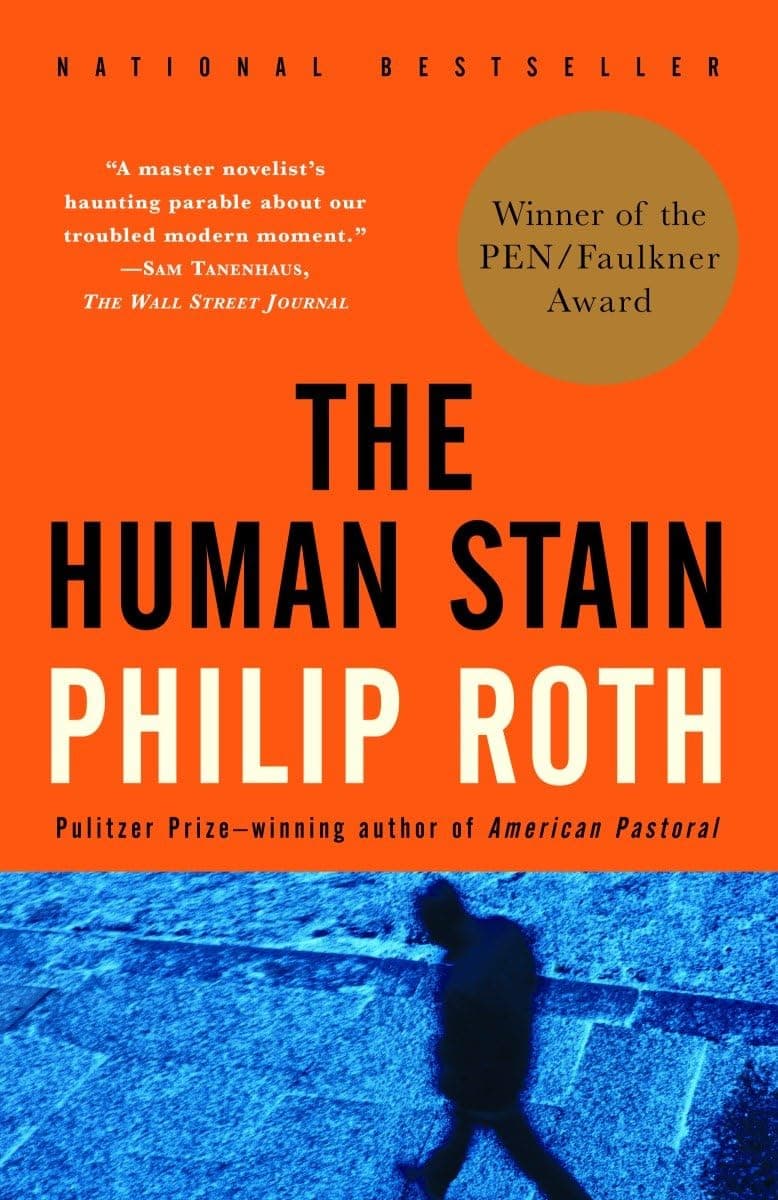
“We leave a stain, we leave a trail, we leave our imprint. Impurity, cruelty, abuse, error, excrement, semen—there's no other way to be here.”
The Human Stain Summary
Coleman Silk, the dean of faculty at a small New England college, has spent his entire career as a demanding, combative intellectual, a classics professor who bent the humanities department to his will. When he uses the word "spooks" to describe two chronically absent students who happen to be African American, the ensuing racism scandal destroys his career and, he believes, kills his wife. In the aftermath, Silk takes up with Faunia Farley, a young, supposedly illiterate janitor at the college who carries her own devastating secrets. Their unlikely affair draws the obsessive rage of Faunia's ex-husband, a traumatized Vietnam veteran named Lester Farley. Narrating this tangled web is Nathan Zuckerman, Roth's recurring alter ego, who gradually uncovers the staggering truth at the center of Silk's life: a secret of identity so profound that it reframes everything the reader has understood about the man, his choices, and the nature of self-invention in America.
The Human Stain, the final volume of Philip Roth's American Trilogy, is a ferocious meditation on identity, political correctness, and the irreducible messiness of human desire, set against the backdrop of the Clinton impeachment summer of 1998. Roth writes with blistering intelligence about the American mania for public purity and private transgression, crafting a novel where every character harbors secrets that threaten to annihilate them. The prose surges with a controlled fury that matches its protagonist's refusal to be diminished, and the novel's exploration of race, class, aging, and erotic life achieves a breadth and moral complexity that places it among Roth's finest achievements. It is a novel about the stain that being alive leaves on every one of us, the ineradicable mark of imperfection that no amount of reinvention can erase.
Why Read The Human Stain?
The Human Stain is Philip Roth at the height of his powers, writing with a fury and precision that few American novelists have ever matched. Coleman Silk is one of the great literary characters of the late twentieth century: a man whose act of self-creation is both heroic and devastating, whose secret illuminates the impossible contradictions of race and identity in America. Roth gives you a novel that is simultaneously a campus satire, a love story, a thriller, and a philosophical meditation on the gap between who we are and who we pretend to be. You will not read it without questioning the performance of your own identity.
Set during the summer of Clinton's impeachment, the novel captures a national mood of moralistic frenzy that feels even more relevant today than when it was written. Roth's prose has the relentless energy of a mind unwilling to simplify, and his portrait of the damage that sanctimony inflicts on imperfect human beings is both devastating and deeply compassionate. If you care about how America constructs and polices identity, if you want to understand the cost of reinvention, this is essential reading. It will make you furious, it will make you think, and it will leave you shaken by the recognition of how much every human life depends on what remains hidden.
About Philip Roth
Philip Roth was born in 1933 in Newark, New Jersey, to a middle-class Jewish family. He studied at Bucknell University and the University of Chicago, publishing his debut story collection Goodbye, Columbus in 1959 to immediate acclaim and controversy. His career spanned nearly six decades and produced thirty-one books, establishing him as one of the dominant figures in American literature.
Roth's work returned obsessively to questions of identity, desire, mortality, and the Jewish-American experience, often through the voices of his fictional alter egos Nathan Zuckerman and David Kepesh. Portnoy's Complaint made him famous in 1969, but his late career produced his most ambitious work: the American Trilogy of American Pastoral, I Married a Communist, and The Human Stain. He won virtually every major literary prize except the Nobel, including the Pulitzer Prize for The Human Animal, the National Book Award, and the Man Booker International Prize. Roth retired from writing in 2012 and died in 2018, leaving behind a body of work unmatched in its intellectual ferocity and its unflinching exploration of what it means to be American.
Reading Guide
Ranked #406 among the greatest books of all time, The Human Stain by Philip Roth has earned its place in the literary canon. Originally written in English and published in 2000, this moderate read from United States continues to resonate with readers today.
This book belongs to our American Spirit and Modern Mind collections, where you can discover more books that share its spirit and themes.
If you enjoy moderate reads like this one, you might also like One Hundred Years of Solitude, Nineteen Eighty-Four, or Wuthering Heights.
From the American Spirit Collection
If you enjoyed The Human Stain, discover more masterpieces that share its spirit.
 #3View Book
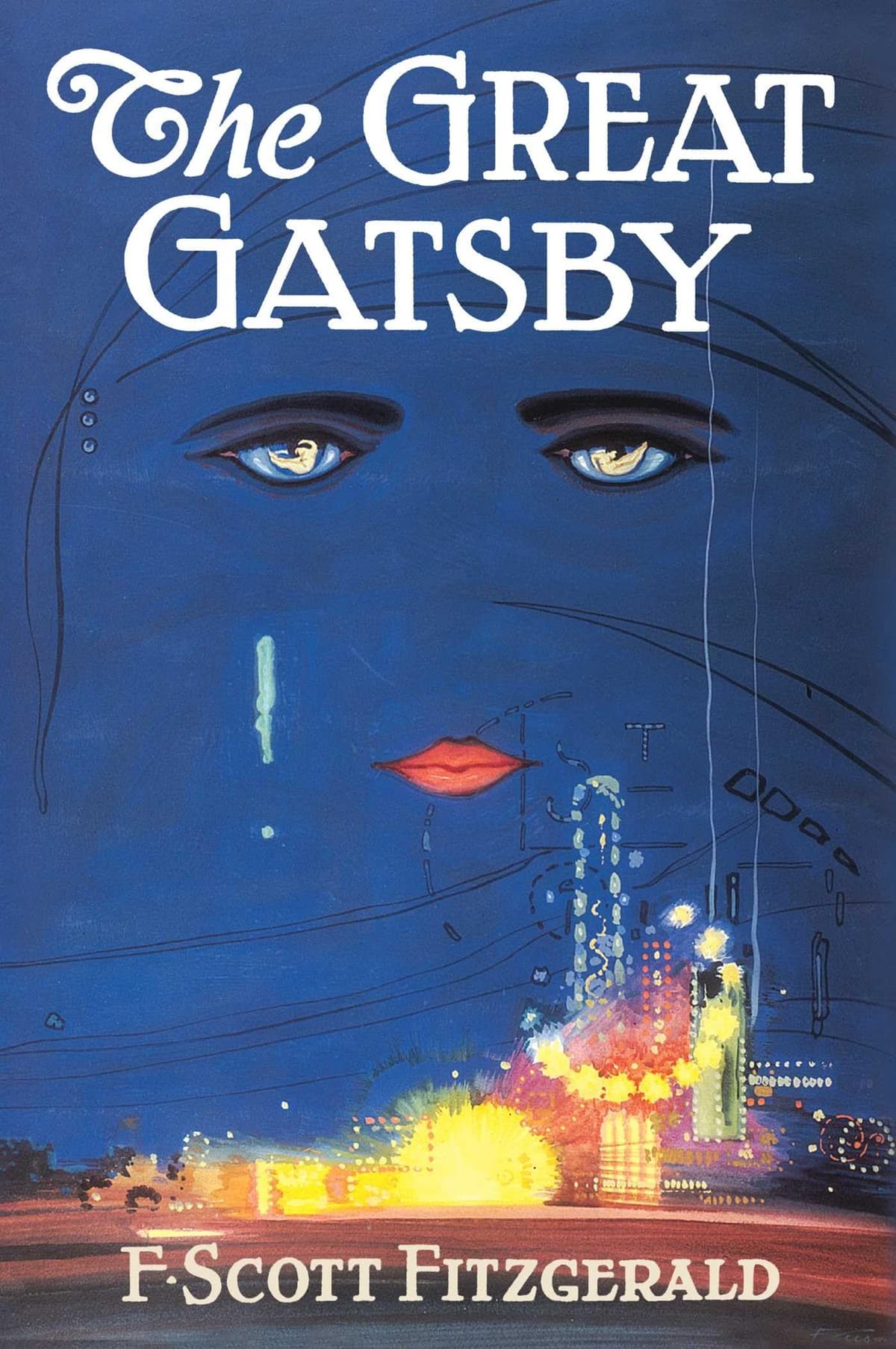
The Great Gatsby
F. Scott Fitzgerald
Accessible•5-6 hours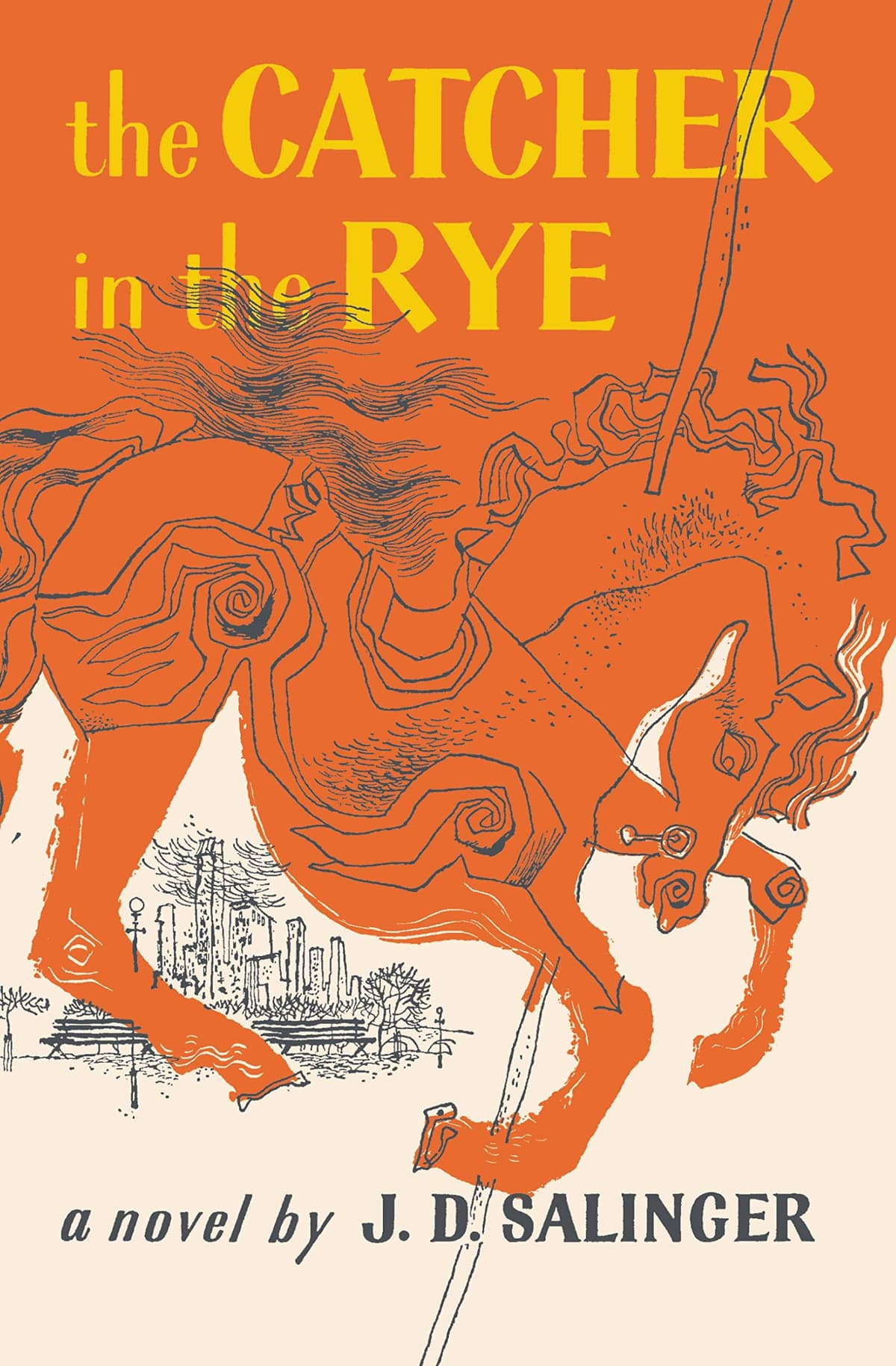 #4View Book
The Catcher in the Rye
J. D. Salinger
Accessible•6-8 hours #13View Book
Lolita
Vladimir Nabokov
Challenging•12-15 hours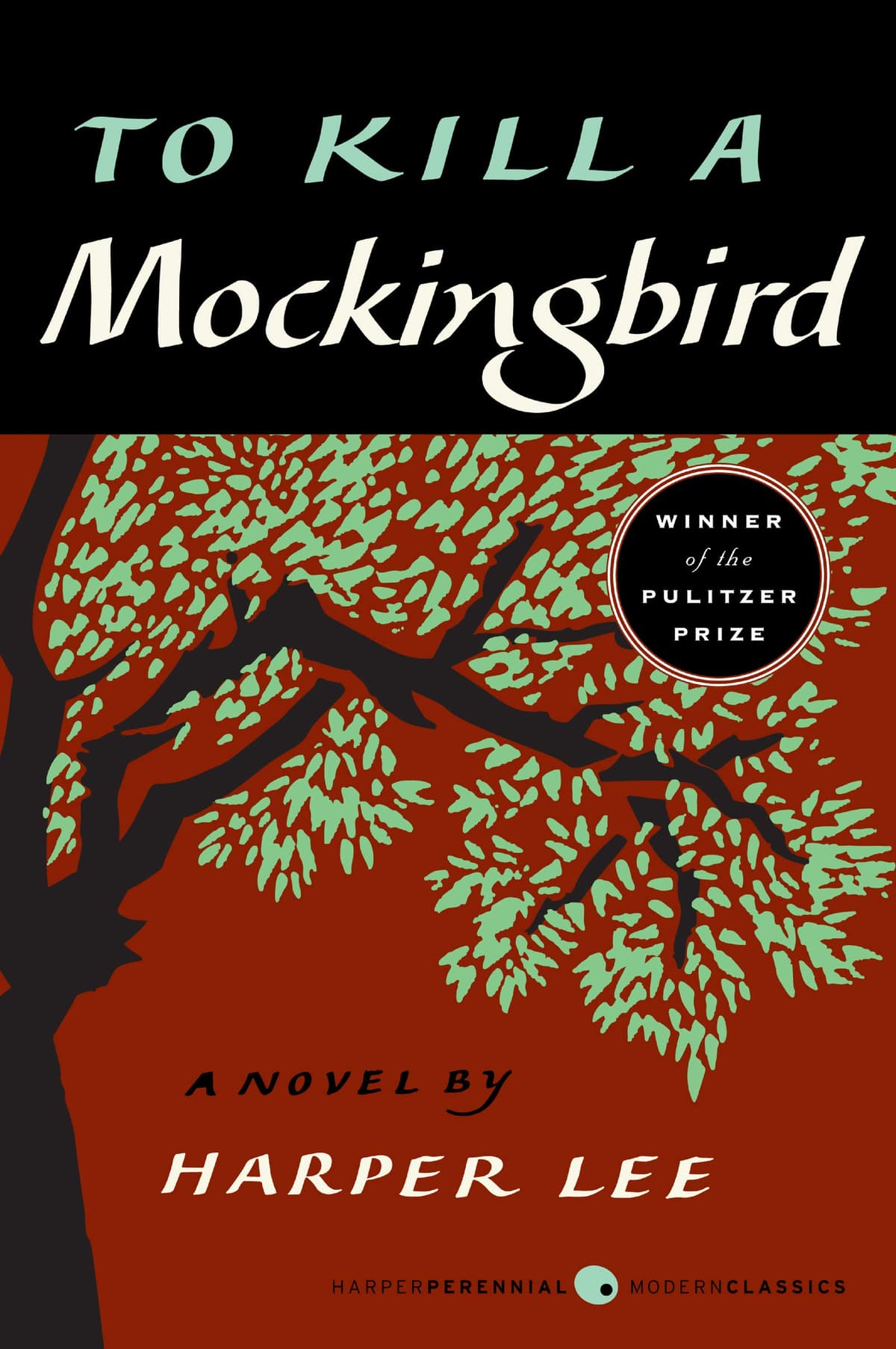 #17View Book
To Kill a Mockingbird
Harper Lee
Accessible•8-10 hours
Browse more collections