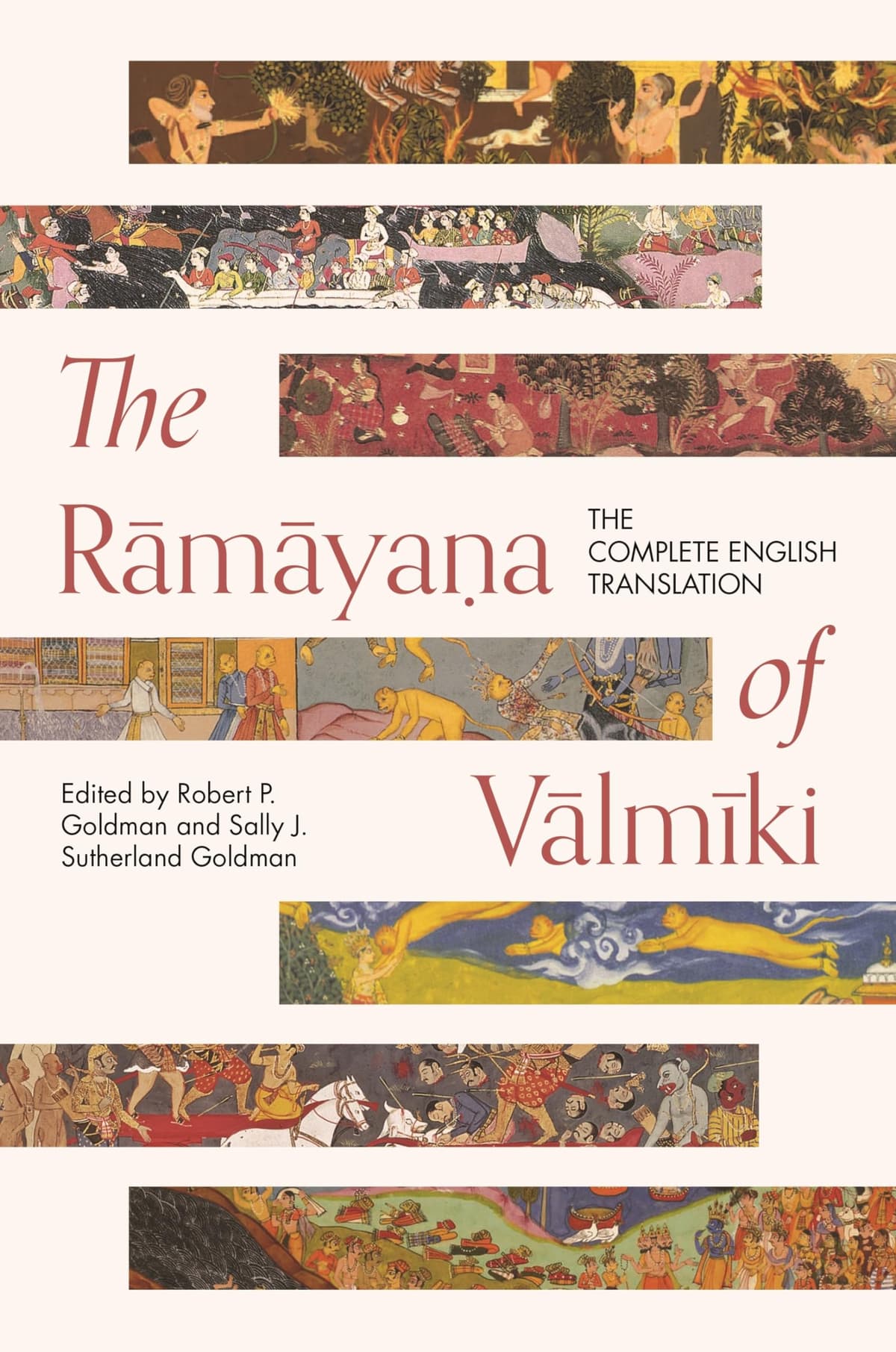
Ramayana
“Even as a tree, though cut down, sprouts up again if its roots remain uncut and firm, so does love return again and again.”
Ramayana Summary
The Ramayana tells the story of Rama, prince of Ayodhya, a man of such perfect virtue that he is an incarnation of the god Vishnu himself. On the eve of his coronation, his father King Dasharatha is forced by a long-ago promise to banish Rama to the forest for fourteen years and crown his younger brother Bharata instead. Rama accepts exile without complaint, accompanied by his devoted wife Sita and his loyal brother Lakshmana. In the wilderness they encounter sages and demons, until the rakshasa king Ravana, lord of the island kingdom of Lanka, abducts Sita through trickery and carries her away to his golden palace. Rama's quest to rescue her becomes an epic war: he allies with Sugriva, king of the monkeys, and the mighty Hanuman, who leaps across the ocean to Lanka, sets the city ablaze with his burning tail, and returns with news of Sita. The great battle that follows, with its celestial weapons, shape-shifting demons, and armies of bears and monkeys, culminates in Rama's defeat of Ravana and the rescue of Sita—though her return is shadowed by a trial of fire to prove her purity, a moment that has provoked centuries of debate about honor, duty, and the treatment of women.
Valmiki's ancient Sanskrit epic, composed around the third century BCE, is one of the foundational texts of world literature and the spiritual bedrock of Hindu civilization. Its influence saturates every aspect of South and Southeast Asian culture—from temple carvings in Cambodia to shadow puppet traditions in Indonesia, from philosophical treatises to Bollywood films. The Ramayana is simultaneously a thrilling adventure, a love story, a manual of dharma (righteous duty), and a profound meditation on what it means to be good in a world that does not always reward goodness. Its characters—Rama the ideal king, Sita the embodiment of devotion, Hanuman the perfect servant—have become archetypes that continue to shape the moral imagination of billions of people.
Why Read Ramayana?
The Ramayana is one of the oldest and most beloved stories ever told, a narrative that has shaped the moral, spiritual, and artistic life of over a billion people for more than two millennia. To read it is to encounter the source code of an entire civilization—the archetypes, the ethical dilemmas, the images of heroism and devotion that pervade every layer of South and Southeast Asian culture. But the Ramayana is not merely an artifact of historical importance; it is a story of tremendous emotional power, filled with moments of breathtaking beauty, devastating loss, and moral complexity that resonate far beyond any single tradition. Rama's exile, Sita's abduction, Hanuman's leap across the ocean—these are scenes that belong to the shared treasury of human storytelling.
What makes the Ramayana endure is not only its grandeur but its intimacy. Beneath the cosmic battles and divine interventions lie deeply human questions: What do we owe to duty when it conflicts with love? How do we maintain goodness in the face of injustice? What is the cost of an honor code that demands proof of a woman's purity? The epic does not shy from these tensions—the trial of Sita remains one of the most debated scenes in world literature. Whether you approach it as scripture, as literature, or simply as one of the greatest adventure stories ever composed, the Ramayana will expand your understanding of what storytelling can be and what it is for.
About Valmiki
Valmiki is traditionally regarded as the first poet—the Adi Kavi—of Sanskrit literature, though almost nothing about his historical existence can be verified. According to legend, he was a highway robber named Ratnakar who was transformed by a chance encounter with the sage Narada, who taught him to meditate on the name of Rama. After years of ascetic devotion so deep that an anthill grew around his motionless body—hence the name Valmiki, meaning 'one born of the anthill'—he emerged as a purified sage. The tradition holds that he composed the Ramayana after witnessing a hunter kill one of a pair of mating cranes, and the grief that overwhelmed him spontaneously emerged as the first verse of poetry in the Sanskrit language.
The Ramayana attributed to Valmiki is one of the two great epics of Indian civilization, alongside the Mahabharata. Composed in approximately 24,000 verses across seven books, it has been retold, translated, and adapted in virtually every language and art form across South and Southeast Asia for over two thousand years. Later versions by Tulsidas, Kamban, and countless others have built upon Valmiki's foundation, but the original Sanskrit text retains a narrative power, a lyrical beauty, and an ethical seriousness that mark it as one of the supreme achievements of human literary imagination. Valmiki's influence extends beyond literature into religion, philosophy, art, and daily life across much of Asia, making him one of the most consequential authors in human history.
Reading Guide
Ranked #404 among the greatest books of all time, Ramayana by Valmiki has earned its place in the literary canon. Originally written in Sanskrit and published in -200, this moderate read from India continues to resonate with readers today.
This book belongs to our Epics and Philosophy & Faith collections, where you can discover more books that share its spirit and themes.
If you enjoy moderate reads like this one, you might also like One Hundred Years of Solitude, Nineteen Eighty-Four, or Wuthering Heights.
From the Epics Collection
If you enjoyed Ramayana, discover more masterpieces that share its spirit.
 #1View Book
Ulysses
James Joyce
Challenging•35-40 hours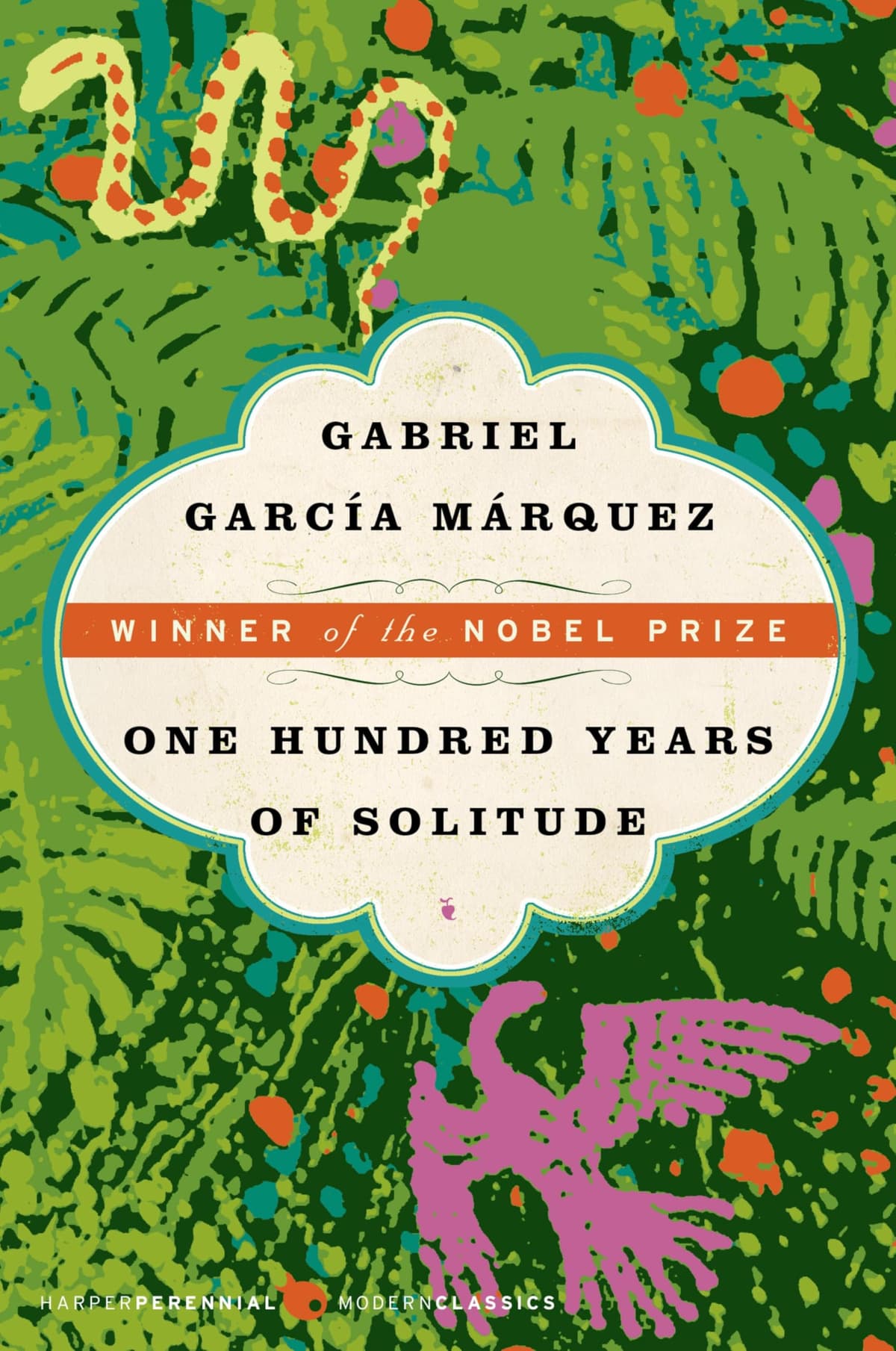 #5View Book
One Hundred Years of Solitude
Gabriel García Márquez
Moderate•15-20 hours #7View Book
Moby-Dick
Herman Melville
Challenging•20-25 hours #9View Book
Don Quixote
Miguel de Cervantes
High•35-40 hours
Browse more collections