Solaris
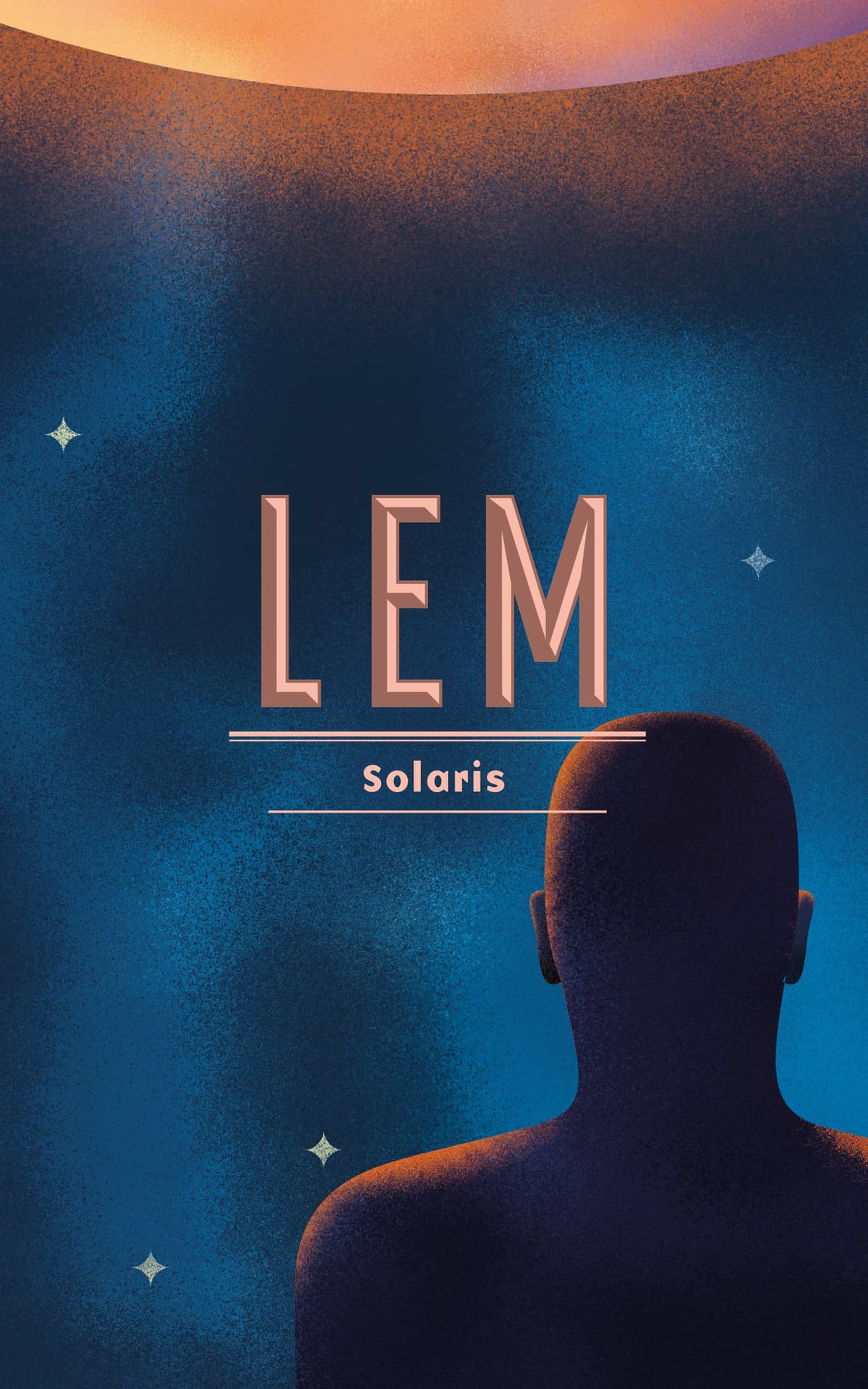
“We don't want to conquer the cosmos, we simply want to extend the boundaries of Earth to the frontiers of the cosmos.”
Solaris Summary
Solaris follows psychologist Kris Kelvin as he arrives at a research station orbiting the planet Solaris, whose entire surface is covered by a vast, sentient ocean. The station is in crisis: one scientist has committed suicide, and the two survivors are behaving erratically, haunted by mysterious visitors they refuse to discuss. Kelvin soon discovers the reason when his long-dead wife, Harey -- who committed suicide years earlier -- materializes in his quarters, apparently created by the ocean from his memories and guilt. These visitors are perfect physical replicas of people from the scientists' pasts, generated by the alien intelligence for purposes that remain utterly opaque. Kelvin's attempts to understand, reject, and ultimately accept his resurrected Harey drive the emotional core of the novel, while the broader narrative explores decades of failed scientific attempts to comprehend or communicate with the Solaris ocean.
Lem's masterpiece is a devastating critique of anthropocentrism and the limits of human knowledge. Unlike most science fiction, which imagines alien contact as either hostile or communicative, Solaris presents an alien intelligence so fundamentally different from human consciousness that meaningful communication may be impossible. The ocean's creation of the visitors might be an attempt at contact, an experiment, a reflex, or something entirely beyond human categories -- and the novel refuses to resolve this ambiguity. Through the lens of Kelvin's grief and the absurd history of Solaristics -- the fictional academic discipline devoted to studying the ocean -- Lem explores how science, for all its power, ultimately confronts mysteries it cannot reduce to human terms. Solaris is at once a love story, a philosophical novel, and a profound meditation on the loneliness of consciousness in an incomprehensible universe.
Why Read Solaris?
Solaris will permanently alter the way you think about science fiction and about the possibility of encountering alien intelligence. Where most first-contact stories assume that communication between species is merely a technical problem to be solved, Lem poses a far more disturbing question: what if the alien is so fundamentally different from us that understanding is impossible? The result is a novel that functions simultaneously as gripping psychological drama -- Kelvin's relationship with the recreated Harey is genuinely heartbreaking -- and as a profound philosophical inquiry into the nature of consciousness, knowledge, and love.
Lem's genius lies in his refusal to provide answers. The Solaris ocean remains an impenetrable mystery, and the elaborate academic history of failed attempts to classify it becomes a darkly comic commentary on humanity's compulsion to impose categories on the uncategorizable. Reading Solaris means sitting with genuine uncertainty, allowing yourself to be unsettled by the possibility that the universe contains intelligences we will never comprehend. In an era of confident predictions about artificial intelligence and extraterrestrial life, Lem's humble, haunting vision of our cognitive limitations feels more necessary than ever.
About Stanisław Lem
Stanisław Lem (1921-2006) was a Polish writer of science fiction, philosophy, and satire who is widely regarded as one of the most important science fiction authors of the twentieth century. Born in Lwow (now Lviv, Ukraine) to a family of Jewish descent, Lem survived the Nazi occupation by working as a mechanic and welder while using forged identity papers. After the war, he studied medicine in Krakow and began writing science fiction in the early 1950s, eventually producing more than thirty novels and short story collections that have been translated into over forty languages, selling tens of millions of copies worldwide.
Lem's work is distinguished by its intellectual ambition, philosophical depth, and sharp satirical wit. His major novels -- Solaris, The Cyberiad, His Master's Voice, and The Star Diaries -- explore questions of artificial intelligence, alien contact, cybernetics, and the limits of human knowledge with a rigor that often put him at odds with the conventions of genre science fiction. He was deeply skeptical of the genre's tendency toward anthropomorphism and wish fulfillment, and his work consistently challenged readers to confront the genuine strangeness of the universe. Lem received numerous international awards and was the most widely read non-English-language science fiction author in the world. Solaris has been adapted for film twice, most notably by Andrei Tarkovsky in 1972.
Reading Guide
Ranked #315 among the greatest books of all time, Solaris by Stanisław Lem has earned its place in the literary canon. Originally written in Polish and published in 1961, this challenging read from Poland continues to resonate with readers today.
This book belongs to our Speculative Futures and Modern Mind collections, where you can discover more books that share its spirit and themes.
If you enjoy challenging reads like this one, you might also like Ulysses, Moby-Dick, or Lolita.
From the Speculative Futures Collection
If you enjoyed Solaris, discover more masterpieces that share its spirit.
 #6View Book
Nineteen Eighty-Four
George Orwell
Moderate•8-10 hours #20View Book
The Trial
Franz Kafka
Moderate•8-10 hours #27View Book
The Magic Mountain
Thomas Mann
High•30-35 hours #41View Book
Frankenstein
Mary Shelley
Accessible•6-8 hours
Browse more collections