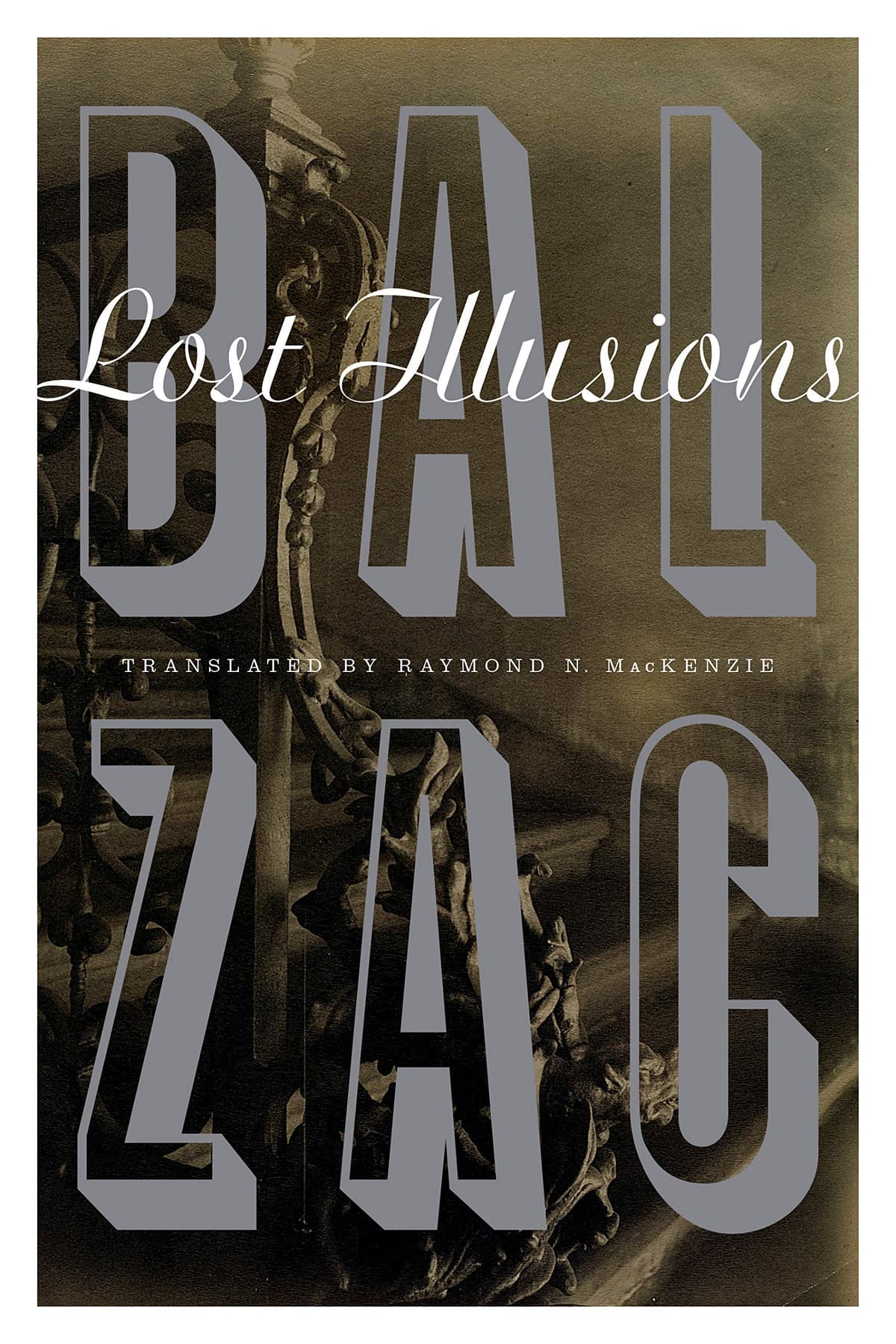
Lost Illusions
“Behind every great fortune there is a crime.”
Lost Illusions Summary
Lost Illusions follows Lucien Chardon, a beautiful, talented, and fatally weak young poet from the provincial city of Angouleme, as he attempts to conquer Paris and make his name in literature. Encouraged by his liaison with the aristocratic Madame de Bargeton, Lucien arrives in the capital only to discover that talent counts for nothing in a world governed by money, connections, and the ruthless machinery of the press. Penniless and humiliated, he is drawn into the world of journalism, where he discovers he has a devastating gift for the poisonous review and the paid puff-piece. His meteoric rise as a critic is fueled by corruption: he sells his pen to the highest bidder, betrays his principles, destroys reputations for profit, and plunges ever deeper into a Paris that runs on vanity, debt, and manipulation. Meanwhile, back in Angouleme, his brother-in-law David Sechard, an honest inventor working on a new paper-making process, is being systematically ruined by the very commercial forces that Lucien has embraced. The novel's architecture is magnificent, cutting between Paris and the provinces to reveal a society in which idealism is a luxury and survival demands compromise.
Balzac's sprawling masterpiece is the definitive novel about the collision between art and commerce, and its portrait of journalism as institutionalized corruption remains disturbingly contemporary. As a central pillar of La Comedie humaine, it reveals Balzac at his most ambitious and penetrating: the detail is encyclopedic, the social analysis devastating, and the energy of the storytelling relentless. Lost Illusions is a novel that devours the world it depicts, cataloguing the economics of publishing, the sociology of Parisian salons, and the psychology of ambition with equal voracity. Lucien is one of the great weak protagonists in fiction, a man whose gifts make his failures all the more tragic, and his story remains a cautionary tale for anyone who has ever dreamed of making art in a marketplace.
Why Read Lost Illusions?
Lost Illusions is the great novel of ambition, and reading it is like watching a brilliant young person walk into a meat grinder with their eyes wide open. Balzac understood the machinery of success and failure better than any novelist before or since, and his portrait of how talent is bought, sold, corrupted, and destroyed by the marketplace has lost none of its power. You will recognize Lucien's world immediately: the sycophantic reviews, the manufactured reputations, the way money determines whose art gets seen and whose disappears. If you have ever wondered why the best work does not always rise to the top, Balzac wrote the definitive answer nearly two hundred years ago.
But this is far more than a cautionary tale. Balzac writes with an energy and appetite that make his fictional Paris as vivid and immersive as any city in literature. The novel is populated with unforgettable characters, from the diabolically charming Vautrin to the long-suffering David Sechard, and its scope encompasses everything from the economics of paper manufacturing to the rituals of aristocratic salons. Reading Lost Illusions gives you a complete world, rendered with such ferocious intelligence that it permanently alters how you see the relationship between art, money, and power.
About Honoré de Balzac
Honore de Balzac was born in Tours, France, in 1799, the son of a civil servant with social ambitions. After an unhappy childhood largely spent in boarding schools, he studied law in Paris but abandoned it to pursue writing, enduring years of poverty and producing potboiler novels under pseudonyms before finding his voice. His breakthrough came with Les Chouans in 1829, and over the next two decades he produced an almost superhuman volume of work, writing through the night fueled by torrents of black coffee, often producing a finished novel in weeks.
Balzac conceived La Comedie humaine as a unified portrait of French society encompassing more than ninety novels and novellas linked by recurring characters. The scope of his ambition was unprecedented: he sought to catalogue every profession, every social class, every variety of human passion in post-Napoleonic France. Major works include Pere Goriot, Eugenie Grandet, Cousin Bette, Lost Illusions, and The Wild Ass's Skin. His influence on the development of realist fiction is immeasurable, acknowledged by writers from Flaubert and Zola to Proust and Henry James. Balzac died in Paris in 1850 at the age of fifty-one, exhausted by the very energy that had fueled his extraordinary output, leaving behind a literary monument that remains the most comprehensive fictional portrait of a society ever attempted.
Reading Guide
Ranked #417 among the greatest books of all time, Lost Illusions by Honoré de Balzac has earned its place in the literary canon. Originally written in French and published in 1837, this moderate read from France continues to resonate with readers today.
This book belongs to our Society & Satire collection, where you can discover more books that share its spirit and themes.
If you enjoy moderate reads like this one, you might also like One Hundred Years of Solitude, Nineteen Eighty-Four, or Wuthering Heights.
From the Society & Satire Collection
If you enjoyed Lost Illusions, discover more masterpieces that share its spirit.
 #9View Book
Don Quixote
Miguel de Cervantes
High•35-40 hours #12View Book
Pride and Prejudice
Jane Austen
Accessible•10-12 hours #22View Book
Madame Bovary
Gustave Flaubert
Moderate•12-15 hours #30View Book
Middlemarch
George Eliot
High•30-35 hours
Browse more collections