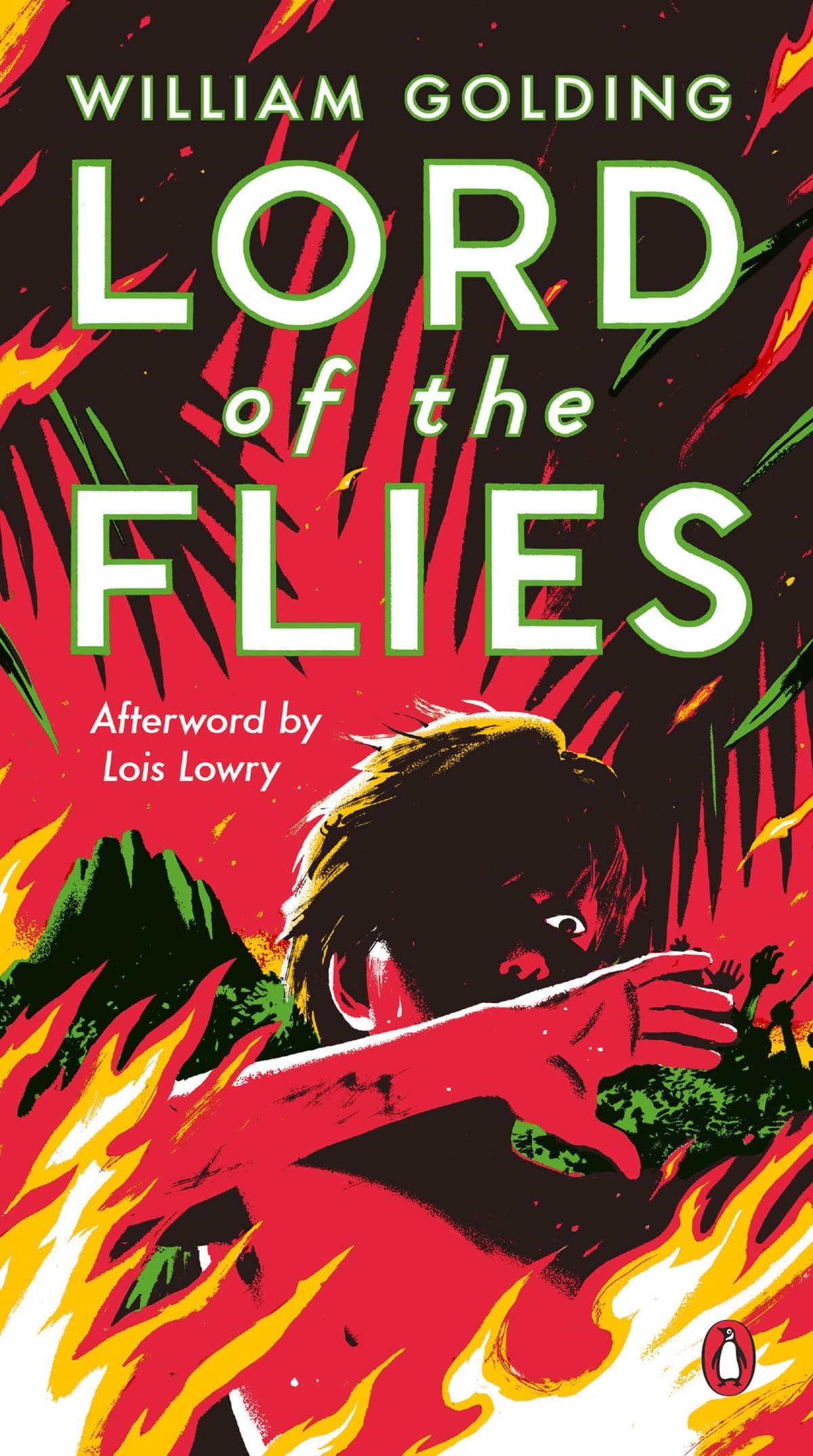
Lord of the Flies
“Maybe there is a beast... maybe it's only us.”
Lord of the Flies Summary
A plane carrying a group of British schoolboys crashes on an uninhabited tropical island. There are no adults. At first, it seems like paradise—Ralph is elected chief, Piggy provides rational counsel, and the boys establish rules, build shelters, and tend a signal fire. But the island harbors a darker force. Jack Merridew, the leader of the choirboys-turned-hunters, discovers the intoxicating power of violence. A rumored 'beast' stalks the jungle, and one by one, the boys abandon civilization for savagery, face paint, and blood sacrifice.
Golding strips away every comfort of the social contract to reveal the darkness that lurks beneath. The conch shell that symbolizes order is smashed. Piggy, the voice of reason, is murdered. And the Lord of the Flies—a severed pig's head swarming with insects—delivers its terrible prophecy to the visionary Simon: the beast is not out there in the jungle. The beast is inside them. It always has been.
Why Read Lord of the Flies?
Lord of the Flies is one of those rare novels that, once read, permanently alters the way you see the world. Golding wrote it as a deliberate inversion of the Victorian adventure story—no plucky boys building a better England in the tropics, but a nightmare vision of what children actually do when the restraints of civilization are removed. It is a book that flatly refuses to believe in human innocence.
Its power lies in its ruthless simplicity. The island is a laboratory, the boys are the experiment, and the result is devastating. Every institution—democracy, religion, reason, law—is tested and found wanting against the primal seduction of power and fear. You will read it in a single sitting, and the final image—a naval officer standing on the beach, mistaking the boys' war for a game—will haunt you for years. It is the book that asks the question no one wants to answer: what would you become without rules?
About William Golding
William Golding (1911–1993) was a British novelist and Nobel laureate who spent years as a schoolteacher before World War II revealed to him the true nature of humanity. His wartime service in the Royal Navy, including participation in the D-Day landings, shattered any illusions about human goodness and gave him the vision that would define his work.
Lord of the Flies was rejected by twenty-one publishers before being accepted by Faber and Faber in 1954. It became one of the most widely read novels of the twentieth century and a staple of school curricula worldwide. Golding won the Nobel Prize in Literature in 1983, lauded for novels that illuminate the human condition with the perspicuity of realistic narrative and the diversity of myth.
Reading Guide
Ranked #50 among the greatest books of all time, Lord of the Flies by William Golding has earned its place in the literary canon. Originally written in English and published in 1954, this accessible read from United Kingdom continues to resonate with readers today.
This book belongs to our Gothic & Dark and Philosophy & Faith collections, where you can discover more books that share its spirit and themes.
If you enjoy accessible reads like this one, you might also like The Great Gatsby, The Catcher in the Rye, or Pride and Prejudice.
From the Gothic & Dark Collection
If you enjoyed Lord of the Flies, discover more masterpieces that share its spirit.
 #15View Book
Wuthering Heights
Emily Brontë
Moderate•10-12 hours #29View Book
Jane Eyre
Charlotte Brontë
Accessible•15-20 hours #41View Book
Frankenstein
Mary Shelley
Accessible•6-8 hours #44View Book
Absalom, Absalom!
William Faulkner
Very High•12-15 hours
Browse more collections