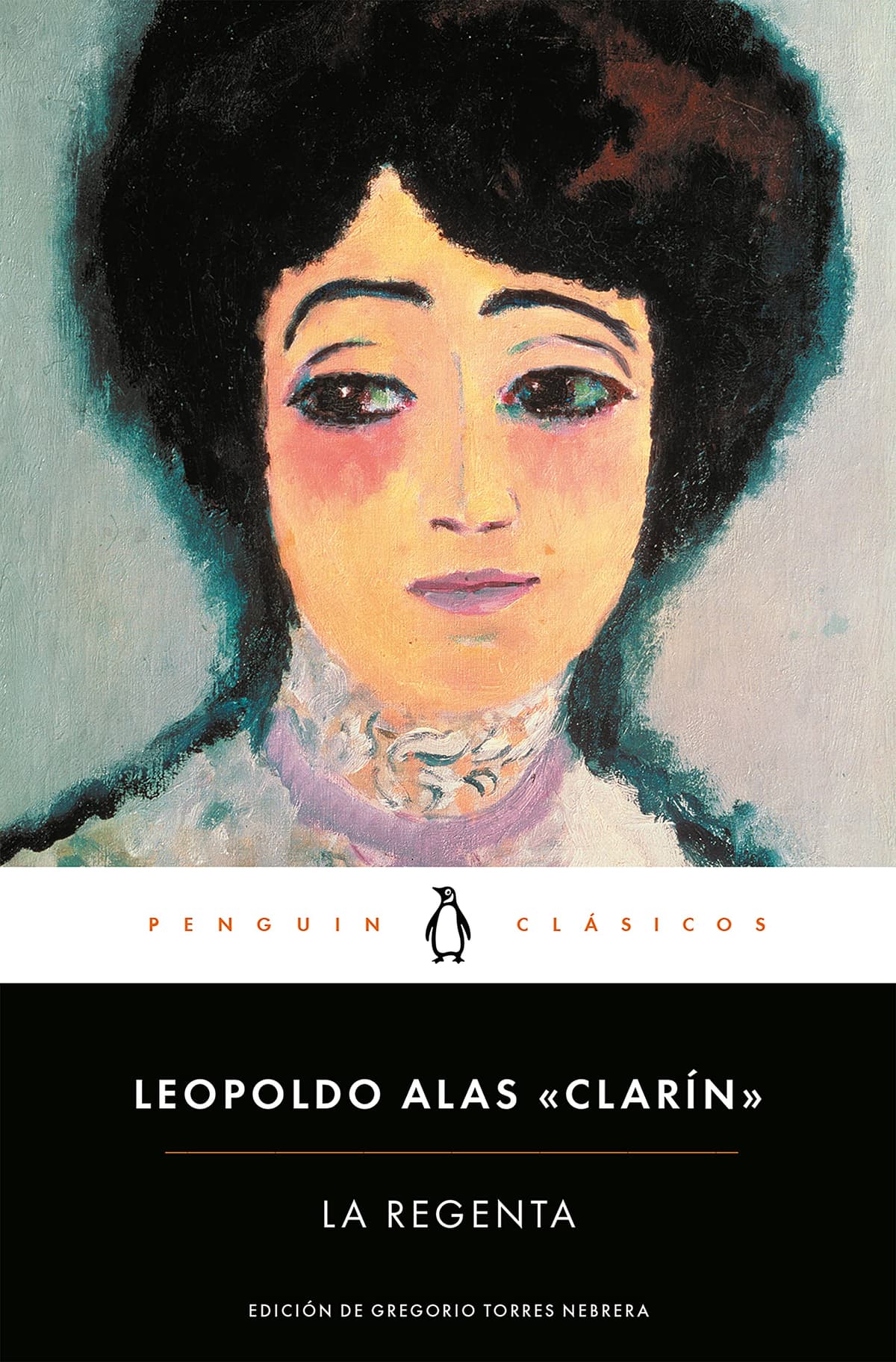
La Regenta
“Vetusta, the very noble and ancient city, was digesting its stew and taking a heroic siesta.”
La Regenta Summary
La Regenta unfolds in Vetusta, a thinly veiled portrait of the provincial Spanish city of Oviedo, where the stifling atmosphere of clerical power, social hypocrisy, and bourgeois torpor presses down upon its inhabitants like a physical weight. At the novel's center is Ana Ozores, the young, beautiful, and deeply unhappy wife of the aged, kindly, but passionless Don Victor Quintanar, the retired regent of the local court. Ana's frustrated yearnings for love, spiritual transcendence, and escape from suffocating boredom make her the object of a relentless contest between two predators: Don Fermín de Pas, the ambitious and secretly passionate cathedral canon who seeks to possess her soul through religious devotion, and Don Alvaro Mesía, the town's suave, calculating Don Juan who pursues her body. The entire city watches, gossips, and maneuvers around Ana's fate, and Clarín renders this provincial society with devastating precision—every salon, every church pew, every whispered conversation crackling with malice, ambition, and repressed desire. The novel builds with agonizing deliberateness toward Ana's fall and the catastrophic consequences that follow.
Often compared to Madame Bovary and Anna Karenina, La Regenta stands alongside them as one of the supreme novels of adultery and provincial entrapment, yet its particular genius lies in its savage anatomy of the relationship between religious authority and sexual power. Clarín's portrait of Don Fermín—a priest whose spiritual devotion is inseparable from his erotic obsession—is one of the most psychologically complex characterizations in nineteenth-century fiction. The novel's scope is encyclopedic, its irony devastating, and its compassion for Ana, trapped between two forms of predation and abandoned by a society that claims to uphold morality while practicing cruelty, gives it an emotional power that transcends its historical moment. La Regenta is the masterpiece of Spanish realism and one of the great European novels.
Why Read La Regenta?
La Regenta is the great Spanish novel that the English-speaking world has yet to fully discover, and reading it is like gaining access to a secret masterpiece. Clarín writes with the psychological acuity of Flaubert and the social breadth of Tolstoy, and his portrait of Vetusta—a city where everyone is watching everyone else and where the church, the salon, and the bedroom are all stages for the same dramas of power and desire—is so vivid and detailed that you will feel you have lived there. Ana Ozores is one of the most fully realized heroines in European fiction: intelligent, passionate, deeply spiritual, and utterly trapped by the circumstances of her life and the failures of the men who claim to love her.
What makes La Regenta essential is its unflinching examination of how religious and sexual power intertwine—a theme that remains disturbingly relevant. The novel strips away every pious pretension to reveal the hunger, ambition, and cruelty that lurk beneath the surface of a society that prides itself on its devotion and respectability. If you have read Madame Bovary and Anna Karenina, La Regenta completes the trilogy of great nineteenth-century novels about women destroyed by the gap between their inner lives and the roles society permits them. It is a monumental reading experience that rewards every page of its considerable length.
About Clarín
Leopoldo Alas, universally known by his pen name Clarín, was born in 1852 in Zamora, Spain, and grew up in Oviedo, the Asturian city that would become the model for Vetusta in his masterpiece. He studied law at the University of Oviedo and in Madrid, where he earned his doctorate and began publishing the literary criticism and satirical journalism that made him the most feared and respected critic in Spain. His pen name, meaning "bugle" or "clarion," reflected his conception of the critic's role as one who sounds the alarm against mediocrity and pretension.
La Regenta, published in two volumes in 1884 and 1885, was immediately recognized as a work of extraordinary power, though its savage critique of provincial morality and clerical corruption provoked fierce attacks from conservative and religious quarters. His only other novel, Su único hijo, appeared in 1890. Clarín also produced a remarkable body of short fiction, including the celebrated stories Adiós, Cordera! and Pipá, as well as volumes of literary criticism that shaped Spanish intellectual life for a generation. He spent most of his adult life as a professor of law at the University of Oviedo, where he was revered by his students and feared by his literary targets. He died in 1901 at the age of forty-nine, his reputation eclipsed for decades before La Regenta was rediscovered and acclaimed as the greatest Spanish novel of the nineteenth century and one of the supreme achievements of European realism.
Reading Guide
Ranked #369 among the greatest books of all time, La Regenta by Clarín has earned its place in the literary canon. Originally written in Spanish and published in 1884, this challenging read from Spain continues to resonate with readers today.
This book belongs to our Society & Satire and Love & Loss collections, where you can discover more books that share its spirit and themes.
If you enjoy challenging reads like this one, you might also like Ulysses, Moby-Dick, or Lolita.
From the Society & Satire Collection
If you enjoyed La Regenta, discover more masterpieces that share its spirit.
 #9View Book
Don Quixote
Miguel de Cervantes
High•35-40 hours #12View Book
Pride and Prejudice
Jane Austen
Accessible•10-12 hours #22View Book
Madame Bovary
Gustave Flaubert
Moderate•12-15 hours #30View Book
Middlemarch
George Eliot
High•30-35 hours
Browse more collections