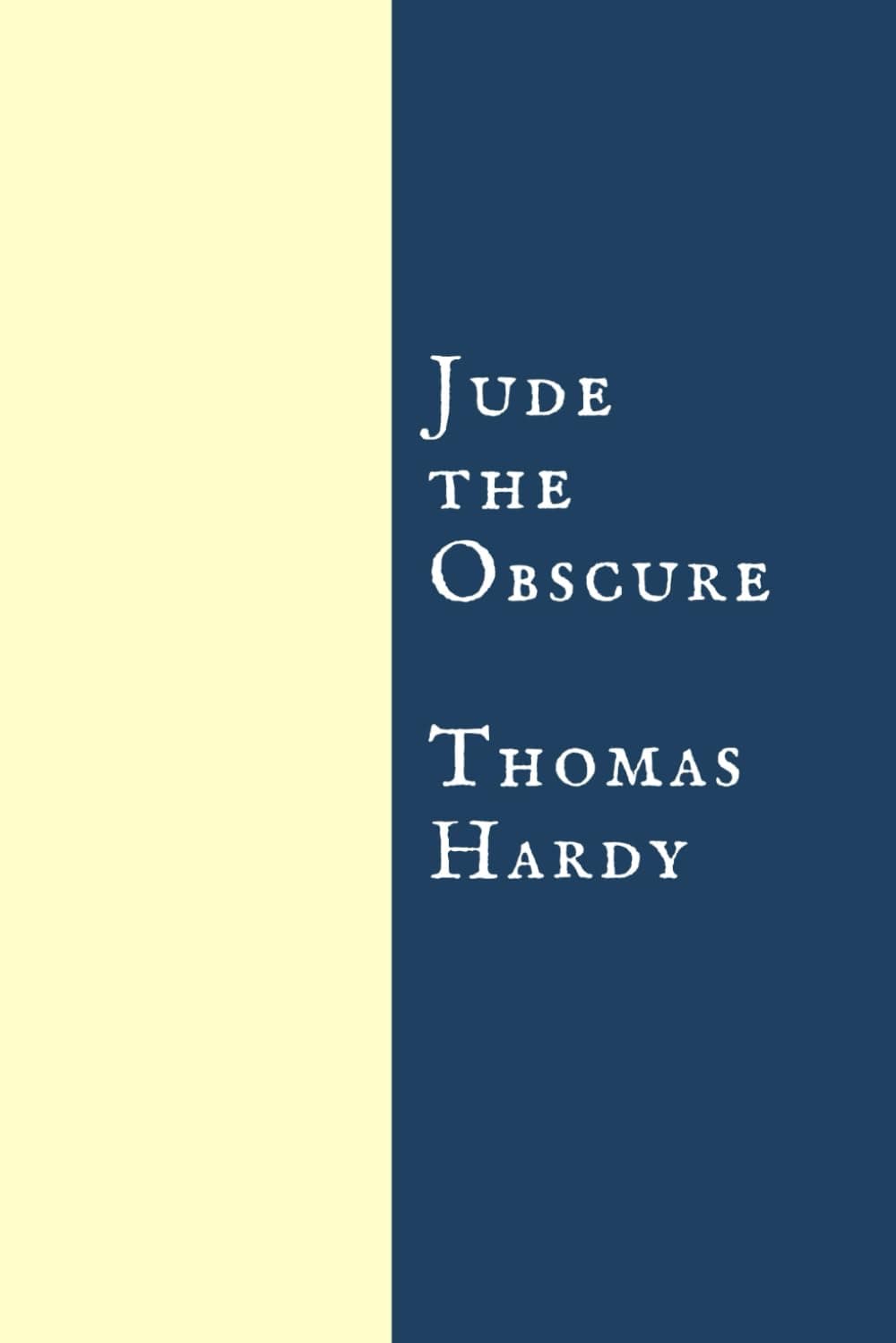
Jude the Obscure
“You are Joseph the dreamer of dreams, dear Jude. And a tragic Don Quixote. And sometimes you are St. Stephen, who, while they were stoning him, could see Heaven opened.”
Jude the Obscure Summary
Jude Fawley, a poor orphan raised in the rural village of Marygreen, dreams of attending the university at Christminster, Hardy's fictional stand-in for Oxford. His intellectual ambitions are first derailed when he marries Arabella Donn, a coarse local girl who traps him into marriage by feigning pregnancy. After she abandons him, Jude moves to Christminster, only to find its colleges impenetrable to a working-class stonemason. There he reconnects with his cousin Sue Bridehead, a fiercely independent and intellectually vibrant woman. Their passionate but tortured relationship defies every convention of Victorian society: they live together unmarried, have children out of wedlock, and refuse to submit to institutional religion. Their happiness proves fragile, shattered by social ostracism, poverty, and a catastrophic act of violence committed by Jude's eldest son, known as Little Father Time, that leaves the family devastated beyond recovery.
Hardy's final novel is a searing indictment of the rigid class structures and moral hypocrisy that defined late Victorian England. The university system, the institution of marriage, and organized religion all stand as barriers that crush individual aspiration and authentic human connection. Sue Bridehead remains one of the most psychologically complex female characters in nineteenth-century fiction, a woman whose progressive ideals ultimately buckle under the weight of grief and social pressure. The novel caused such an outcry upon publication that Hardy famously abandoned fiction altogether, turning exclusively to poetry for the remaining three decades of his life. Jude the Obscure endures as a profoundly modern tragedy about the gap between human longing and the institutions that claim to serve it.
Why Read Jude the Obscure?
Few novels capture the ache of unfulfilled ambition with such devastating precision. Hardy places you inside the mind of Jude Fawley, a man whose intellectual hunger is matched only by society's determination to deny him. Every page vibrates with the tension between what a person might become and what the world will allow. The relationship between Jude and Sue Bridehead crackles with emotional and philosophical electricity, as two people who refuse to live by convention discover just how mercilessly convention punishes dissent.
Reading this novel strips away any romantic nostalgia about the Victorian era. Hardy's unflinching portrait of poverty, institutional cruelty, and the weaponization of respectability feels urgently contemporary. The questions it raises about who gets access to education, whose love is considered legitimate, and what happens to those who challenge the social order have lost none of their relevance. This is the book that was so honest it ended Hardy's career as a novelist, and that fearlessness is precisely what makes it essential reading more than a century later.
About Thomas Hardy
Thomas Hardy was born in 1840 in Higher Bockhampton, Dorset, the rural English landscape that would become the fictional Wessex of his novels. Trained as an architect, he turned to writing in the 1870s and produced a remarkable sequence of novels including Far from the Madding Crowd, The Return of the Native, The Mayor of Casterbridge, and Tess of the d'Urbervilles. His fiction is characterized by its deep sympathy for ordinary people caught in the machinery of fate, class, and social convention, set against the ancient rhythms of the English countryside.
The hostile reception of Jude the Obscure in 1895, which was publicly burned by a bishop and condemned as immoral, led Hardy to abandon prose fiction entirely. He devoted the final thirty years of his life to poetry, producing some of the most admired verse of the twentieth century. Hardy died in 1928, and in a characteristically divided gesture, his heart was buried in his beloved Dorset while his ashes were interred in Poets' Corner at Westminster Abbey. He remains one of the towering figures of English literature, a writer whose tragic vision and mastery of landscape have influenced generations of novelists and poets.
Reading Guide
Ranked #326 among the greatest books of all time, Jude the Obscure by Thomas Hardy has earned its place in the literary canon. Originally written in English and published in 1895, this moderate read from United Kingdom continues to resonate with readers today.
This book belongs to our Love & Loss and Society & Satire collections, where you can discover more books that share its spirit and themes.
If you enjoy moderate reads like this one, you might also like One Hundred Years of Solitude, Nineteen Eighty-Four, or Wuthering Heights.
From the Love & Loss Collection
If you enjoyed Jude the Obscure, discover more masterpieces that share its spirit.
 #3View Book
The Great Gatsby
F. Scott Fitzgerald
Accessible•5-6 hours #10View Book
Anna Karenina
Leo Tolstoy
High•30-35 hours #12View Book
Pride and Prejudice
Jane Austen
Accessible•10-12 hours #15View Book
Wuthering Heights
Emily Brontë
Moderate•10-12 hours
Browse more collections