Death in Venice

“For you know that we poets cannot walk the way of beauty without Eros as our companion and guide.”
Death in Venice Summary
Gustav von Aschenbach, an aging, distinguished German writer celebrated for his disciplined, rigorously controlled art, travels to Venice seeking rest and renewal after years of unrelenting creative labor. At the Grand Hotel des Bains on the Lido, he becomes mesmerized by Tadzio, a fourteen-year-old Polish boy of extraordinary beauty who is vacationing with his aristocratic family. What begins as aesthetic admiration gradually transforms into an all-consuming, unspoken obsession. Aschenbach rearranges his entire existence around glimpses of the boy, following him through the narrow streets and piazzas of Venice, sitting on the beach to watch him play, and descending into increasingly undignified behavior. Meanwhile, a cholera epidemic creeps through the city, a truth the Venetian authorities desperately conceal to protect the tourist trade. Aschenbach, who learns of the plague, deliberately stays, choosing proximity to Tadzio over his own survival.
Thomas Mann's novella is a masterpiece of psychological and philosophical fiction, a work that operates simultaneously as a realistic narrative and an allegory about the dangerous relationship between art, beauty, and dissolution. Mann draws heavily on Platonic and Nietzschean philosophy, staging Aschenbach's decline as a confrontation between the Apollonian ideals of order and restraint that have governed his life and the Dionysian forces of passion and chaos that ultimately consume him. Venice itself becomes a character in the story, its gorgeous decaying facades mirroring Aschenbach's own disintegration. The novella explores how the pursuit of beauty can lead to moral collapse, how the artist's need for inspiration can become a form of self-destruction, and how the rigid suppression of desire only ensures its eventual, catastrophic return.
Why Read Death in Venice?
In barely a hundred pages, Thomas Mann created one of the most psychologically devastating works in all of literature. Death in Venice is a story of terrifying precision, tracing the disintegration of a great artist with the clinical detachment of a medical case study and the symbolic richness of a Greek tragedy. Mann's prose, even in translation, is dense with philosophical meaning, and his use of Venice as both setting and metaphor, a city of sublime beauty built on rotting foundations, is one of the great achievements of literary symbolism.
Reading this novella, you will witness the gradual erosion of everything a man has built his life upon, his reputation, his discipline, his self-knowledge, by a force he cannot name or resist. You will find yourself both repelled and moved by Aschenbach's obsession, and you will confront uncomfortable questions about the relationship between aesthetic beauty and moral danger. Mann forces you to consider whether the artistic temperament, with its hunger for beauty and its need for intense feeling, carries within it the seeds of its own destruction. This is a work that will stay with you long after its brief, devastating final scene.
About Thomas Mann
Thomas Mann (1875-1955) was born in Lubeck, Germany, into a prosperous merchant family whose decline would inspire his first novel, Buddenbrooks (1901). He became one of the most important German writers of the twentieth century, producing novels, novellas, and essays of formidable intellectual depth and stylistic mastery. He was awarded the Nobel Prize in Literature in 1929, primarily for Buddenbrooks, though his subsequent works, including The Magic Mountain (1924) and the tetralogy Joseph and His Brothers, confirmed his stature as a towering figure of European letters.
Mann's relationship with Germany was marked by painful complexity. An early supporter of German nationalism during World War I, he gradually became a defender of democratic values and an outspoken opponent of Nazism. He emigrated to Switzerland in 1933 and later to the United States, where he lived in Pacific Palisades, California, becoming an American citizen in 1944. His later masterwork Doctor Faustus (1947) served as an allegorical exploration of Germany's descent into barbarism. Mann's fiction is characterized by its ironic sophistication, its engagement with philosophy and music, and its persistent exploration of the tension between bourgeois respectability and artistic transgression.
Reading Guide
Ranked #251 among the greatest books of all time, Death in Venice by Thomas Mann has earned its place in the literary canon. Originally written in German and published in 1912, this challenging read from Germany continues to resonate with readers today.
This book belongs to our Love & Loss and Philosophy & Faith collections, where you can discover more books that share its spirit and themes.
If you enjoy challenging reads like this one, you might also like Ulysses, Moby-Dick, or Lolita.
From the Love & Loss Collection
If you enjoyed Death in Venice, discover more masterpieces that share its spirit.
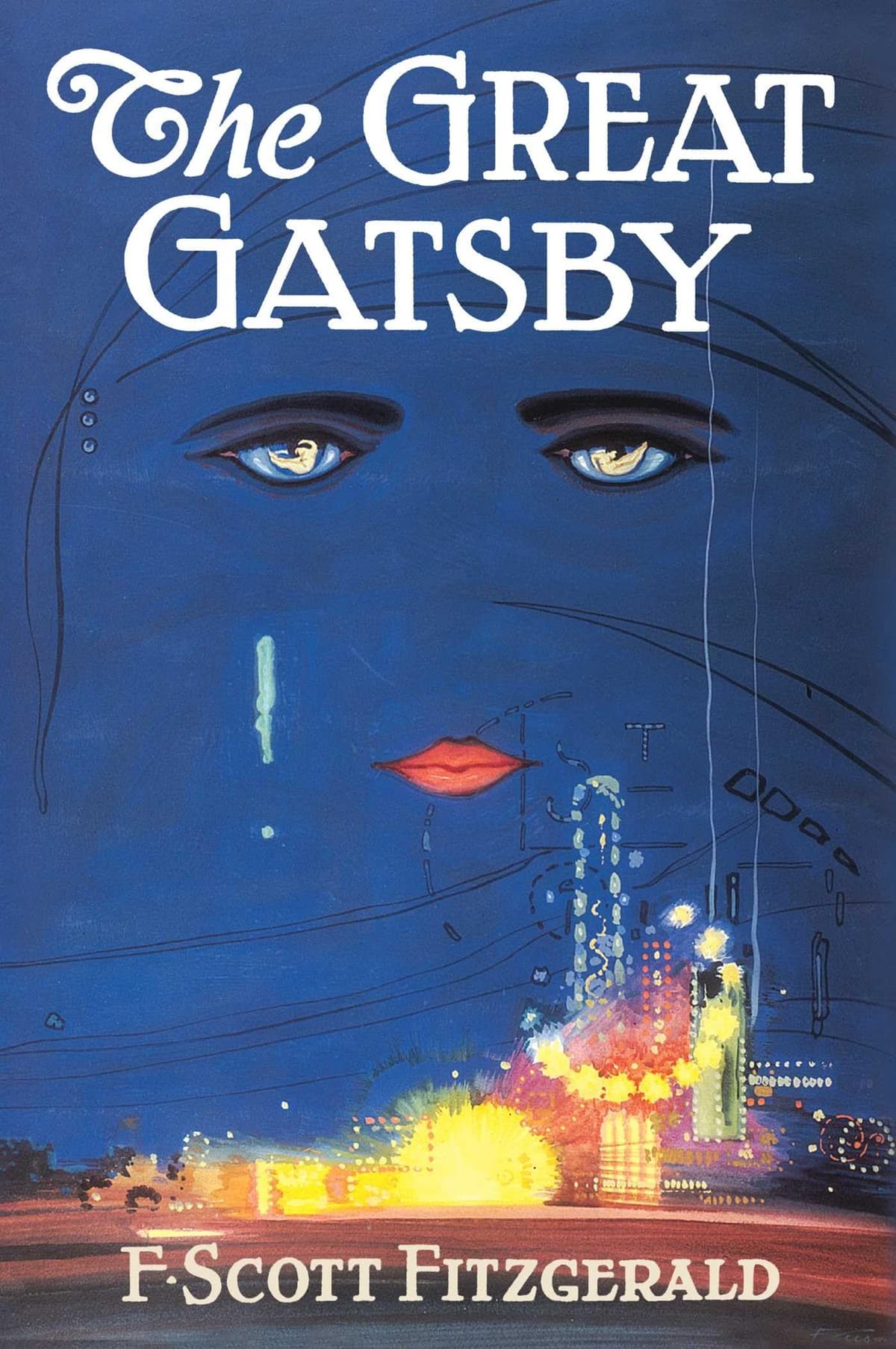 #3View Book
The Great Gatsby
F. Scott Fitzgerald
Accessible•5-6 hours #10View Book
Anna Karenina
Leo Tolstoy
High•30-35 hours #12View Book
Pride and Prejudice
Jane Austen
Accessible•10-12 hours #15View Book
Wuthering Heights
Emily Brontë
Moderate•10-12 hours
Browse more collections