Cry, the Beloved Country
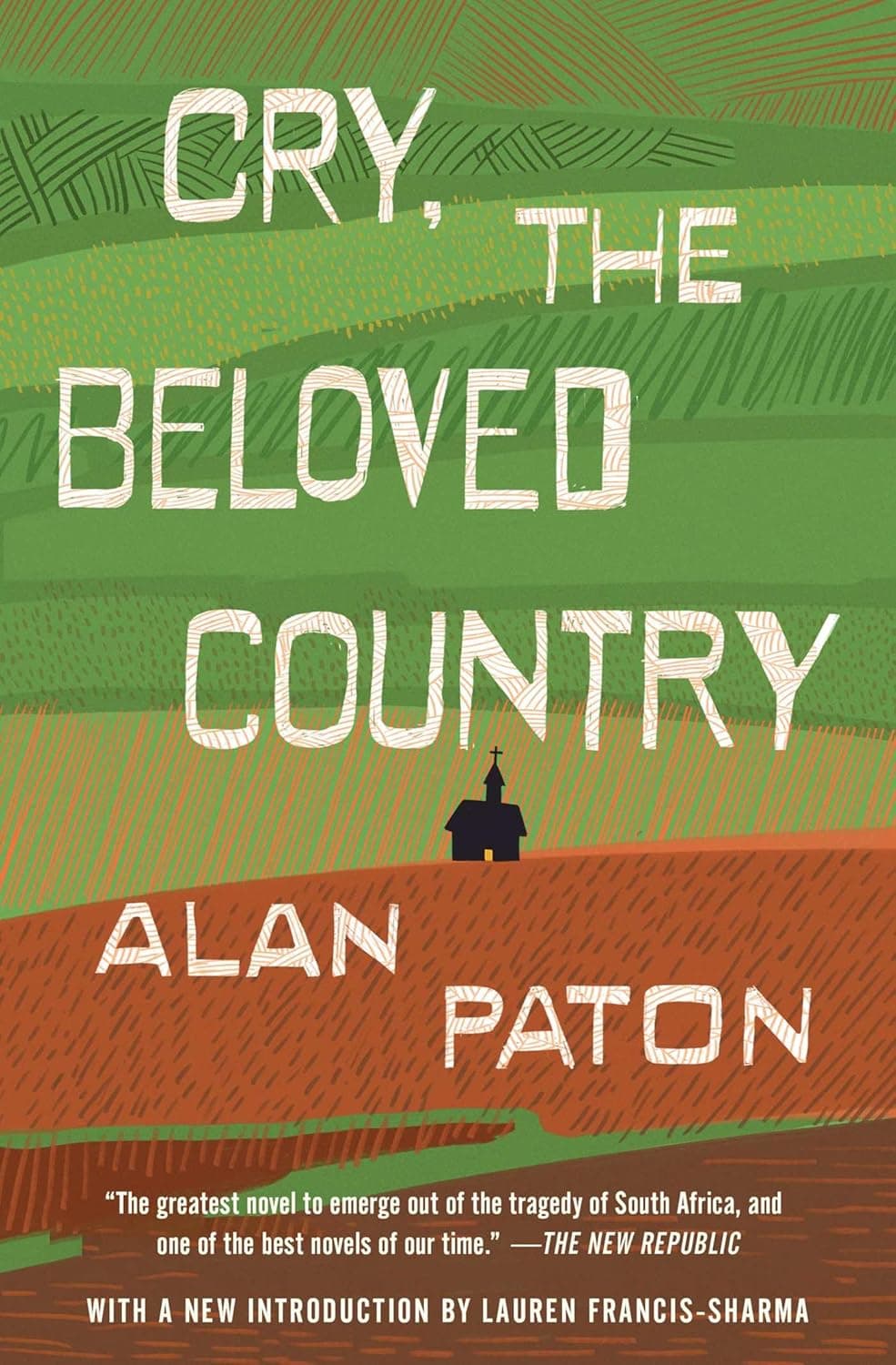
“Cry, the beloved country, for the unborn child that is the inheritor of our fear.”
Cry, the Beloved Country Summary
Stephen Kumalo, an elderly Zulu Anglican priest in the rural village of Ndotsheni in South Africa's Natal province, receives a letter summoning him to Johannesburg to help his sick sister Gertrude. Upon arriving in the sprawling, dangerous city, Kumalo discovers that Gertrude has turned to prostitution and drinking, and his son Absalom, who had gone to the city seeking opportunity, has fallen in with criminals. Through the help of the compassionate priest Theophilus Msimangu, Kumalo searches through the townships and shanties of Johannesburg, witnessing the devastating effects of apartheid-era segregation and poverty on Black South Africans. The search ends in tragedy when Kumalo learns that Absalom has murdered Arthur Jarvis, a young white man who was, ironically, one of the most outspoken advocates for racial justice in the country. Absalom is tried, convicted, and sentenced to death, leaving his father shattered.
Alan Paton's deeply moving novel, published in 1948, the very year the National Party came to power and formally instituted apartheid, is both a cry of anguish and a plea for reconciliation. The novel's parallel narrative follows James Jarvis, the murdered man's father, who discovers through his son's writings a commitment to justice he had never understood, and who reaches across the racial divide to help Kumalo's village. Paton writes in a spare, biblical prose style that gives the novel the quality of a parable or a psalm, elevating a story of individual suffering into a universal meditation on justice, forgiveness, and the devastating human cost of systemic racism. The novel's vision of a beloved country being destroyed by fear and injustice remains as powerful and necessary today as it was at its publication.
Why Read Cry, the Beloved Country?
Alan Paton wrote Cry, the Beloved Country in a hotel room in Norway, far from his homeland, driven by a homesickness and a moral urgency that infuse every page. The novel possesses a rare quality: it is simultaneously a work of passionate political engagement and one of deep spiritual compassion, never reducing its characters to symbols or its message to propaganda. Paton's prose, with its rhythmic repetitions and its echoes of the King James Bible and Zulu oral tradition, creates a distinctive voice that is at once ancient and immediate, mournful and hopeful.
Reading this novel, you will be immersed in the landscape of South Africa, from the green hills of Natal to the sprawling chaos of Johannesburg, and you will witness the human devastation wrought by a system designed to separate and oppress. You will follow Stephen Kumalo's journey from innocence through despair to a hard-won acceptance, and you will be moved by the tentative bridge of understanding built between two grieving fathers across an almost unbridgeable racial divide. This is a novel that will break your heart and, in its final pages, offer a fragile but genuine hope that love and justice might yet prevail over fear.
About Alan Paton
Alan Paton (1903-1988) was born in Pietermaritzburg, South Africa, to a Scottish father and a South African mother of English descent. He studied at the University of Natal and worked as a teacher before becoming the principal of the Diepkloof Reformatory for young Black offenders in 1935, where he implemented progressive reforms that transformed the institution. It was during a tour of prisons and reformatories in Europe and America in 1946-1947 that he wrote Cry, the Beloved Country, which became an immediate international bestseller upon its publication in 1948.
Paton was a lifelong opponent of apartheid and a founding member of the South African Liberal Party, which he led from 1953 until the government banned it in 1968. His political activism made him a target of the apartheid regime, which confiscated his passport and subjected him to surveillance. His other works include the novel Too Late the Phalarope (1953) and the autobiographical Towards the Mountain (1980). Paton is remembered as one of South Africa's greatest writers and moral voices, a man who used literature as an instrument of conscience during one of the darkest chapters of his country's history.
Reading Guide
Ranked #253 among the greatest books of all time, Cry, the Beloved Country by Alan Paton has earned its place in the literary canon. Originally written in English and published in 1948, this accessible read from South Africa continues to resonate with readers today.
This book belongs to our Society & Satire and Philosophy & Faith collections, where you can discover more books that share its spirit and themes.
If you enjoy accessible reads like this one, you might also like The Great Gatsby, The Catcher in the Rye, or Pride and Prejudice.
From the Society & Satire Collection
If you enjoyed Cry, the Beloved Country, discover more masterpieces that share its spirit.
 #9View Book
Don Quixote
Miguel de Cervantes
High•35-40 hours #12View Book
Pride and Prejudice
Jane Austen
Accessible•10-12 hours #22View Book
Madame Bovary
Gustave Flaubert
Moderate•12-15 hours #30View Book
Middlemarch
George Eliot
High•30-35 hours
Browse more collections