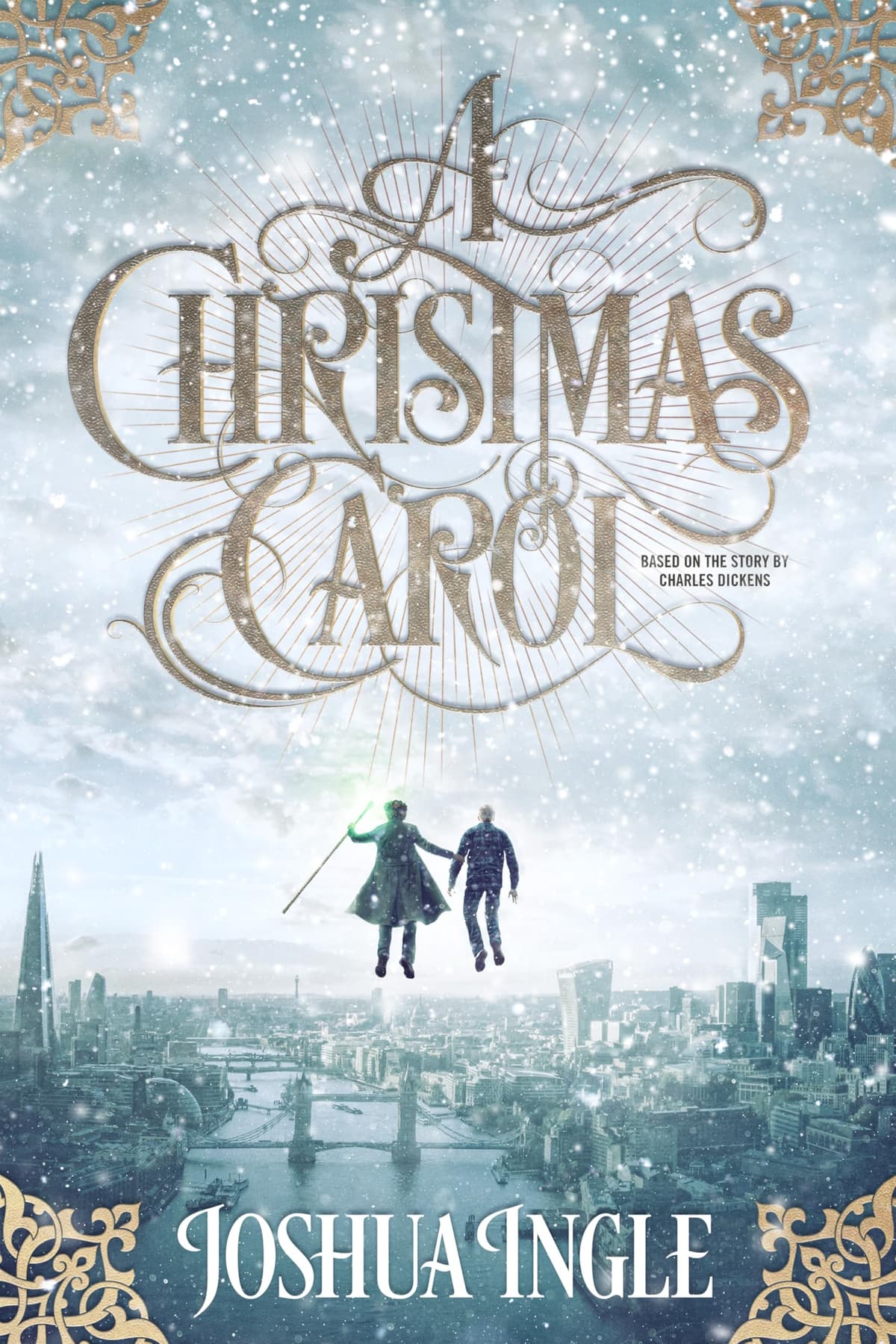
A Christmas Carol
“I will honour Christmas in my heart, and try to keep it all the year.”
A Christmas Carol Summary
On a bitter Christmas Eve in Victorian London, the miserly Ebenezer Scrooge sits alone in his counting house, refusing charity, dismissing his nephew's invitation to dinner, and grudging his underpaid clerk Bob Cratchit even a lump of coal. That night, Scrooge is visited by the ghost of his former business partner, Jacob Marley, who appears in chains forged of his own greed and warns Scrooge that three spirits will come to offer him a chance at redemption. The Ghost of Christmas Past reveals the lonely boy Scrooge once was and the love he sacrificed for money; the Ghost of Christmas Present shows him the warmth of the Cratchit household—and the fragile life of Tiny Tim; the Ghost of Christmas Yet to Come unveils a future of solitary death and indifference.
Dickens wrote A Christmas Carol in a white heat—six weeks of furious composition—and the result is a work of concentrated emotional power that has shaped the very meaning of Christmas in the English-speaking world. It is a ghost story, a social pamphlet, and a moral fable all at once, driven by Dickens's outrage at the condition of England's poor and his unshakable faith in the possibility of human transformation. Scrooge's metamorphosis from miser to benefactor is the great conversion narrative of secular literature—a story so deeply embedded in our culture that its language has become our own. To call someone a "Scrooge" is to invoke Dickens without knowing it.
Why Read A Christmas Carol?
You already know this story—it is woven into the fabric of the culture, retold in countless films and adaptations—but nothing compares to reading Dickens's own words. The original novella crackles with an energy and a fury that no adaptation captures: Dickens's sentences swing from savage social commentary to tender sentiment to ghostly terror with a virtuosity that reminds you why he was the most popular writer of his age. At barely a hundred pages, it is the most efficient emotional demolition in English literature.
A Christmas Carol endures because its central insight is timeless: that it is never too late to change, that generosity is its own reward, and that the measure of a life is not what you accumulate but what you give away. Dickens wrote it to shame a nation into caring for its poorest citizens, and the book did exactly that—it helped transform Christmas from a minor holiday into a season of charity and goodwill. To read it is to feel the original warmth of that transformation.
About Charles Dickens
Charles Dickens (1812–1870) was the most celebrated English novelist of the Victorian era, a literary colossus whose works shaped the conscience of a nation. Born in Portsmouth, his childhood was scarred by his father's imprisonment for debt and his own stint in a boot-blacking factory—experiences that fueled his lifelong crusade against poverty and injustice. He began his career as a journalist and parliamentary reporter before exploding into fame with The Pickwick Papers at the age of twenty-four.
Dickens's prodigious output includes Oliver Twist, David Copperfield, Bleak House, Great Expectations, A Tale of Two Cities, and Our Mutual Friend—novels that combine social criticism with unforgettable characters and baroque plotting. He was also a tireless public performer, giving dramatic readings that drew enormous crowds. His influence on English literature and on the social conscience of the English-speaking world is incalculable; more than any other writer, he gave voice to the voiceless and insisted that society be judged by how it treats its most vulnerable members.
Reading Guide
Ranked #243 among the greatest books of all time, A Christmas Carol by Charles Dickens has earned its place in the literary canon. Originally written in English and published in 1843, this accessible read from United Kingdom continues to resonate with readers today.
This book belongs to our Society & Satire collection, where you can discover more books that share its spirit and themes.
If you enjoy accessible reads like this one, you might also like The Great Gatsby, The Catcher in the Rye, or Pride and Prejudice.
From the Society & Satire Collection
If you enjoyed A Christmas Carol, discover more masterpieces that share its spirit.
 #9View Book
Don Quixote
Miguel de Cervantes
High•35-40 hours #12View Book
Pride and Prejudice
Jane Austen
Accessible•10-12 hours #22View Book
Madame Bovary
Gustave Flaubert
Moderate•12-15 hours #30View Book
Middlemarch
George Eliot
High•30-35 hours
Browse more collections