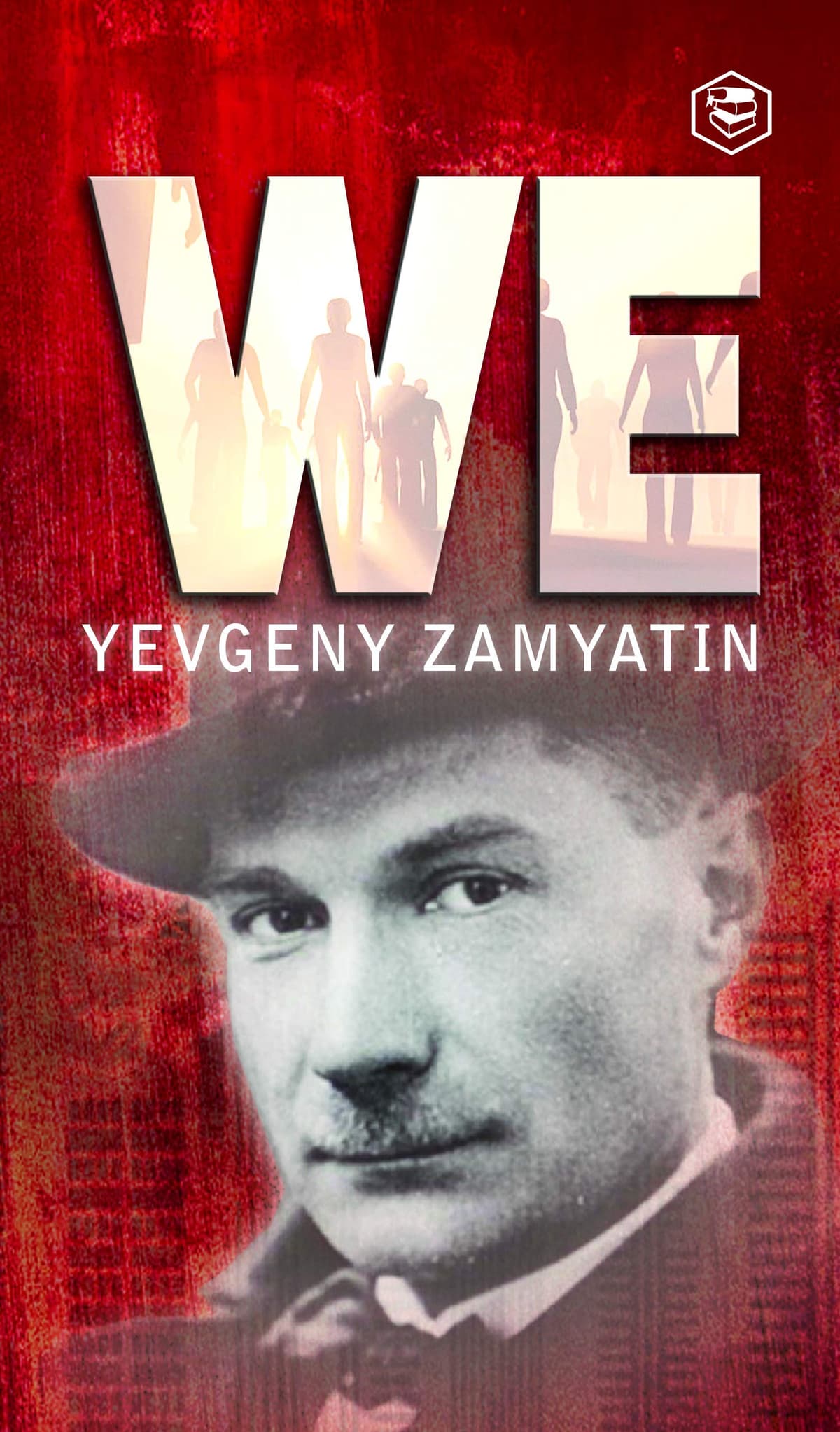
We
“There is no final revolution. Revolutions are infinite.”
We Summary
We is a dystopian novel set in the twenty-sixth century within the One State, a totalitarian society enclosed behind a great Green Wall that separates its citizens from the wild natural world beyond. The narrative takes the form of diary entries written by D-503, a mathematician and engineer who is building the Integral, a spaceship designed to export the One State's ideology to other planets. Citizens of the One State live in glass buildings under constant surveillance, follow rigidly scheduled lives dictated by the Table of Hours, and are identified by numbers rather than names. D-503's ordered existence shatters when he meets I-330, a mysterious woman who introduces him to forbidden pleasures -- music, alcohol, and unsanctioned love -- and draws him into a revolutionary conspiracy to overthrow the authoritarian Benefactor.
Zamyatin's novel holds the distinction of being the first great dystopian novel of the twentieth century, written in 1921 and directly influencing both Aldous Huxley's Brave New World and George Orwell's Nineteen Eighty-Four. Its vision of a society that has sacrificed freedom for mathematical perfection anticipates with eerie precision the surveillance states and technological totalitarianism of the modern era. The novel's power derives from D-503's unreliable narration: as he falls in love and begins to think independently, his mathematical certainties dissolve into confusion, and the reader watches the painful, exhilarating birth of an individual consciousness within a system designed to prevent exactly that. Zamyatin's prose style -- fragmented, fevered, full of mathematical imagery and expressionistic energy -- mirrors D-503's psychological disintegration and makes We not just a political allegory but a genuinely experimental literary work.
Why Read We?
Reading We is like discovering the source code of an entire literary genre. Every dystopian novel you have ever read -- Nineteen Eighty-Four, Brave New World, The Handmaid's Tale -- carries the DNA of Zamyatin's visionary work. But We is far more than a historical curiosity. Its portrayal of a society that has perfected happiness by eliminating freedom, of glass walls that make privacy impossible, and of a state that performs surgery to remove the capacity for imagination feels more prophetic now than it did a century ago. In an age of algorithmic surveillance and digital transparency, Zamyatin's warnings have acquired a chilling new relevance.
Beyond its political prescience, We is a genuinely thrilling reading experience. D-503's diary entries crackle with the energy of a mind breaking free from its programming, and his doomed love affair with the revolutionary I-330 gives the novel an emotional intensity that elevates it above mere allegory. Zamyatin's modernist prose style -- mathematical, fragmented, delirious -- captures the vertigo of a consciousness caught between submission and rebellion. This is the novel that the Soviet state banned and that inspired two of the greatest books of the twentieth century; it deserves to be read on its own extraordinary terms.
About Yevgeny Zamyatin
Yevgeny Ivanovich Zamyatin (1884-1937) was a Russian author, engineer, and dissident whose work anticipated the great dystopian literature of the twentieth century. Trained as a naval engineer at the St. Petersburg Polytechnic Institute, Zamyatin was arrested twice for his involvement with the Bolsheviks before the 1917 Revolution. He spent time in England supervising the construction of icebreakers during World War I, an experience that informed his satirical novella Islanders. After the Revolution, he initially supported the new regime but quickly became disillusioned with its suppression of artistic freedom.
We, written in 1920-1921, could not be published in the Soviet Union and first appeared in English translation in 1924. When a Russian-language edition was published abroad in 1927, Zamyatin was subjected to a vicious campaign of persecution by Soviet literary authorities. In 1931, with the personal intervention of Maxim Gorky, he was allowed to emigrate to Paris, where he lived in poverty until his death. Zamyatin's influence on world literature vastly exceeds his modest fame: George Orwell acknowledged We as a direct inspiration for Nineteen Eighty-Four, and the novel's impact can be traced through virtually all subsequent dystopian fiction. His commitment to artistic independence in the face of totalitarian pressure makes him one of the most courageous figures in twentieth-century letters.
Reading Guide
Ranked #312 among the greatest books of all time, We by Yevgeny Zamyatin has earned its place in the literary canon. Originally written in Russian and published in 1924, this moderate read from Russia continues to resonate with readers today.
This book belongs to our Speculative Futures and Russian Soul collections, where you can discover more books that share its spirit and themes.
If you enjoy moderate reads like this one, you might also like One Hundred Years of Solitude, Nineteen Eighty-Four, or Wuthering Heights.
From the Speculative Futures Collection
If you enjoyed We, discover more masterpieces that share its spirit.
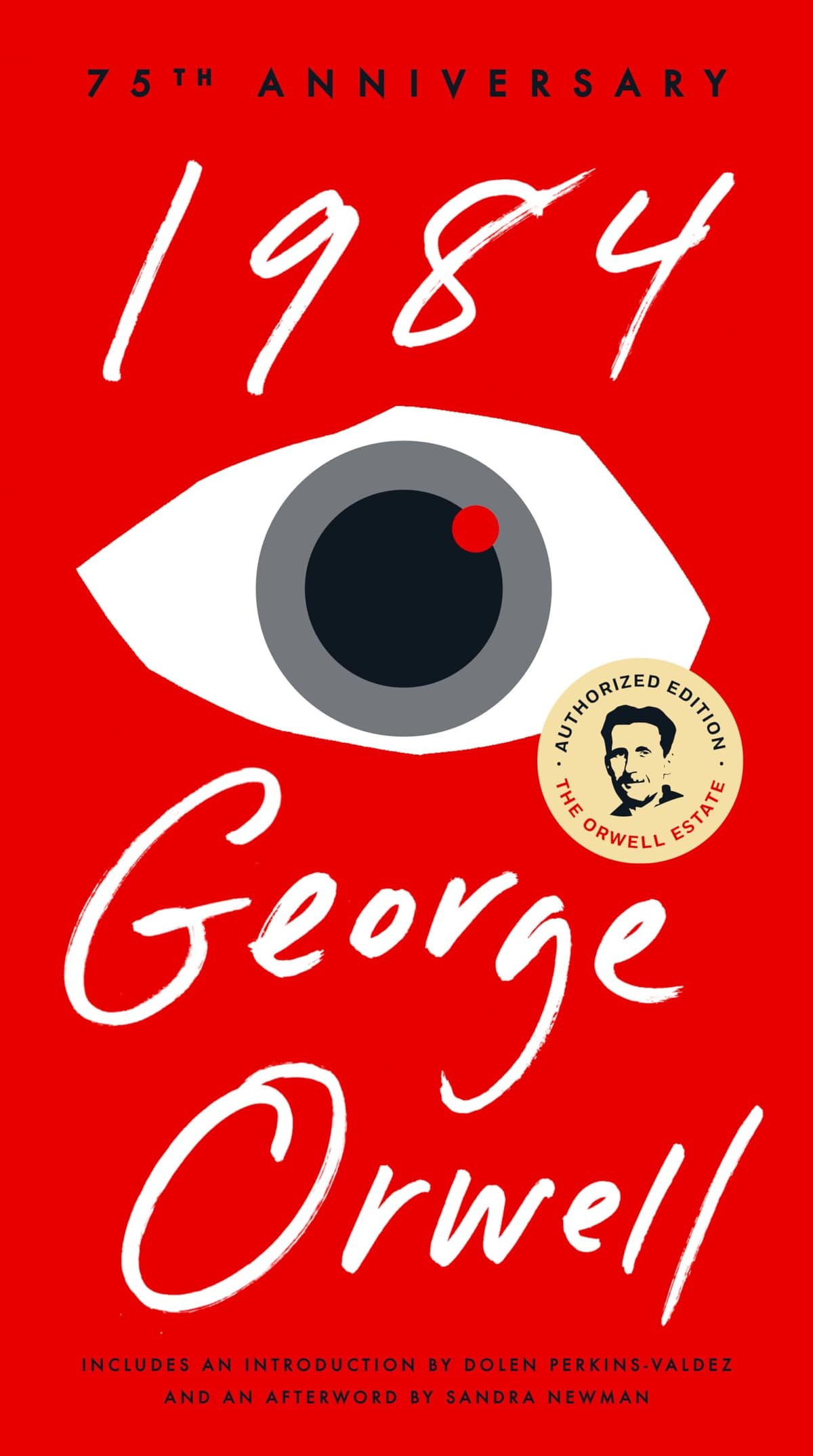 #6View Book
Nineteen Eighty-Four
George Orwell
Moderate•8-10 hours #20View Book
The Trial
Franz Kafka
Moderate•8-10 hours #27View Book
The Magic Mountain
Thomas Mann
High•30-35 hours #41View Book
Frankenstein
Mary Shelley
Accessible•6-8 hours
Browse more collections