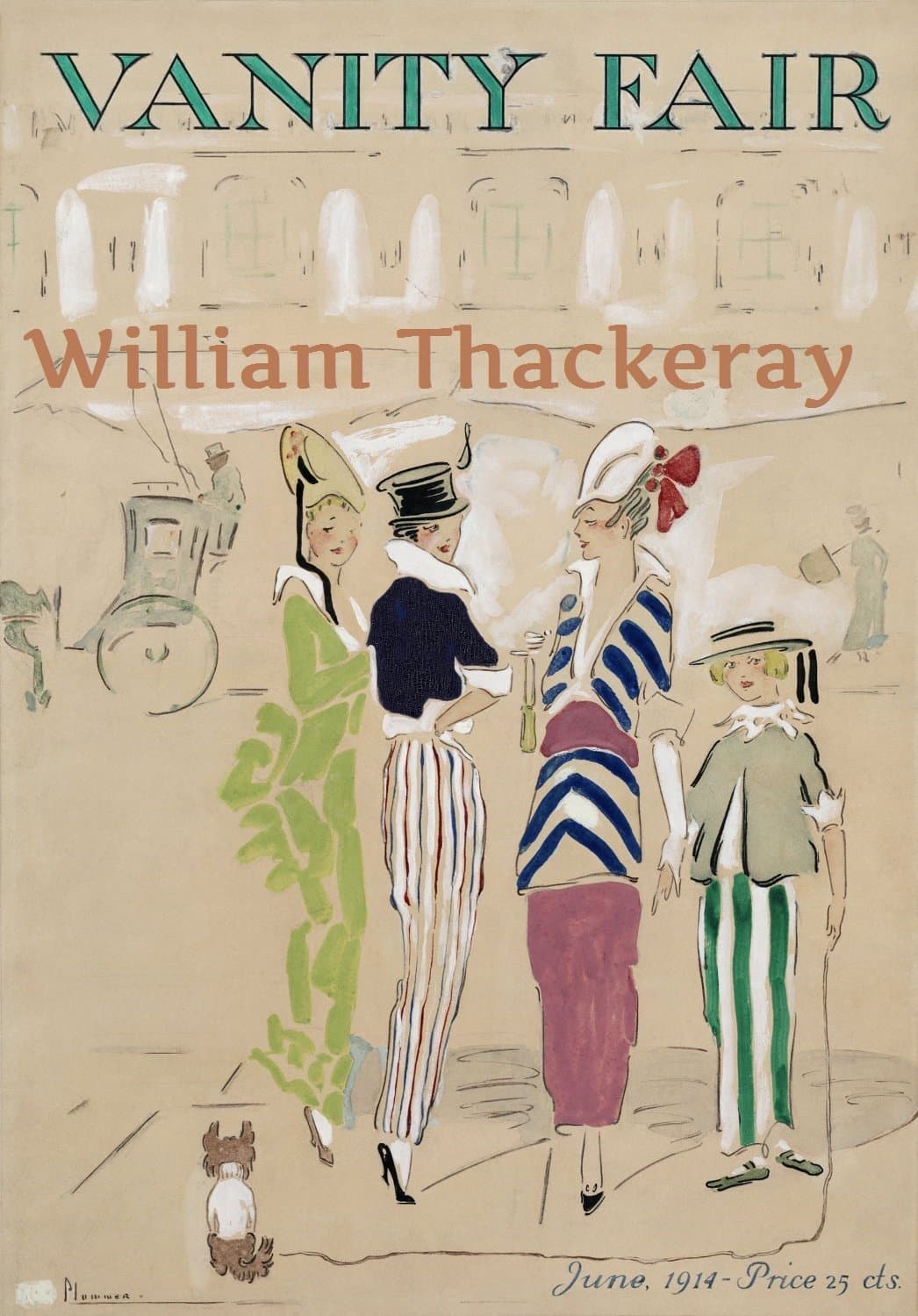
Vanity Fair
“Ah! Vanitas Vanitatum! which of us is happy in this world? Which of us has his desire? or, having it, is satisfied?”
Vanity Fair Summary
Two young women leave Miss Pinkerton's academy and set out to make their way in Regency England. Amelia Sedley is sweet, passive, and destined for heartbreak. Becky Sharp is poor, brilliant, ruthless, and determined to claw her way to the top of a society that would prefer she stay invisible. Their intertwined stories sweep across the great stage of the Napoleonic Wars, from London drawing rooms to the terror of Waterloo, from country estates to debtors' prisons, as Thackeray gleefully exposes the greed, hypocrisy, and social climbing that animate every level of English life.
Thackeray called his novel 'a novel without a hero,' and that is precisely its genius. There is no one to root for unreservedly—Amelia is a doormat, Becky is a schemer, and the men are vain, gullible, or brutal. Instead, the reader is drawn into a vast, cynical, endlessly entertaining puppet show in which the author himself steps forward as the Manager of the Performance, pulling the strings and commenting on the folly of his creations with a mixture of contempt and compassion.
Why Read Vanity Fair?
Vanity Fair is the great satirical novel of the English language—a panoramic, merciless, wickedly entertaining dissection of a society obsessed with money, status, and appearances. Thackeray holds up a mirror to human vanity and finds it everywhere: in the drawing room and on the battlefield, in love affairs and financial transactions, in the pious and the profane alike. If Dickens gives us the warm heart of Victorian England, Thackeray gives us its sharp, unsparing eye.
At the center of it all is Becky Sharp, one of the most indelible characters in fiction—a woman with no money, no connections, and no scruples, who uses her intelligence and charm as weapons in a war against a world stacked against her. She is impossible to admire and impossible not to watch. Thackeray refuses to moralize about her, and that refusal is the novel's greatest strength. Vanity Fair trusts the reader to see the world clearly and draw their own conclusions.
About William Makepeace Thackeray
William Makepeace Thackeray (1811–1863) was Charles Dickens's great rival for the title of foremost Victorian novelist. Born in Calcutta to a prosperous family, he squandered his inheritance through gambling and failed investments before turning to writing out of necessity. He worked as a journalist, illustrator, and satirist before finding his voice as a novelist.
Vanity Fair, published in monthly installments in 1847–48, established him as a literary force equal to Dickens, though where Dickens sentimentalized, Thackeray anatomized. His other major works include Pendennis, The History of Henry Esmond, and The Newcomes. He died suddenly at fifty-two, and his reputation has fluctuated ever since—but Vanity Fair endures as one of the supreme achievements of the English novel.
Reading Guide
Ranked #114 among the greatest books of all time, Vanity Fair by William Makepeace Thackeray has earned its place in the literary canon. Originally written in English and published in 1847, this moderate read from United Kingdom continues to resonate with readers today.
This book belongs to our Society & Satire collection, where you can discover more books that share its spirit and themes.
If you enjoy moderate reads like this one, you might also like One Hundred Years of Solitude, Nineteen Eighty-Four, or Wuthering Heights.
From the Society & Satire Collection
If you enjoyed Vanity Fair, discover more masterpieces that share its spirit.
 #9View Book
Don Quixote
Miguel de Cervantes
High•35-40 hours #12View Book
Pride and Prejudice
Jane Austen
Accessible•10-12 hours #22View Book
Madame Bovary
Gustave Flaubert
Moderate•12-15 hours #30View Book
Middlemarch
George Eliot
High•30-35 hours
Browse more collections