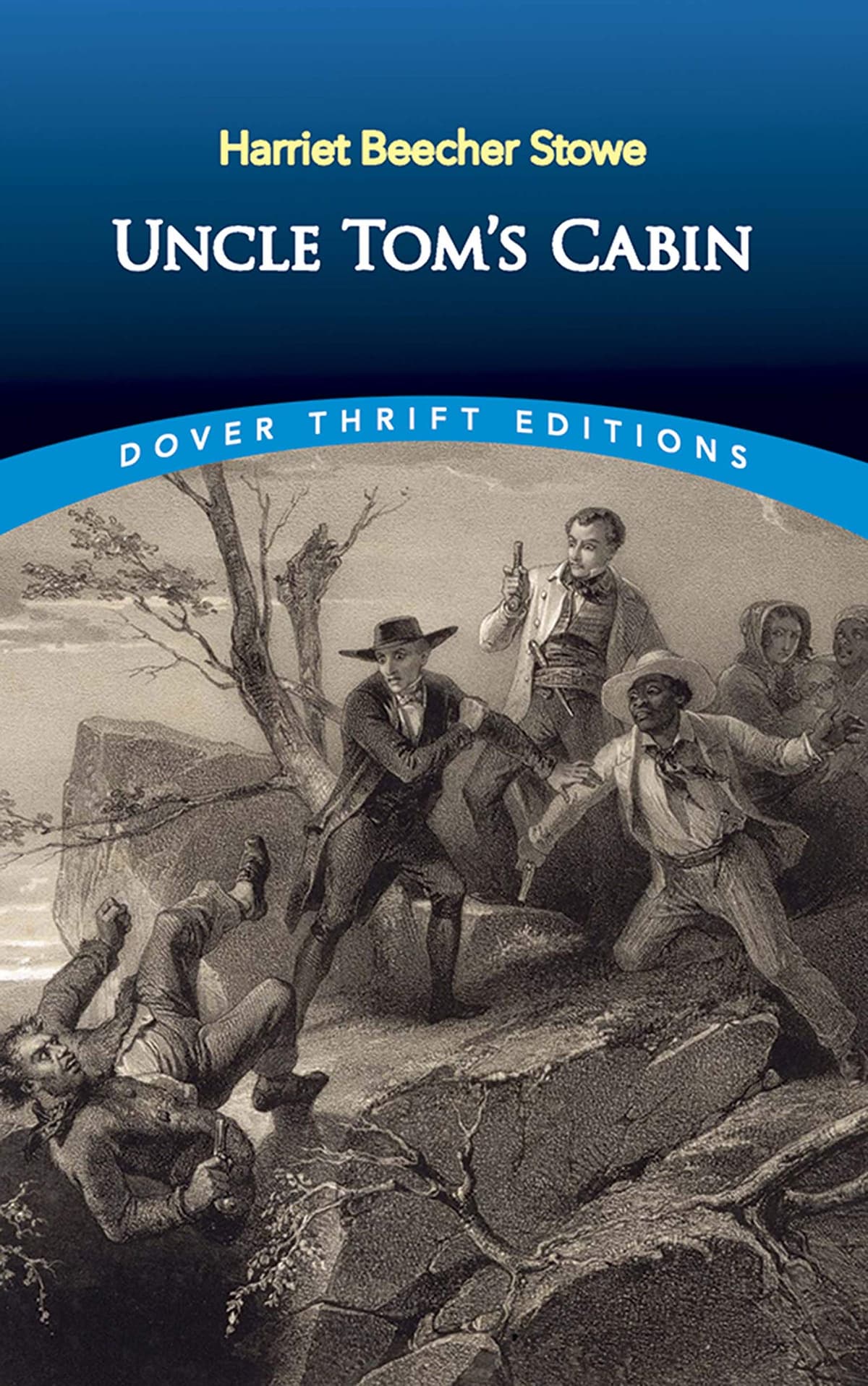
Uncle Tom's Cabin
“The longest day must have its close—the gloomiest night will wear on to a morning.”
Uncle Tom's Cabin Summary
Uncle Tom is a deeply devout, middle-aged enslaved man sold away from his Kentucky home and his wife and children to pay his master's debts. His journey takes him south—first to the household of the kind but weak Augustine St. Clare in New Orleans, where he forms a tender bond with St. Clare's angelic daughter Eva, and then, after a series of betrayals and misfortunes, to the cotton plantation of Simon Legree, a monstrous Yankee slaveholder whose cruelty knows no limits. Tom endures every degradation with a Christian fortitude that infuriates Legree and inspires his fellow captives, and his martyrdom becomes the novel's moral center—a testament to the idea that faith and human dignity can survive even the most inhuman system.
Harriet Beecher Stowe's novel was a literary earthquake. Published in 1852, it sold 300,000 copies in its first year and became the best-selling novel of the nineteenth century, galvanizing abolitionist sentiment across the North and enraging the slaveholding South. Abraham Lincoln reportedly greeted Stowe as "the little woman who wrote the book that started this great war." The novel's sentimentalism and racial caricatures have made it deeply controversial in modern times, yet its historical impact is beyond dispute. Uncle Tom's Cabin forced a nation to confront the human reality of slavery—the severed families, the casual brutality, the moral corruption of both enslaver and enslaved—and in doing so helped ignite the conflagration that would end it.
Why Read Uncle Tom's Cabin?
No novel in American history has had a greater political impact. Uncle Tom's Cabin did not merely reflect the antislavery movement—it accelerated it, putting a human face on an institution that its defenders tried to reduce to economics and abstraction. Stowe's genius was to make her readers feel: to weep over the separation of mothers from children, to rage at the casual cruelty of slaveholders, and to recognize the full humanity of people the law defined as property. Whatever its literary imperfections, it is a book that changed history.
Reading it today is a complicated experience, and that complexity is part of its value. The novel's racial stereotypes and its reliance on Christian sentimentalism will make a modern reader uncomfortable—and they should. But to dismiss the book for these flaws is to miss its enduring power: its insistence that systems of oppression survive by numbing our capacity for empathy, and that stories have the power to restore it. Uncle Tom's Cabin demands that you grapple with the uncomfortable origins of American moral progress, and in doing so, it remains essential.
About Harriet Beecher Stowe
Harriet Beecher Stowe (1811–1896) was born in Litchfield, Connecticut, into one of the most prominent religious families in America. Her father, Lyman Beecher, was a famous Calvinist preacher; her brother Henry Ward Beecher became the most celebrated clergyman of the age. She was educated at the Hartford Female Seminary, founded by her sister Catharine, and later moved to Cincinnati, where her proximity to slaveholding Kentucky and her encounters with fugitive slaves deepened her abolitionist convictions. The passage of the Fugitive Slave Act in 1850 galvanized her to write Uncle Tom's Cabin.
The novel's extraordinary success made Stowe one of the most famous women in the world. She traveled to Europe, where she was received by Queen Victoria, and continued to write prolifically—producing novels, essays, and works of social commentary, including Dred: A Tale of the Great Dismal Swamp, The Minister's Wooing, and Oldtown Folks. Though her literary reputation has fluctuated, her influence on American culture and politics is undeniable. She demonstrated, more powerfully than any writer before or since, that fiction could be a weapon against injustice.
Reading Guide
Ranked #175 among the greatest books of all time, Uncle Tom's Cabin by Harriet Beecher Stowe has earned its place in the literary canon. Originally written in English and published in 1852, this moderate read from United States continues to resonate with readers today.
This book belongs to our American Spirit and Society & Satire collections, where you can discover more books that share its spirit and themes.
If you enjoy moderate reads like this one, you might also like One Hundred Years of Solitude, Nineteen Eighty-Four, or Wuthering Heights.
From the American Spirit Collection
If you enjoyed Uncle Tom's Cabin, discover more masterpieces that share its spirit.
 #3View Book
The Great Gatsby
F. Scott Fitzgerald
Accessible•5-6 hours #4View Book
The Catcher in the Rye
J. D. Salinger
Accessible•6-8 hours #13View Book
Lolita
Vladimir Nabokov
Challenging•12-15 hours #17View Book
To Kill a Mockingbird
Harper Lee
Accessible•8-10 hours
Browse more collections