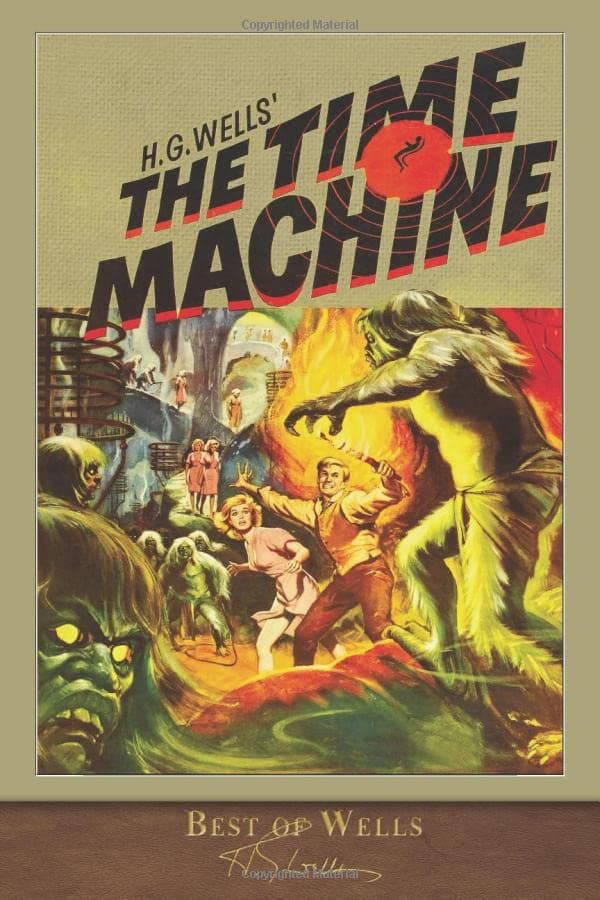
The Time Machine
“We are kept keen on the grindstone of pain and necessity, and, it seemed to me, that here was that hateful grindstone broken at last!”
The Time Machine Summary
An unnamed Time Traveller demonstrates his invention to a group of skeptical dinner guests before embarking on a journey to the year 802,701 AD, where he discovers a world utterly transformed. Humanity has split into two species: the Eloi, beautiful, childlike creatures who live in crumbling palaces above ground, and the Morlocks, pale, ape-like beings who dwell in vast underground machinery and emerge at night to prey upon the Eloi. The Traveller befriends a young Eloi woman named Weena and gradually pieces together the horrifying evolutionary logic behind this divided world, realizing that the class divisions of Victorian England have, over millennia, hardened into a biological separation between leisured surface dwellers and industrialized subterranean workers. When the Morlocks steal his time machine, the Traveller must venture into their dark tunnels to reclaim it and escape.
H. G. Wells's debut novel is one of the foundational texts of science fiction, a work that transformed the genre from mere adventure into a vehicle for serious social and philosophical inquiry. The bifurcation of humanity into Eloi and Morlocks is a savage extrapolation of Victorian class inequality, while the novel's further journey to the dying Earth, where the sun hangs red and bloated over a desolate shore, offers one of the most haunting visions of entropy in all literature. Written with lean, propulsive energy, The Time Machine raises questions about evolution, progress, and the ultimate fate of civilization that remain as urgent now as they were in 1895.
Why Read The Time Machine?
In barely a hundred pages, Wells created a story that redefined the possibilities of science fiction and remains one of the genre's most electrifying achievements. The journey to the year 802,701 unfolds with the pace and suspense of a thriller, yet every revelation carries the weight of a philosophical argument. The Eloi and the Morlocks are not merely monsters and victims but the logical endpoint of a society that allows inequality to deepen unchecked, a warning that strikes with renewed force in every generation.
The novel's final chapters, in which the Traveller pushes further into the future to witness the slow death of the Earth itself, achieve a cosmic grandeur that few works of any genre have matched. Wells strips away every human comfort and confronts the reader with the ultimate indifference of time and nature. Yet the book is never ponderous: it moves with a storyteller's instinct for suspense and image, and its brevity gives it a concentrated power that longer works often lack. The Time Machine is essential reading for anyone interested in science fiction, social criticism, or the art of the short novel.
About H. G. Wells
Herbert George Wells was born in 1866 in Bromley, Kent, to a lower-middle-class family. A scholarship to the Normal School of Science in London brought him under the tutelage of the biologist T. H. Huxley, whose lectures on evolution profoundly shaped Wells's worldview. After working as a teacher and journalist, Wells published The Time Machine in 1895, launching one of the most prolific and influential literary careers of the modern era. In rapid succession he produced The Island of Doctor Moreau, The Invisible Man, and The War of the Worlds, establishing himself as the father of modern science fiction.
Beyond science fiction, Wells wrote realist novels, social comedies, popular histories, and political tracts, becoming one of the most widely read authors in the world. He was a committed socialist and futurist who advocated for world government, free education, and scientific planning, engaging in public debates with figures from Henry James to Joseph Stalin. His influence on science fiction is incalculable: virtually every major theme of the genre, from time travel to alien invasion to biological engineering, can be traced back to his early romances. Wells died in London in 1946, having lived long enough to see many of his fictional warnings about technology and warfare come terrifyingly true.
Reading Guide
Ranked #293 among the greatest books of all time, The Time Machine by H. G. Wells has earned its place in the literary canon. Originally written in English and published in 1895, this accessible read from United Kingdom continues to resonate with readers today.
This book belongs to our Speculative Futures collection, where you can discover more books that share its spirit and themes.
If you enjoy accessible reads like this one, you might also like The Great Gatsby, The Catcher in the Rye, or Pride and Prejudice.
From the Speculative Futures Collection
If you enjoyed The Time Machine, discover more masterpieces that share its spirit.
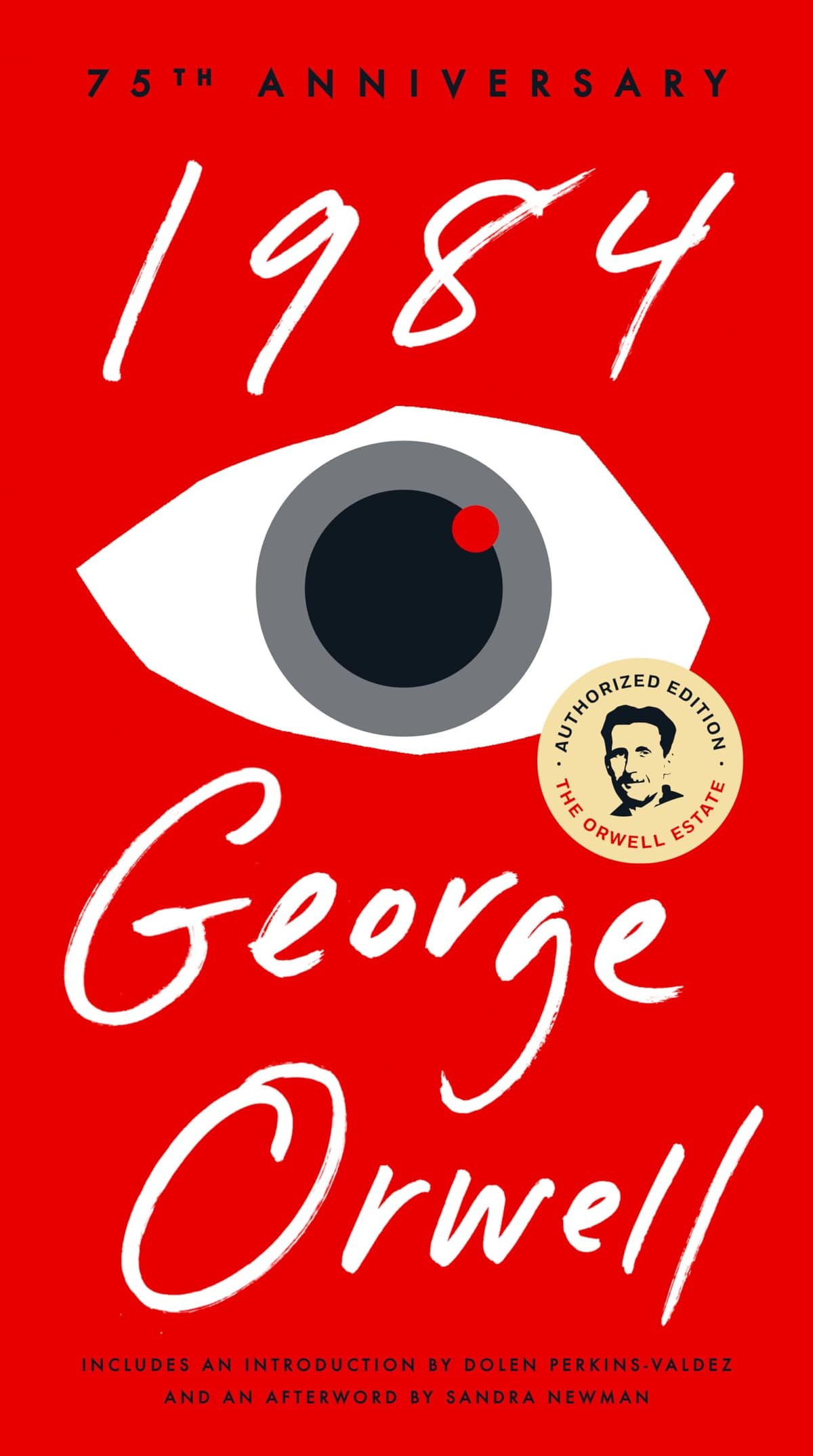 #6View Book
Nineteen Eighty-Four
George Orwell
Moderate•8-10 hours #20View Book
The Trial
Franz Kafka
Moderate•8-10 hours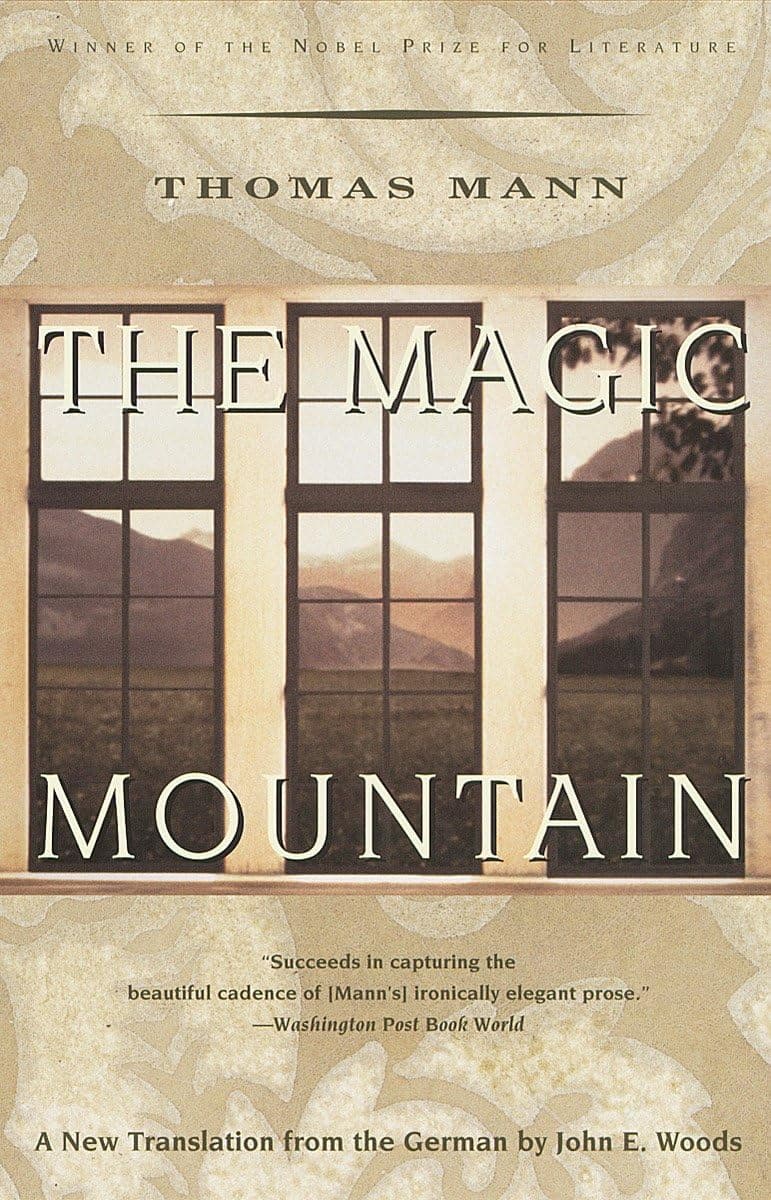 #27View Book
The Magic Mountain
Thomas Mann
High•30-35 hours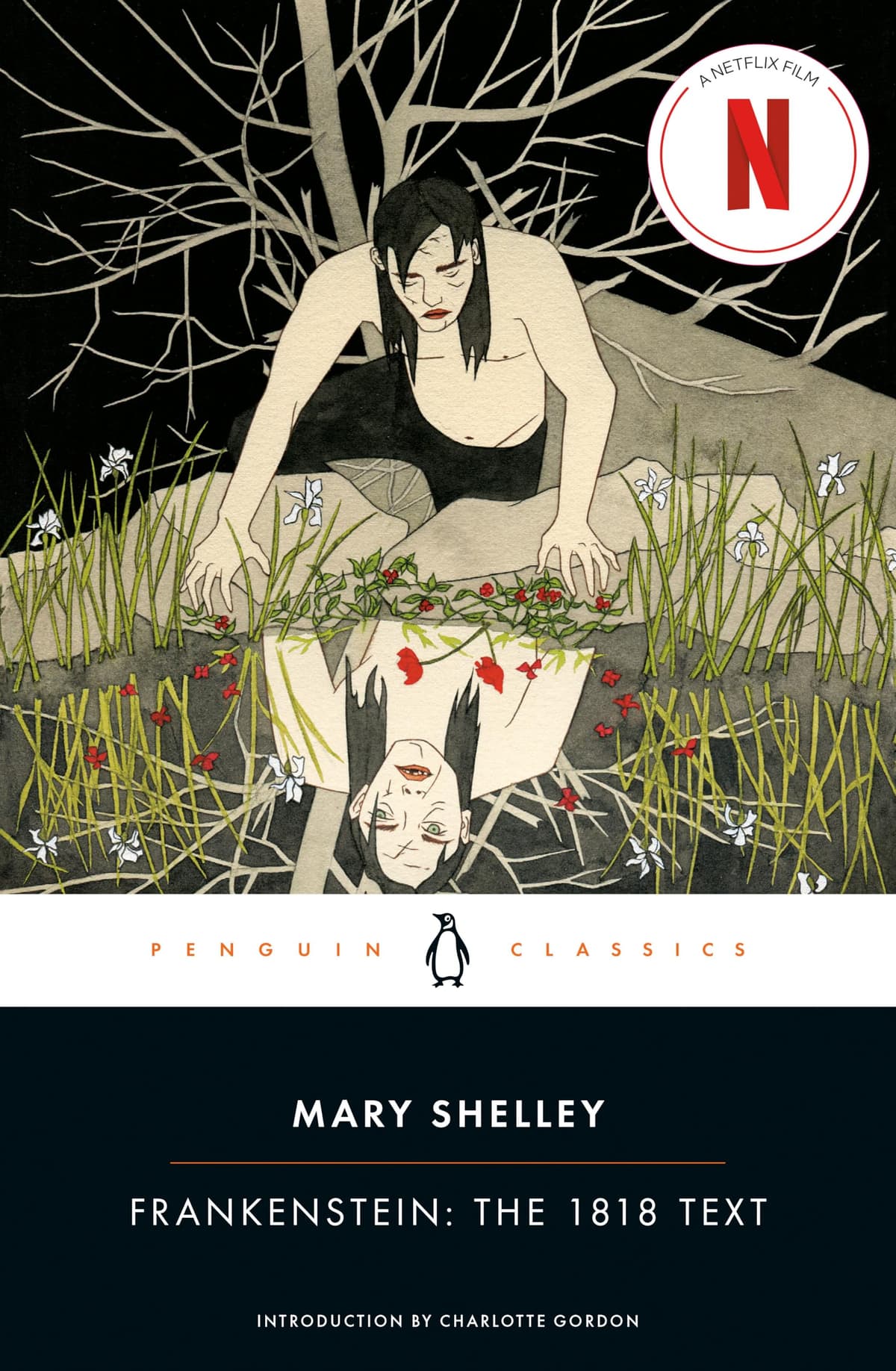 #41View Book
Frankenstein
Mary Shelley
Accessible•6-8 hours
Browse more collections