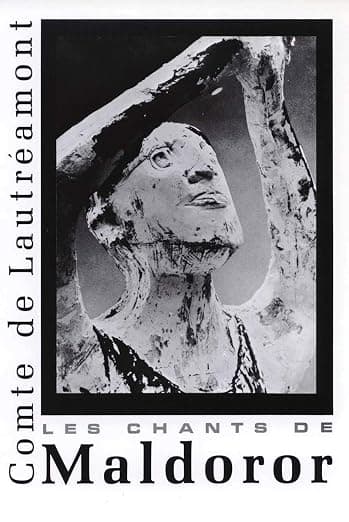
The Songs of Maldoror
“He is as handsome as the retractability of the claws of birds of prey; or, again, as the uncertainty of the muscular movements in wounds of the soft parts of the posterior cervical region.”
The Songs of Maldoror Summary
The Songs of Maldoror erupts onto the page as a sustained howl of rage, cruelty, and black ecstasy. Its titular figure, Maldoror, is a shape-shifting embodiment of evil who wages war against God, humanity, and the very concept of goodness. Across six cantos of hallucinatory prose poetry, he commits acts of extraordinary violence and transgression: he embraces a shark in the open ocean, transforms into an octopus to strangle his victims, watches dispassionately as children are tortured, and engages in blasphemous combat with the Creator. The narrative, if it can be called that, lurches between Gothic horror, savage parody, lyrical nature description, and passages of deliberately absurd metamorphosis. There is no conventional plot; instead, the reader is swept along on a torrent of images that assault, seduce, and disorient in equal measure.
Lautreamont's work was virtually unknown during his brief lifetime but became one of the sacred texts of the Surrealist movement, who saw in it a liberation of the unconscious mind from all moral and aesthetic restraint. Andre Breton called it the supreme expression of the marvelous, and its influence can be traced through Dada, Surrealism, and virtually every subsequent tradition of literary transgression. The Songs of Maldoror is at once a parody of Romantic excess and its apotheosis, a work that takes Byron's Satanic hero to his logical and terrifying conclusion. It is also a profoundly literary work, saturated with references to Homer, Milton, and the Gothic novelists, which it simultaneously honors and demolishes. The book raises questions about the nature of evil, the limits of literary representation, and the relationship between beauty and horror that remain as provocative today as they were in 1868.
Why Read The Songs of Maldoror?
If you have ever felt that literature is too polite, too tame, too committed to the daylight world of reason and propriety, The Songs of Maldoror will shatter that feeling permanently. This is a book that exists at the outermost edge of what language can do, a work of such unrestrained imaginative violence that it makes most experimental literature look timid by comparison. Reading it is not comfortable, but it is exhilarating in the way that encountering something truly new and genuinely dangerous is always exhilarating. You will emerge from it with an expanded sense of what literature is capable of and what the human imagination contains in its darkest recesses.
You should also read The Songs of Maldoror because it is one of the great origin points of modern literary culture. Without Lautreamont, there would be no Surrealism, no Dada, and much of the experimental tradition of the twentieth century would be unimaginable. The Surrealists worshipped this text, and understanding why will illuminate an entire hemisphere of modern art and literature. The book is also, beneath its pyrotechnics, a work of extraordinary linguistic beauty, full of passages that achieve a dark sublimity unmatched in Western literature. It is a short book that casts a very long shadow, and any serious reader of literature should stand in that shadow at least once.
About Comte de Lautréamont
The Comte de Lautreamont was the pen name of Isidore Lucien Ducasse, born in 1846 in Montevideo, Uruguay, to French parents. Almost nothing is known of his inner life; he is one of literature's great enigmas. He was sent to France for his education, attending lycees in Tarbes and Pau before moving to Paris, where he lived in obscurity and apparent poverty. He published the first canto of The Songs of Maldoror in 1868 and the complete work in 1869, though the publisher, alarmed by its content, refused to distribute it. He also wrote Poesies, a pair of brief, cryptic prefaces that appear to repudiate everything Maldoror represents. He died in Paris in 1870 at the age of twenty-four, during the siege of the city in the Franco-Prussian War. The cause of his death is unknown.
Lautreamont's posthumous influence is wildly disproportionate to the slenderness of his output. The Surrealists, who rediscovered his work in the 1920s, elevated him to the status of a prophet, and his famous line about the chance meeting of a sewing machine and an umbrella on a dissecting table became their unofficial motto. His impact extends through the entire tradition of literary transgression, from the Beats to punk to contemporary experimental fiction. He demonstrated that literature could be a vehicle for the irrational, the violent, and the sublime simultaneously, and that a single work of radical imagination could reshape the possibilities of an entire art form. The mystery of his life only deepens his legend: he remains a figure of pure literary fire, consumed almost as quickly as he blazed.
Reading Guide
Ranked #461 among the greatest books of all time, The Songs of Maldoror by Comte de Lautréamont has earned its place in the literary canon. Originally written in French and published in 1868, this challenging read from France continues to resonate with readers today.
This book belongs to our Gothic & Dark collection, where you can discover more books that share its spirit and themes.
If you enjoy challenging reads like this one, you might also like Ulysses, Moby-Dick, or Lolita.
From the Gothic & Dark Collection
If you enjoyed The Songs of Maldoror, discover more masterpieces that share its spirit.
 #15View Book
Wuthering Heights
Emily Brontë
Moderate•10-12 hours #29View Book
Jane Eyre
Charlotte Brontë
Accessible•15-20 hours #41View Book
Frankenstein
Mary Shelley
Accessible•6-8 hours #44View Book
Absalom, Absalom!
William Faulkner
Very High•12-15 hours
Browse more collections