Peter and Wendy
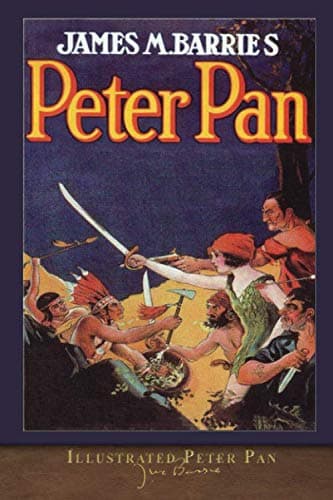
“To die will be an awfully big adventure.”
Peter and Wendy Summary
Peter and Wendy tells the story of the Darling children—Wendy, John, and Michael—who are spirited away from their London nursery by Peter Pan, a boy who refuses to grow up, and his fairy companion Tinker Bell. They fly to Neverland, a magical island populated by the Lost Boys, a tribe of warriors, mermaids, and the fearsome Captain Hook and his pirate crew. Wendy becomes a mother figure to the Lost Boys, telling them stories and tending to their underground home, while Peter leads them on adventures against Hook, whose obsessive hatred of Peter stems from Peter having cut off his hand and fed it to a crocodile that now stalks him, its ticking clock a constant reminder of approaching doom. The climactic battle aboard Hook's ship ends in the pirate captain's defeat, and the children return home to their grieving parents—all except Peter, who flies away, already forgetting.
J. M. Barrie's novel is far darker and more psychologically complex than its many adaptations suggest. Its narrator is wry, unsettling, and occasionally cruel, reflecting on the selfishness of children and the heartbreak of parents with an irony that cuts deep. Peter Pan is not simply a celebration of childhood; he is a figure of profound ambivalence—eternally young but incapable of love, memory, or growth. The book explores the painful necessity of growing up, the impossibility of holding onto innocence, and the bittersweet relationship between mothers and children. Beneath its fairy-tale surface, Peter and Wendy is a meditation on time, loss, and the stories we tell to make sense of both.
Why Read Peter and Wendy?
Reading Peter and Wendy as an adult is a genuinely startling experience. The story you think you know from films and pantomimes turns out to be stranger, sadder, and more sophisticated than any adaptation has captured. Barrie's narrator is witty and unsettling, capable of shifting from whimsy to genuine menace within a single sentence. The Neverland he creates is not a safe playground but a place where children can die, where forgetting is Peter's defining characteristic, and where the line between adventure and cruelty is disturbingly thin. It is one of the great works of English fantasy precisely because it takes its own darkness seriously.
Beyond its literary pleasures, this novel confronts questions that matter deeply to anyone who has ever been a child or raised one. What do we lose when we grow up? What do we gain? Is Peter Pan a figure of liberation or tragedy—or both? Barrie refuses easy answers, and his novel resonates differently at every stage of life. Children read it as adventure; parents read it through tears. It is short, exquisitely written, and guaranteed to make you see one of the world's most familiar stories with entirely new eyes.
About J. M. Barrie
James Matthew Barrie was born in 1860 in Kirriemuir, Scotland, the ninth of ten children in a weaver's family. The death of his older brother David in a skating accident when Barrie was six profoundly shaped his imagination; his mother's grief and her idealization of the boy who would never grow up became a central preoccupation of his work. Barrie studied at the University of Edinburgh and became a successful novelist and playwright in London, but his greatest creation emerged from stories he told to the Llewelyn Davies boys, five brothers he befriended in Kensington Gardens. Peter Pan first appeared as a character in Barrie's 1902 novel The Little White Bird before becoming the hero of the 1904 play Peter Pan, or the Boy Who Wouldn't Grow Up, and the 1911 novel Peter and Wendy.
Barrie was one of the most successful dramatists of the Edwardian era, and Peter Pan made him enormously wealthy. He donated the copyright to Great Ormond Street Hospital for children, a gift that continues to generate revenue for the institution. His personal life was marked by an unconsummated marriage, the deaths of two of the Llewelyn Davies boys, and a complex psychology that biographers have debated for decades. He was made a baronet in 1913 and received the Order of Merit in 1922. Barrie died in 1937 in London. His legacy rests almost entirely on Peter Pan, a character who has become one of the most enduring figures in world literature and a permanent symbol of childhood, imagination, and the flight from mortality.
Reading Guide
Ranked #303 among the greatest books of all time, Peter and Wendy by J. M. Barrie has earned its place in the literary canon. Originally written in English and published in 1911, this accessible read from Scotland continues to resonate with readers today.
This book belongs to our Love & Loss collection, where you can discover more books that share its spirit and themes.
If you enjoy accessible reads like this one, you might also like The Great Gatsby, The Catcher in the Rye, or Pride and Prejudice.
From the Love & Loss Collection
If you enjoyed Peter and Wendy, discover more masterpieces that share its spirit.
 #3View Book
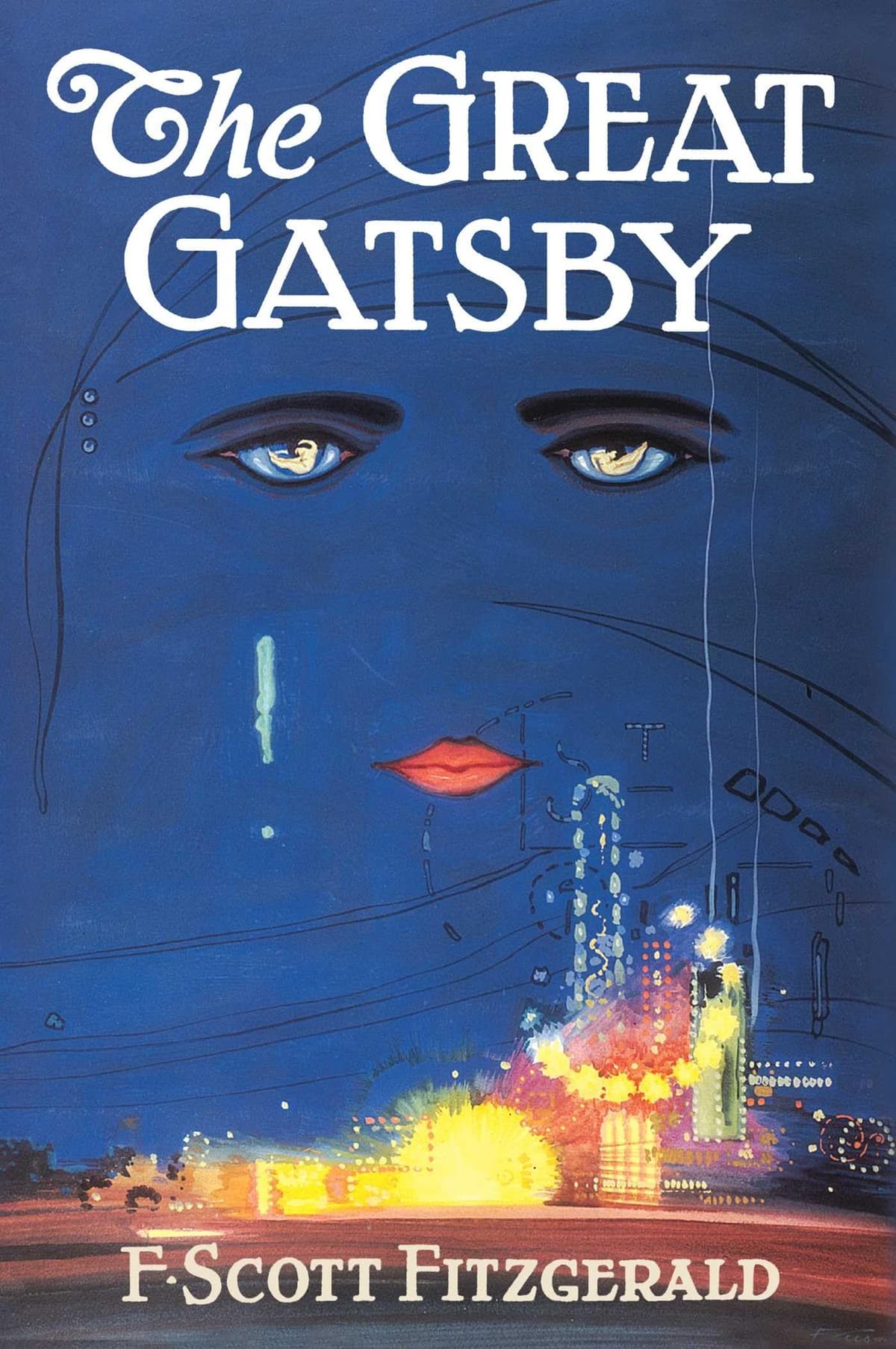
The Great Gatsby
F. Scott Fitzgerald
Accessible•5-6 hours #10View Book
Anna Karenina
Leo Tolstoy
High•30-35 hours #12View Book
Pride and Prejudice
Jane Austen
Accessible•10-12 hours #15View Book
Wuthering Heights
Emily Brontë
Moderate•10-12 hours
Browse more collections