Meditations
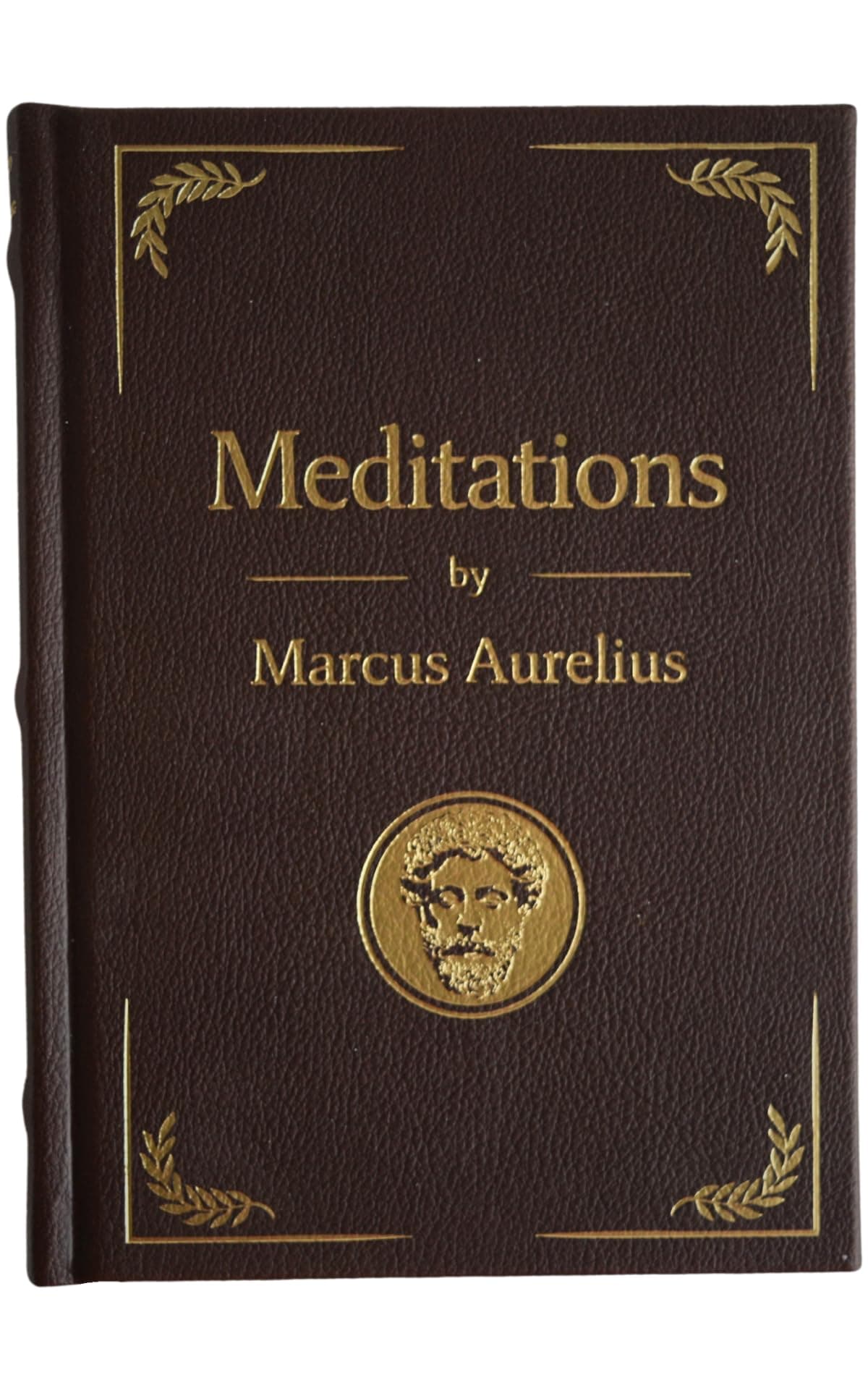
“The happiness of your life depends upon the quality of your thoughts.”
Meditations Summary
Meditations is the private journal of Marcus Aurelius, Roman Emperor from 161 to 180 CE, written during the last decade of his life while he commanded military campaigns along the Danube frontier. Never intended for publication, the work consists of twelve books of reflections, exhortations, and reminders addressed entirely to himself. Marcus counsels himself to accept what cannot be changed, to act justly regardless of how others behave, to remember the transience of all things—fame, pleasure, the empire itself—and to find peace through alignment with reason and nature. He returns obsessively to the shortness of life, the insignificance of human affairs when viewed against the vastness of time, and the importance of fulfilling one's duties without complaint or expectation of reward. The entries range from single sentences to extended philosophical arguments, creating an intimate portrait of a mind in constant dialogue with itself.
As the last great document of Stoic philosophy, Meditations distills centuries of Greek and Roman thought into a practical guide for living with integrity under impossible pressures. What makes the work extraordinary is its context: these are not the reflections of a cloistered philosopher but of the most powerful man in the Western world, wrestling with the same anxieties, frustrations, and temptations that afflict every human being. Marcus' unflinching awareness of his own mortality—he was writing during a devastating plague and endless frontier wars—gives his meditations an urgency that transcends their historical moment. The work has influenced thinkers from Montaigne and Frederick the Great to modern cognitive behavioral therapy, and its core message—that the only thing within our control is how we respond to what happens to us—remains one of the most powerful and consoling ideas in the history of philosophy.
Why Read Meditations?
Meditations is the rare philosophical work that feels as though it was written for you personally. Marcus Aurelius was not constructing a system or addressing an audience; he was talking to himself, trying to be a better person in the face of exhaustion, grief, and the crushing weight of responsibility. This directness gives the text an emotional immediacy that formal philosophy rarely achieves. When Marcus reminds himself that even emperors are forgotten, that pain is temporary, that anger harms the angry person most of all, he speaks across two millennia with the authority of lived experience.
The practical value of this book is extraordinary. In an age of anxiety, distraction, and information overload, Marcus offers a framework for focusing on what actually matters: your own character, your treatment of others, your acceptance of what you cannot control. The Meditations has been a companion to military leaders, entrepreneurs, therapists, and ordinary people seeking to navigate difficult lives with grace and resilience. It is short enough to read in a weekend, deep enough to study for a lifetime, and honest enough to meet you wherever you are. There is no better introduction to Stoic thought, and no more powerful demonstration of philosophy as a way of life rather than an academic exercise.
About Marcus Aurelius
Marcus Aurelius was born in 121 CE in Rome into a distinguished family with political connections. Adopted by Emperor Antoninus Pius at the direction of Hadrian, he received an extraordinary education in rhetoric, law, and philosophy, developing a particular devotion to Stoicism under the tutelage of teachers he names with gratitude in the opening book of the Meditations. He became emperor in 161 CE and ruled for nearly two decades, a period marked by plague, frontier wars against Germanic tribes, and internal rebellion. Despite these challenges, ancient sources consistently describe him as a just and conscientious ruler.
Marcus Aurelius is remembered as the last of the "Five Good Emperors" and the philosopher-king that Plato envisioned. His Meditations, written in Greek during his military campaigns and never intended for publication, survived by chance and has become one of the most widely read works of ancient literature. The text profoundly influenced Renaissance humanism, Enlightenment moral philosophy, and modern therapeutic practices, particularly cognitive behavioral therapy and resilience training. Marcus died in 180 CE, likely of plague, at his military headquarters near modern Vienna. His death is often cited as marking the end of the Pax Romana and the beginning of Rome's long decline, lending poignant weight to his own reflections on impermanence and the passage of empires.
Reading Guide
Ranked #302 among the greatest books of all time, Meditations by Marcus Aurelius has earned its place in the literary canon. Originally written in Greek and published in 161, this moderate read from Rome continues to resonate with readers today.
This book belongs to our Philosophy & Faith collection, where you can discover more books that share its spirit and themes.
If you enjoy moderate reads like this one, you might also like One Hundred Years of Solitude, Nineteen Eighty-Four, or Wuthering Heights.
From the Philosophy & Faith Collection
If you enjoyed Meditations, discover more masterpieces that share its spirit.
 #11View Book
Crime and Punishment
Fyodor Dostoevsky
High•20-25 hours #18View Book
The Bible
Various
Variable•60-80 hours #19View Book
The Brothers Karamazov
Fyodor Dostoevsky
Very High•35-40 hours #21View Book
The Stranger
Albert Camus
Moderate•3-4 hours
Browse more collections