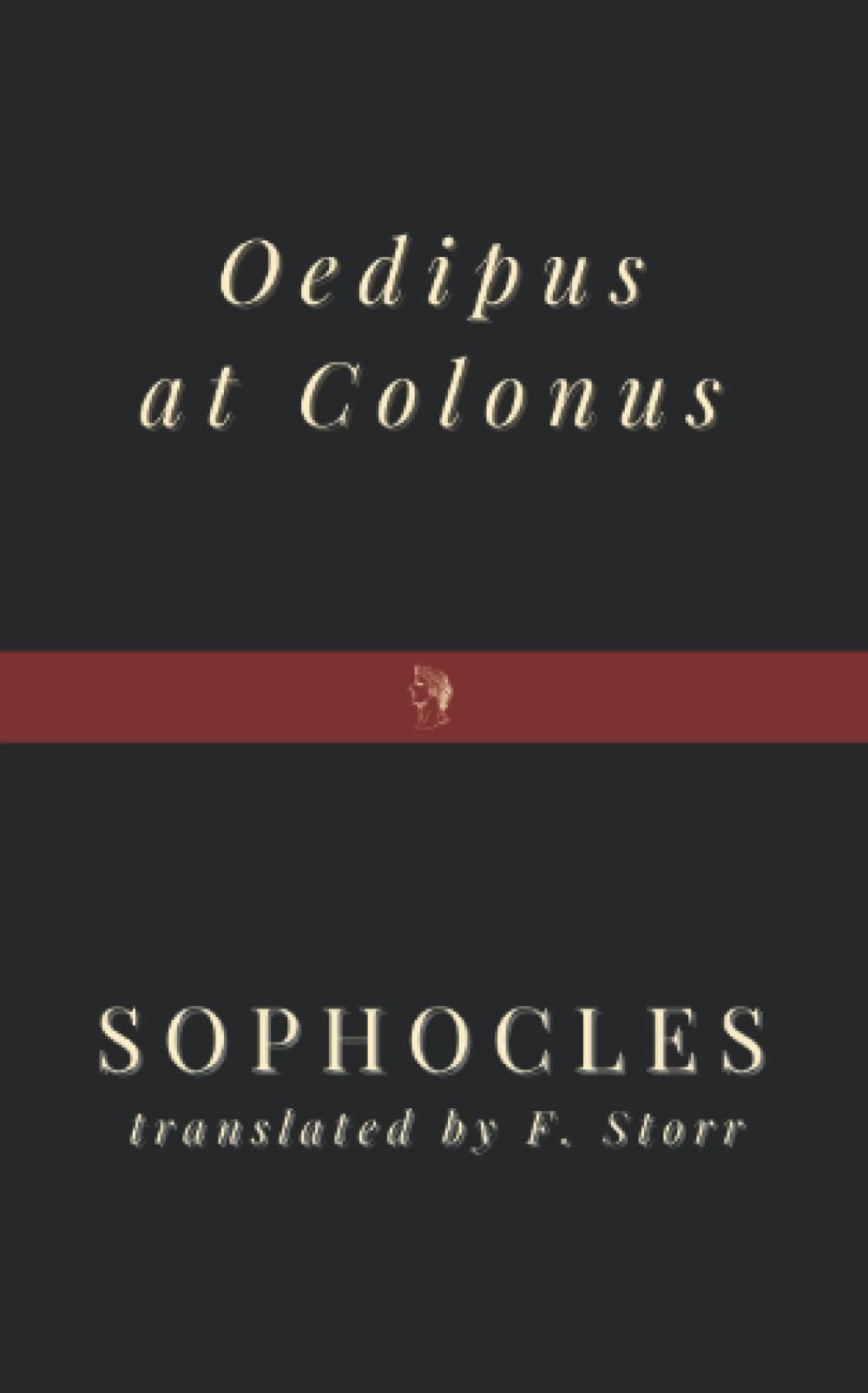
Oedipus at Colonus
“Not to be born is, past all prizing, best; but, when a man has seen the light, the next best thing by far is to go back where he came from, as quickly as he can.”
Oedipus at Colonus Summary
Blind, exiled, and near death, Oedipus arrives at Colonus, a sacred grove outside Athens, guided by his devoted daughter Antigone. Though the local citizens recoil at the presence of a man cursed by patricide and incest, Oedipus seeks sanctuary from Theseus, king of Athens. His peace is threatened by Creon, who attempts to kidnap his daughters to force his return to Thebes, and by his son Polynices, who begs for his father's blessing in the coming war against his brother Eteocles. Oedipus refuses both, unleashing a devastating curse upon his sons before departing to a mysterious, divinely ordained death whose secret location will forever protect Athens.
Written at the end of Sophocles' life and produced posthumously in 401 BCE, Oedipus at Colonus is the playwright's most meditative and spiritual work. Where Oedipus Rex is a drama of relentless revelation, this final play moves with the slow gravity of ritual, transforming a broken outcast into a figure of numinous power. The language shifts between fierce invective and passages of extraordinary lyrical beauty, particularly in the famous ode to Colonus that celebrates the Attic landscape. Sophocles uses the conventions of supplication tragedy to explore the paradox at the heart of Greek religion: that pollution and sanctity can inhabit the same body, and that suffering, carried long enough, becomes its own form of grace.
Why Read Oedipus at Colonus?
If you have read Oedipus Rex, you owe it to yourself to witness how Sophocles closes the circle. This is not a sequel in any conventional sense but a profound reimagining of what becomes of a man after catastrophe has stripped away everything. You will encounter Oedipus not as the proud solver of riddles but as a figure of terrifying moral authority, someone whose very suffering has become a source of power. The play's central question resonates far beyond antiquity: can a person be guilty and innocent at the same time, and what does it mean to find peace without forgiveness?
You should also read this play for its sheer dramatic beauty. The confrontation between Oedipus and his son Polynices is one of the most emotionally devastating scenes in all of Western literature, a father's curse delivered with a fury that makes clear how love and hatred can be indistinguishable. The choral ode praising Colonus stands as one of the supreme lyric achievements of the ancient world. And the final scene, in which Oedipus walks unaided to his mysterious death, achieves something rare in drama: a sense of genuine transcendence, where the boundary between the human and the divine dissolves before your eyes.
About Sophocles
Sophocles (c. 496-406 BCE) was born into a wealthy family in Colonus, the very setting of this final play, just outside Athens. He lived through the golden age of Athenian democracy and its devastating collapse, serving as a general alongside Pericles and holding public office as a treasurer and priest. He wrote over 120 plays across a career spanning more than six decades, winning first prize at the Festival of Dionysus at least eighteen times, a record never surpassed. He is credited with introducing the third actor to the stage, expanding the dramatic possibilities of tragedy beyond anything his predecessors imagined.
Of his vast output, only seven complete tragedies survive: Ajax, Antigone, Oedipus Rex, Electra, The Women of Trachis, Philoctetes, and Oedipus at Colonus. Together they constitute some of the foundational texts of Western literature, exploring the collision between human will and divine order with unmatched psychological depth. Aristotle held up Oedipus Rex as the ideal tragedy in his Poetics, and Sophocles' influence reverberates through Seneca, Shakespeare, Racine, and modern dramatists from Eugene O'Neill to Wole Soyinka. He died at approximately ninety years of age, and Oedipus at Colonus was staged posthumously by his grandson, making it both a farewell to the theater and a homecoming to the place of his birth.
Reading Guide
Ranked #365 among the greatest books of all time, Oedipus at Colonus by Sophocles has earned its place in the literary canon. Originally written in Ancient Greek and published in -401, this challenging read from Greece continues to resonate with readers today.
This book belongs to our Philosophy & Faith and Love & Loss collections, where you can discover more books that share its spirit and themes.
If you enjoy challenging reads like this one, you might also like Ulysses, Moby-Dick, or Lolita.
From the Philosophy & Faith Collection
If you enjoyed Oedipus at Colonus, discover more masterpieces that share its spirit.
 #11View Book
Crime and Punishment
Fyodor Dostoevsky
High•20-25 hours #18View Book
The Bible
Various
Variable•60-80 hours #19View Book
The Brothers Karamazov
Fyodor Dostoevsky
Very High•35-40 hours #21View Book
The Stranger
Albert Camus
Moderate•3-4 hours
Browse more collections