Medea
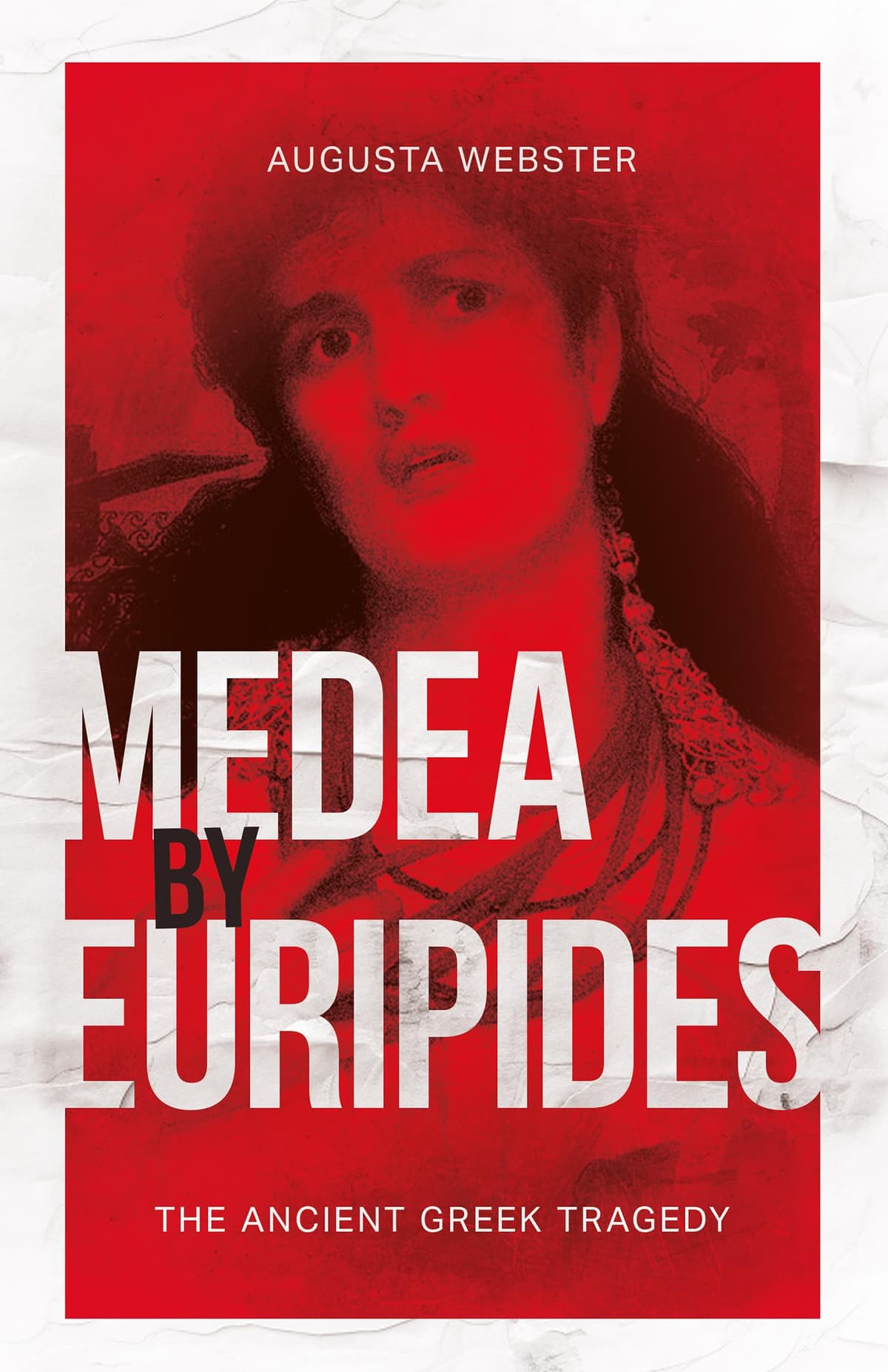
“Of all things which are living and can form a judgment, we women are the most unfortunate creatures.”
Medea Summary
Medea, first performed in 431 BCE, opens in Corinth where the sorceress Medea has been abandoned by her husband Jason, who has taken a new bride—the daughter of King Creon—to advance his political ambitions. Having sacrificed everything for Jason—betraying her father, murdering her brother, leaving her homeland—Medea finds herself a foreign woman with no rights, no family, and no recourse. Creon, fearing her reputation for sorcery, orders her banished. Medea pleads for a single day's reprieve, and in that day she executes a devastating plan of revenge: she sends a poisoned robe and crown to Jason's new bride, killing both the princess and her father, then commits the most shocking act in Greek tragedy by murdering her own two sons. She escapes in a chariot sent by her grandfather Helios, the sun god, leaving Jason utterly destroyed.
Euripides' tragedy is a searing examination of what happens when a brilliant, passionate woman is pushed beyond all endurance by a society that treats her as disposable. The play interrogates the institutions of marriage, exile, and patriarchal power with a frankness that stunned ancient audiences and continues to provoke modern ones. Medea is neither simply villain nor victim; she is a fully realized character whose intelligence and suffering make her monstrous actions comprehensible, if never comfortable. Euripides grants her the most persuasive rhetoric in the play, forcing the audience to confront their own sympathies. The work raises questions about justice, gender, and the limits of human endurance that remain as urgent today as they were in fifth-century Athens.
Why Read Medea?
Medea is a play that seizes you by the throat and never lets go. In fewer than a hundred pages, Euripides creates one of the most complex and terrifying characters in all of literature—a woman whose love has curdled into something beyond rage, beyond grief, into a cold calculus of annihilation. The emotional intensity of the work is extraordinary, building from Medea's anguished opening cries to a climax that has haunted audiences for two and a half millennia. Every line crackles with rhetorical power and psychological precision.
What makes this play indispensable is its refusal to offer easy moral categories. Euripides forces you to hold multiple truths simultaneously: that Medea's suffering is real, that Jason's betrayal is contemptible, and that her revenge is an atrocity. The play's exploration of what it means to be a foreigner, a woman, and a person with no institutional power resonates across centuries and cultures. Reading or watching Medea is an encounter with the foundations of Western drama and a reminder that the greatest literature does not comfort us—it makes us see.
About Euripides
Euripides was born around 480 BCE in Salamis, Greece, and became one of the three great tragedians of classical Athens, alongside Aeschylus and Sophocles. Ancient sources suggest he was a reclusive figure who preferred his library to public life, and his plays were often controversial in his own time, winning far fewer prizes at the Dionysia than those of his rivals. He is believed to have written around ninety plays, of which eighteen tragedies and one satyr play survive—the largest surviving body of work from any ancient dramatist. Late in life, he left Athens for the court of King Archelaus of Macedon, where he died around 406 BCE.
Euripides revolutionized Greek tragedy by bringing ordinary human psychology to the stage, giving voice to women, slaves, and outsiders in ways that challenged Athenian social norms. His influence on subsequent literature is immeasurable; Aristotle called him the most tragic of the poets, and his works shaped Roman drama, Renaissance theater, and modern playwriting. Medea, The Bacchae, Hippolytus, and The Trojan Women remain cornerstones of the theatrical repertoire. His willingness to question the gods, expose the cruelty of war, and portray the complexity of human motivation marks him as one of the earliest and most powerful voices for humanistic inquiry in Western civilization.
Reading Guide
Ranked #297 among the greatest books of all time, Medea by Euripides has earned its place in the literary canon. Originally written in Ancient Greek and published in -431, this moderate read from Greece continues to resonate with readers today.
This book belongs to our Love & Loss collection, where you can discover more books that share its spirit and themes.
If you enjoy moderate reads like this one, you might also like One Hundred Years of Solitude, Nineteen Eighty-Four, or Wuthering Heights.
From the Love & Loss Collection
If you enjoyed Medea, discover more masterpieces that share its spirit.
 #3View Book
The Great Gatsby
F. Scott Fitzgerald
Accessible•5-6 hours #10View Book
Anna Karenina
Leo Tolstoy
High•30-35 hours #12View Book
Pride and Prejudice
Jane Austen
Accessible•10-12 hours #15View Book
Wuthering Heights
Emily Brontë
Moderate•10-12 hours
Browse more collections