Man's Fate
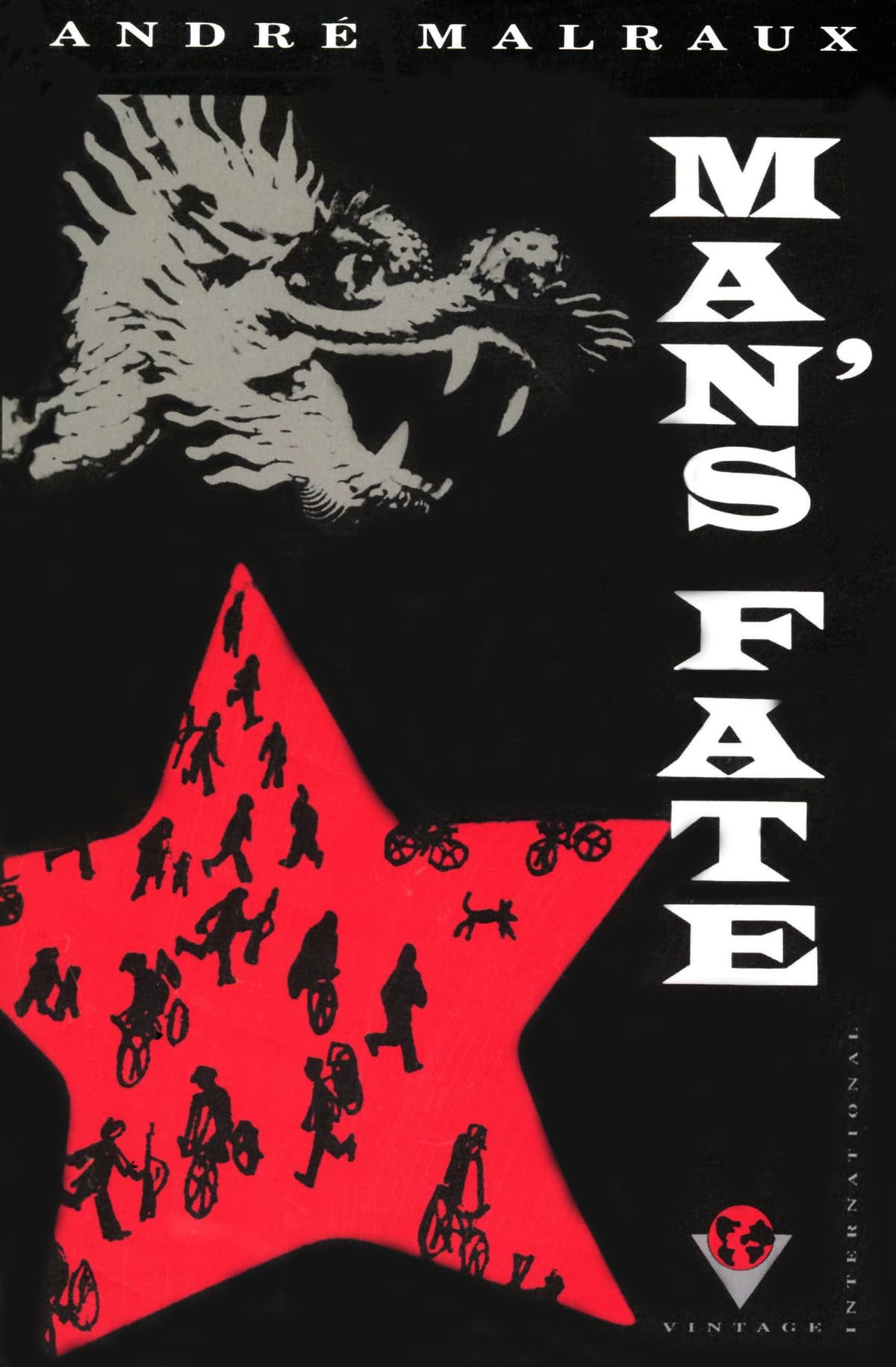
“The great mystery is not that we should have been thrown down here at random between the profusion of matter and that of the stars; it is that from our very prison we should draw, from our own selves, images powerful enough to deny our own nothingness.”
Man's Fate Summary
Shanghai, March 1927. Chiang Kai-shek is about to betray the Communist revolutionaries who helped bring him to power, and a small band of insurrectionists—armed with smuggled weapons and desperate conviction—attempt to seize the city before the inevitable crackdown. At the center of the conspiracy is Ch'en Ta-erh, a young terrorist consumed by the metaphysics of assassination; Kyo Gisors, a half-French, half-Japanese organizer whose commitment to the revolution is inseparable from his love for his wife, May; and Kyo's father, old Gisors, an opium-addicted intellectual who watches the catastrophe unfold with the detached melancholy of a man who has seen too much. Around them swirl arms dealers, warlords, police chiefs, and a Russian emissary who must sacrifice the Shanghai communists to preserve Moscow's alliance with Chiang.
André Malraux's novel is a ferocious meditation on action, ideology, and the meaning of human dignity in the face of certain defeat. The prose crackles with the tension of a ticking bomb—compressed, cinematic, brutal—and the philosophical debates between characters feel not like set pieces but like the authentic arguments of men who know they may die before morning. Man's Fate asks the ultimate existential question: if history is indifferent and death is certain, what gives a life meaning? Malraux's answer—that meaning is forged in the act of choosing, of committing oneself absolutely to something larger than the self—burns through every page of this extraordinary novel.
Why Read Man's Fate?
This is one of the most intense reading experiences in all of literature—a novel that grips you by the throat on the first page and does not release you until the last. Malraux writes about revolution not as abstraction but as lived experience: the fear before an assassination, the chaos of street fighting, the anguish of watching comrades die for a cause that history has already decided to crush. Every character faces a moment of ultimate choice—to act or to submit, to betray or to sacrifice—and the weight of those decisions is felt in your own body as you read.
But Man's Fate is more than a political thriller. It is a profound philosophical novel about what it means to be human—to love, to suffer, to die with dignity. The scene in which the captured revolutionaries await execution, sharing their last cyanide capsules as acts of fraternity, is among the most devastating in modern fiction. Malraux wrote from experience—he was an adventurer, a resistance fighter, a man who believed that action was the only answer to absurdity—and that lived conviction gives his novel an authenticity and moral seriousness that no amount of literary technique alone could achieve.
About André Malraux
André Malraux (1901–1976) was a French novelist, art theorist, and statesman whose life read like one of his own novels. Born in Paris, he abandoned his formal education to pursue adventure—traveling to Indochina in the 1920s, where he was arrested for stealing Khmer sculptures, then involving himself in anticolonial politics. He witnessed the Chinese revolution firsthand and fought in the Spanish Civil War as a squadron leader for the Republican air force. During World War II, he joined the French Resistance and commanded a brigade during the liberation of France.
Man's Fate (La Condition Humaine), published in 1933, won the Prix Goncourt and established him as one of Europe's leading intellectuals. After the war, Malraux abandoned fiction for art criticism and politics, serving as Charles de Gaulle's Minister of Cultural Affairs for over a decade—a role in which he championed the cleaning of Paris's monuments and the creation of cultural centers across France. His other major novels include The Royal Way and Man's Hope. He remains a singular figure: a man of action who was also a man of ideas, and whose fiction bears the unmistakable stamp of a life lived at the extreme edge of experience.
Reading Guide
Ranked #165 among the greatest books of all time, Man's Fate by André Malraux has earned its place in the literary canon. Originally written in French and published in 1933, this challenging read from France continues to resonate with readers today.
This book belongs to our Philosophy & Faith and Society & Satire collections, where you can discover more books that share its spirit and themes.
If you enjoy challenging reads like this one, you might also like Ulysses, Moby-Dick, or Lolita.
From the Philosophy & Faith Collection
If you enjoyed Man's Fate, discover more masterpieces that share its spirit.
 #11View Book
Crime and Punishment
Fyodor Dostoevsky
High•20-25 hours #18View Book
The Bible
Various
Variable•60-80 hours #19View Book
The Brothers Karamazov
Fyodor Dostoevsky
Very High•35-40 hours #21View Book
The Stranger
Albert Camus
Moderate•3-4 hours
Browse more collections