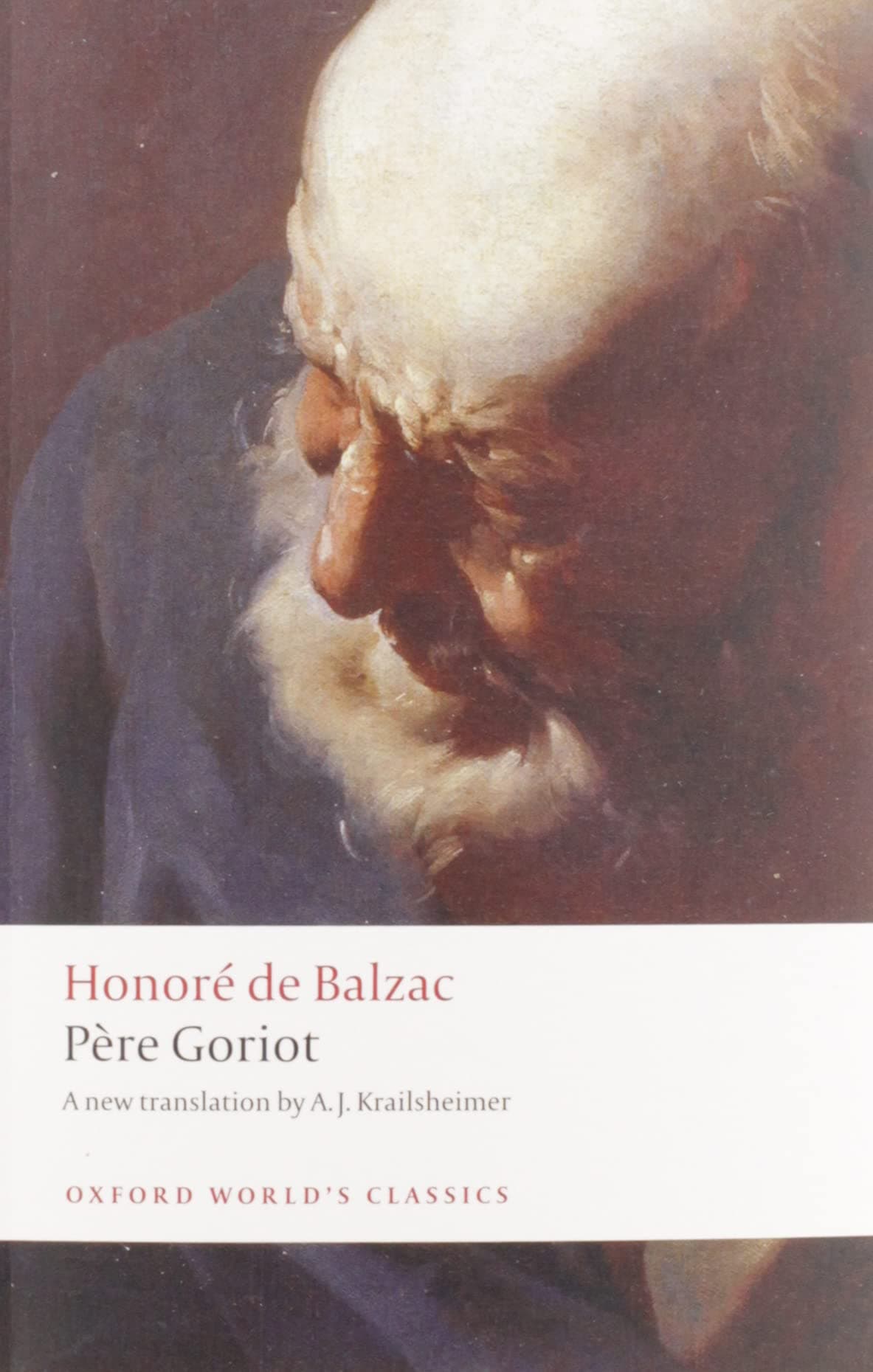
Father Goriot
“The secret of great fortunes without apparent cause is a crime forgotten, for it was properly done.”
Father Goriot Summary
In a crumbling Parisian boarding house called the Maison Vauquer, the remnants of respectable society cling to their last pretensions. Among the lodgers are two figures who will define the novel: Eugène de Rastignac, a young law student from the provinces burning with ambition, and old Goriot, a retired vermicelli maker who was once wealthy but has impoverished himself to fund the extravagant lifestyles of his two ungrateful daughters—the Comtesse de Restaud and the Baronne de Nucingen. As Rastignac ascends through the glittering salons of Parisian high society, he watches Goriot descend into destitution and death, sacrificing everything for daughters who will not even attend his funeral.
Balzac's novel is the cornerstone of his vast Human Comedy—the interconnected cycle of over ninety works that map every stratum of French society. Father Goriot is its most devastating entry, a story that operates simultaneously as a Bildungsroman, a social panorama, and a modern retelling of King Lear. The prose is dense with detail—Balzac catalogues the peeling wallpaper, the greasy tablecloths, the precise hierarchy of boarding-house seating—because he understood that money is not an abstraction but a physical reality that shapes every human relationship. The novel's great villain is not any individual but Paris itself: beautiful, seductive, and utterly indifferent to the suffering it demands as the price of admission.
Why Read Father Goriot?
Balzac does not describe society—he dissects it, with the precision of a surgeon and the passion of a lover. Father Goriot plunges you into the boarding houses and ballrooms of 1820s Paris, and by the time you surface, you will understand how money, ambition, and love intertwine to create the machinery of modern life. Old Goriot's devotion to his daughters is one of the most painful portraits of parental love in all of literature—a love so absolute it becomes its own form of madness.
But the novel's true education belongs to Rastignac, and through him to you. As he learns the rules of a society built on greed and performance, you watch idealism corrode in real time. Balzac's final image—Rastignac standing over Goriot's grave, looking down at the lights of Paris, and uttering his famous challenge to the city—is one of the great endings in fiction. It is the moment when youth puts away its illusions and decides to fight the world on its own terms. You will never forget it.
About Honoré de Balzac
Honoré de Balzac (1799–1850) was born in Tours, France, and spent his life in a feverish attempt to capture the whole of French society in fiction. After failed attempts at business—including a disastrous printing venture that left him burdened with debt for decades—he turned to writing with an obsessive energy that became legendary. He worked through the night fueled by prodigious quantities of coffee, sometimes producing a finished novel in a matter of weeks, building his monumental Human Comedy one volume at a time.
The Human Comedy encompasses over ninety novels and stories populated by more than two thousand characters, many of whom recur across multiple works, creating a fictional universe of unprecedented scope and detail. Father Goriot, Eugénie Grandet, Lost Illusions, and Cousin Bette are among his most celebrated works. Balzac's influence on the novel is immeasurable—he taught writers from Flaubert to Proust to Dostoevsky how fiction could anatomize an entire civilization. He died at fifty-one, exhausted by his labors, just months after finally marrying his longtime love, the Polish countess Ewelina Hańska. Victor Hugo spoke at his funeral, declaring that Balzac belonged among the greatest minds of his age.
Reading Guide
Ranked #215 among the greatest books of all time, Father Goriot by Honoré de Balzac has earned its place in the literary canon. Originally written in French and published in 1835, this moderate read from France continues to resonate with readers today.
This book belongs to our Society & Satire and Love & Loss collections, where you can discover more books that share its spirit and themes.
If you enjoy moderate reads like this one, you might also like One Hundred Years of Solitude, Nineteen Eighty-Four, or Wuthering Heights.
From the Society & Satire Collection
If you enjoyed Father Goriot, discover more masterpieces that share its spirit.
 #9View Book
Don Quixote
Miguel de Cervantes
High•35-40 hours #12View Book
Pride and Prejudice
Jane Austen
Accessible•10-12 hours #22View Book
Madame Bovary
Gustave Flaubert
Moderate•12-15 hours #30View Book
Middlemarch
George Eliot
High•30-35 hours
Browse more collections