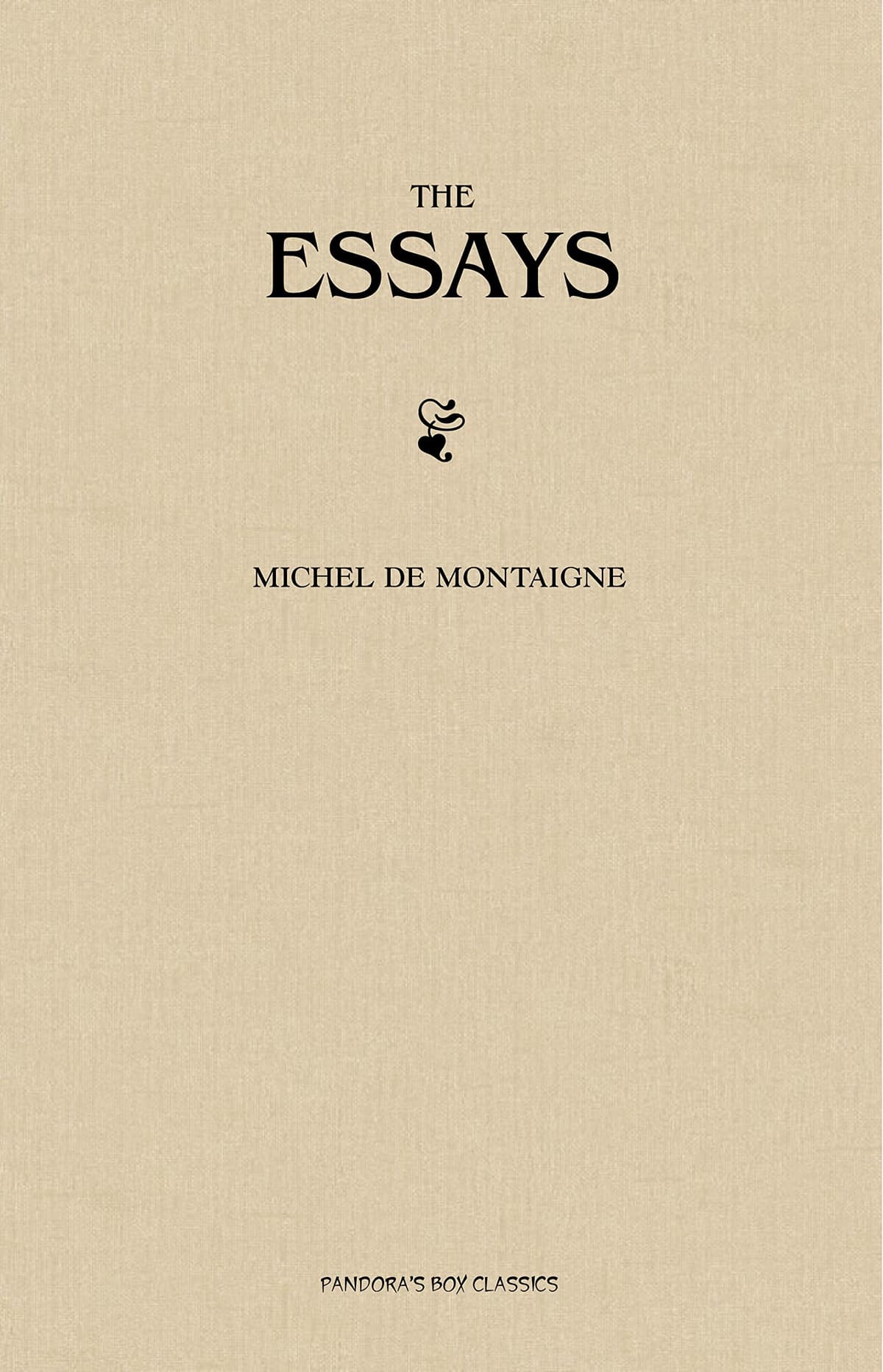
Essays
“I am myself the matter of my book.”
Essays Summary
In 1571, a French nobleman retired to a tower library in his family estate and began writing about himself. The result, published in three books over two decades, invented an entire literary form—the essay. Michel de Montaigne examined everything: cannibals and coaches, thumbs and friendship, the education of children and the terror of death. No subject was too grand or too trivial, because the true subject was always the same—the restless, contradictory, endlessly fascinating human mind.
Montaigne wrote with a candor that still startles. He confessed his cowardice, his bad memory, his kidney stones, his sexual habits, his fear of pain. He quoted the ancients on every page and then cheerfully disagreed with them. The Essays are a conversation with one of the most honest, humane, and witty minds in Western history—a man who believed that the highest form of knowledge is knowing yourself, and the highest form of wisdom is admitting how little you know.
Why Read Essays?
Montaigne invented the essay, but he did something far more radical—he invented the modern self. Before Montaigne, writers presented themselves as authorities. Montaigne presented himself as a question. His method was to examine his own thoughts, habits, and contradictions with ruthless honesty, and in doing so he discovered that the self is not fixed but fluid, not a monument but a river.
The Essays are the most companionable of all great books. Montaigne speaks to you across four centuries as if you were sitting across from him by the fire, and his voice—skeptical, tolerant, amused, humane—is the antidote to every form of fanaticism. In an age of certainties and tribalism, his insistence that we might be wrong about everything is not weakness but the deepest kind of courage.
About Michel de Montaigne
Michel de Montaigne (1533–1592) was a French nobleman, statesman, and wine grower who served as mayor of Bordeaux and counselor to kings. After the death of his closest friend, Étienne de La Boétie, Montaigne retreated to his estate and began the literary project that would consume the rest of his life.
His three books of Essays, published between 1580 and 1595, invented a genre and influenced virtually every subsequent writer of nonfiction. Shakespeare read him; Emerson worshipped him; Nietzsche called him the freest and most vigorous of spirits. Montaigne remains the great exemplar of intellectual honesty—a writer who dared to say 'What do I know?' and made that question the foundation of modern thought.
Reading Guide
Ranked #67 among the greatest books of all time, Essays by Michel de Montaigne has earned its place in the literary canon. Originally written in French and published in 1580, this challenging read from France continues to resonate with readers today.
This book belongs to our Philosophy & Faith collection, where you can discover more books that share its spirit and themes.
If you enjoy challenging reads like this one, you might also like Ulysses, Moby-Dick, or Lolita.
From the Philosophy & Faith Collection
If you enjoyed Essays, discover more masterpieces that share its spirit.
 #11View Book
Crime and Punishment
Fyodor Dostoevsky
High•20-25 hours #18View Book
The Bible
Various
Variable•60-80 hours #19View Book
The Brothers Karamazov
Fyodor Dostoevsky
Very High•35-40 hours #21View Book
The Stranger
Albert Camus
Moderate•3-4 hours
Browse more collections