Demons
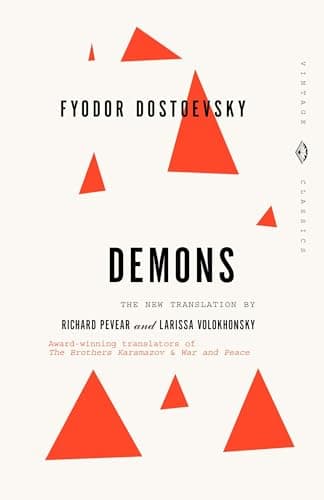
“The secret of man's being is not only to live but to have something to live for.”
Demons Summary
A quiet Russian provincial town is infiltrated by a cell of nihilist revolutionaries led by the charismatic, amoral Pyotr Verkhovensky. His instrument of chaos is the enigmatic Nikolai Stavrogin—a man of extraordinary magnetism and absolute inner emptiness, around whom everyone orbits like moths around a black flame. As Verkhovensky manipulates idealists, liberals, and bureaucrats alike, the town descends into arson, murder, madness, and suicide. The revolution devours its own.
Dostoevsky wrote Demons as a furious response to the real-life murder of a student by the revolutionary Sergei Nechayev, but the novel transcends its origins to become a prophetic anatomy of political terrorism and ideological fanaticism. Each character embodies a different strain of radicalism—atheism, nihilism, socialism, spiritual despair—and Dostoevsky subjects each to merciless scrutiny. At the center is Stavrogin, one of the most disturbing figures in all of literature: a man who has tried everything, believed everything, and found that nothing matters.
Why Read Demons?
Demons is the most terrifyingly prophetic novel ever written. Published in 1872, it predicted with uncanny accuracy the trajectory of revolutionary violence that would engulf Russia and the world in the twentieth century—from the Bolshevik Revolution to the ideological terrorism of our own age. Dostoevsky understood, decades before anyone else, that when human beings abandon God and morality in the name of a political idea, the result is not utopia but carnage.
It is also Dostoevsky at his most theatrically brilliant. The novel has the pace of a thriller and the depth of a philosophical treatise. Stavrogin is one of literature's great enigmas—beautiful, magnetic, utterly hollow—and the scenes involving his confession are among the most shocking Dostoevsky ever wrote. If you want to understand the psychology of radicalization, the seductive power of ideology, and the catastrophe that follows when ideas replace humanity, there is no better guide.
About Fyodor Dostoevsky
Fyodor Dostoevsky (1821–1881) experienced the extremes of human existence firsthand. As a young man, he was arrested for involvement in a radical reading circle, subjected to a mock execution, and sentenced to four years of hard labor in a Siberian prison camp. That experience transformed him from a liberal idealist into the most penetrating religious and psychological novelist in history.
His great novels—Crime and Punishment, The Idiot, Demons, and The Brothers Karamazov—probe the darkest recesses of the human soul with an intensity that no writer before or since has matched. Dostoevsky was an epileptic, a compulsive gambler, and a man of volcanic contradictions, and those contradictions gave his fiction its shattering power. He remains the novelist to whom all others are compared when the subject is the depths of human consciousness.
Reading Guide
Ranked #95 among the greatest books of all time, Demons by Fyodor Dostoevsky has earned its place in the literary canon. Originally written in Russian and published in 1872, this challenging read from Russia continues to resonate with readers today.
This book belongs to our Russian Soul and Philosophy & Faith collections, where you can discover more books that share its spirit and themes.
If you enjoy challenging reads like this one, you might also like Ulysses, Moby-Dick, or Lolita.
From the Russian Soul Collection
If you enjoyed Demons, discover more masterpieces that share its spirit.
 #10View Book
Anna Karenina
Leo Tolstoy
High•30-35 hours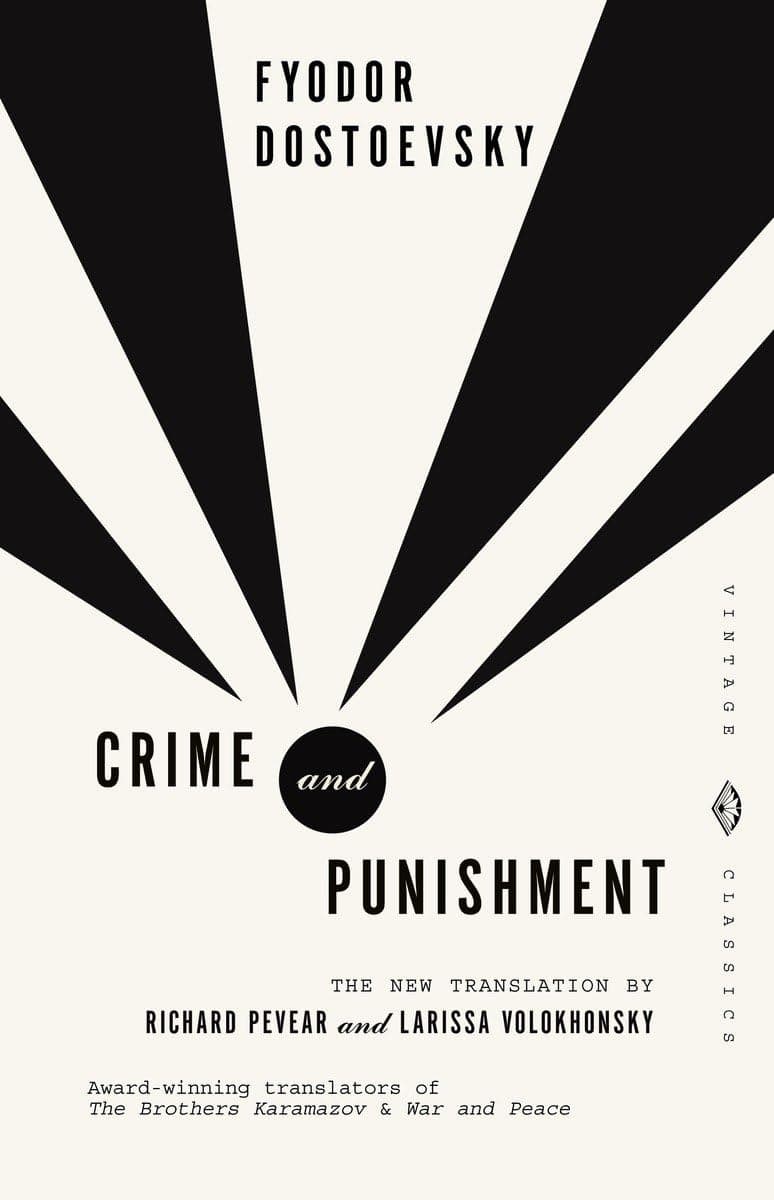 #11View Book
Crime and Punishment
Fyodor Dostoevsky
High•20-25 hours #14View Book
War and Peace
Leo Tolstoy
Very High•40-50 hours #19View Book
The Brothers Karamazov
Fyodor Dostoevsky
Very High•35-40 hours
Browse more collections