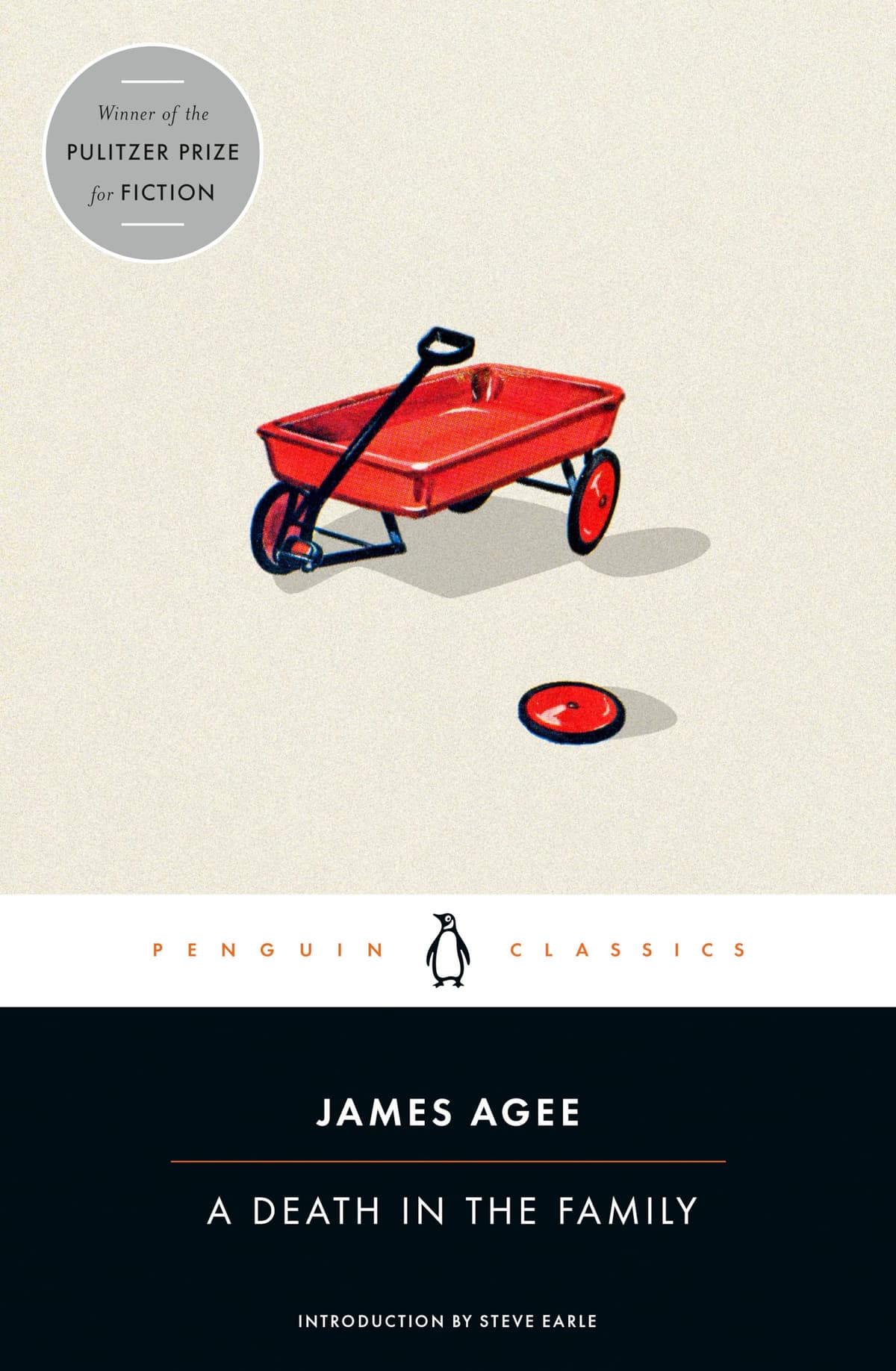
A Death in the Family
“Now is the night one blue dew, my father has drained, he has coiled to sleep.”
A Death in the Family Summary
On a spring evening in 1915 in Knoxville, Tennessee, Jay Follet receives a telephone call telling him that his father, far away in the mountains, may be dying. He drives through the night to his father's side, only to find the old man recovering. On the drive home, something happens, the exact nature of which is revealed with excruciating care: Jay's car leaves the road, and he is killed instantly. The rest of the novel traces the impact of this sudden, incomprehensible loss on his family, particularly his wife Mary, his young son Rufus, and his even younger daughter Catherine. Mary, a devout Catholic, clings to her faith for consolation, while Jay's brother and father, hard-drinking men of the Tennessee hills, grieve in their own inarticulate ways. Rufus, who is six years old and worships his father, struggles to understand what death means, grasping fragments of adult conversation and funeral ritual without being able to assemble them into sense. The novel moves with extraordinary delicacy between the perspectives of the adults and the children, capturing both the large architecture of grief and its smallest, most piercing details: the way a cap smells like a father's hair, the way a child is proud to be seen in a new suit at a funeral.
A Death in the Family is one of the most profoundly felt novels in American literature, a book that approaches grief not as a theme to be explored but as an experience to be inhabited. James Agee's prose is lyrical, precise, and saturated with sensory detail, rendering the textures of a specific time and place, Knoxville in the early twentieth century, with an almost unbearable vividness. The novel is autobiographical: Agee's own father was killed in a car accident when Agee was six years old, and the novel represents a lifetime's effort to recover and understand that foundational loss. Published posthumously and awarded the Pulitzer Prize, it stands as a testament to the power of fiction to preserve what time would otherwise destroy: the sound of a voice, the warmth of a presence, the irreplaceable particularity of a life.
Why Read A Death in the Family?
A Death in the Family will break your heart, but it will break it in a way that feels necessary and even, paradoxically, healing. James Agee writes about the most universal of human experiences, the sudden loss of someone you love, with such precision and tenderness that you will feel as though you are remembering your own losses rather than reading about someone else's. The novel's power comes from its absolute fidelity to the way grief actually works: not as a grand dramatic arc but as a series of small, bewildering moments, a child's confusion at a funeral, a widow's inability to believe what she has been told, the terrible normalcy of a world that goes on as though nothing has happened.
What makes this novel essential is Agee's prose, which is among the most beautiful in American literature. His sentences have the quality of music, and his descriptions of Knoxville, its summer evenings, its tree-lined streets, its particular quality of light, create a world so vivid that its loss feels like your own. If you have ever loved someone and feared losing them, or if you have already experienced that loss and struggled to find words for it, this novel will speak to you with a directness and a compassion that transcend time and place. It is one of those rare books that make the unbearable bearable by giving it form.
About James Agee
James Rufus Agee was born in 1909 in Knoxville, Tennessee, and his childhood was shattered at the age of six when his father, Hugh James Agee, was killed in an automobile accident, an event that would haunt and define his literary career. He attended Phillips Exeter Academy and Harvard, where he edited the Harvard Advocate, and after graduation joined the staff of Fortune magazine. His collaboration with the photographer Walker Evans, documenting the lives of Alabama sharecroppers during the Depression, produced Let Us Now Praise Famous Men, a work of nonfiction that was a commercial failure upon publication in 1941 but is now regarded as one of the masterpieces of American documentary literature.
Agee was a man of prodigious and scattered talents: a poet, a novelist, a journalist, and one of the most influential film critics of his era, writing for Time and The Nation. His screenplays for The African Queen and The Night of the Hunter are considered among the finest ever written. But his great literary ambition was always the novel about his father's death, which he worked on intermittently for years. He died of a heart attack in a New York taxicab in 1955 at the age of forty-five, leaving the manuscript unfinished. A Death in the Family was edited and published posthumously in 1957 and was awarded the Pulitzer Prize for Fiction. It remains his masterpiece, the work in which his gifts for lyrical prose, psychological insight, and emotional depth found their fullest and most moving expression.
Reading Guide
Ranked #453 among the greatest books of all time, A Death in the Family by James Agee has earned its place in the literary canon. Originally written in English and published in 1957, this moderate read from United States continues to resonate with readers today.
This book belongs to our Love & Loss and American Spirit collections, where you can discover more books that share its spirit and themes.
If you enjoy moderate reads like this one, you might also like One Hundred Years of Solitude, Nineteen Eighty-Four, or Wuthering Heights.
From the Love & Loss Collection
If you enjoyed A Death in the Family, discover more masterpieces that share its spirit.
 #3View Book
The Great Gatsby
F. Scott Fitzgerald
Accessible•5-6 hours #10View Book
Anna Karenina
Leo Tolstoy
High•30-35 hours #12View Book
Pride and Prejudice
Jane Austen
Accessible•10-12 hours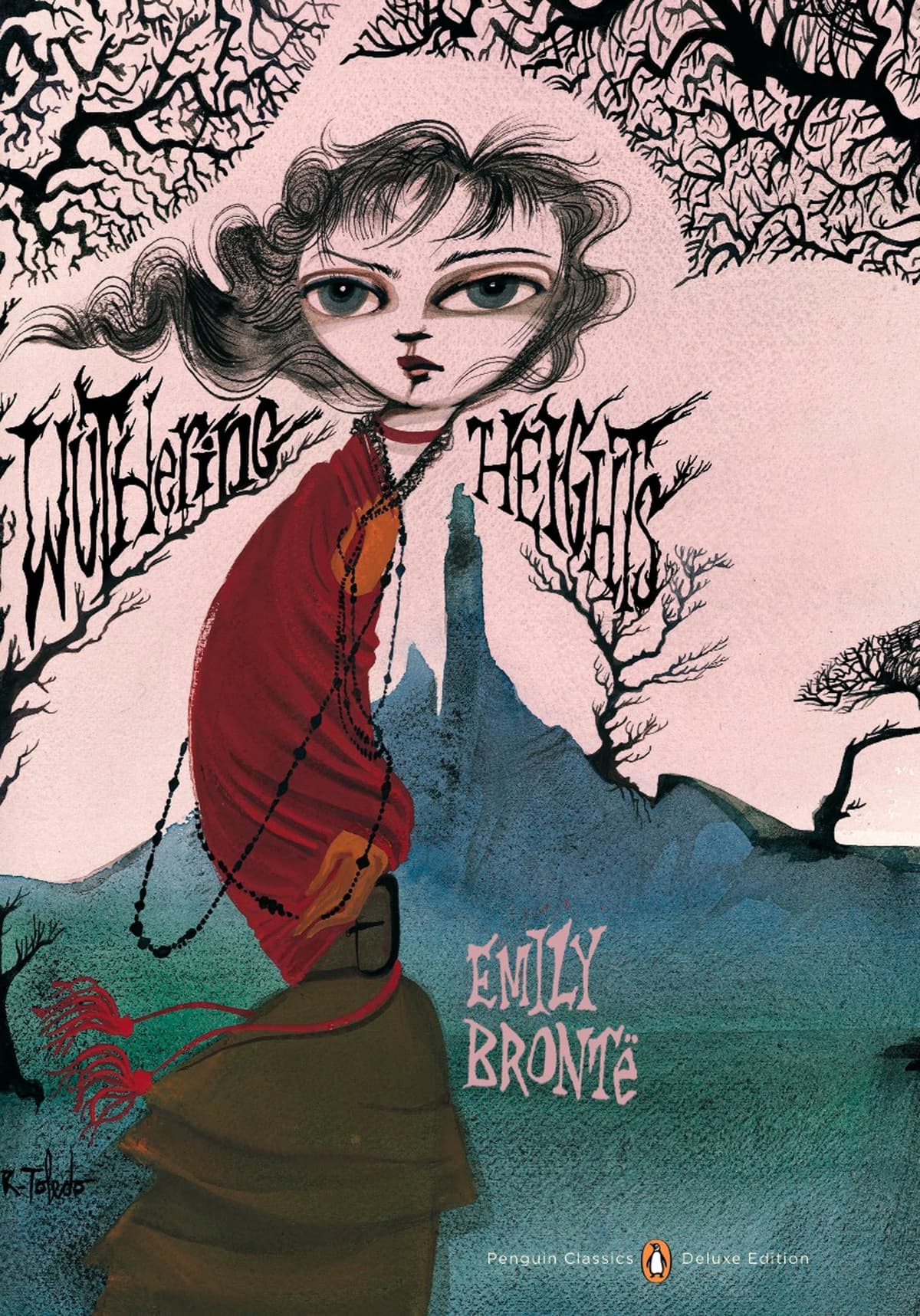 #15View Book
Wuthering Heights
Emily Brontë
Moderate•10-12 hours
Browse more collections