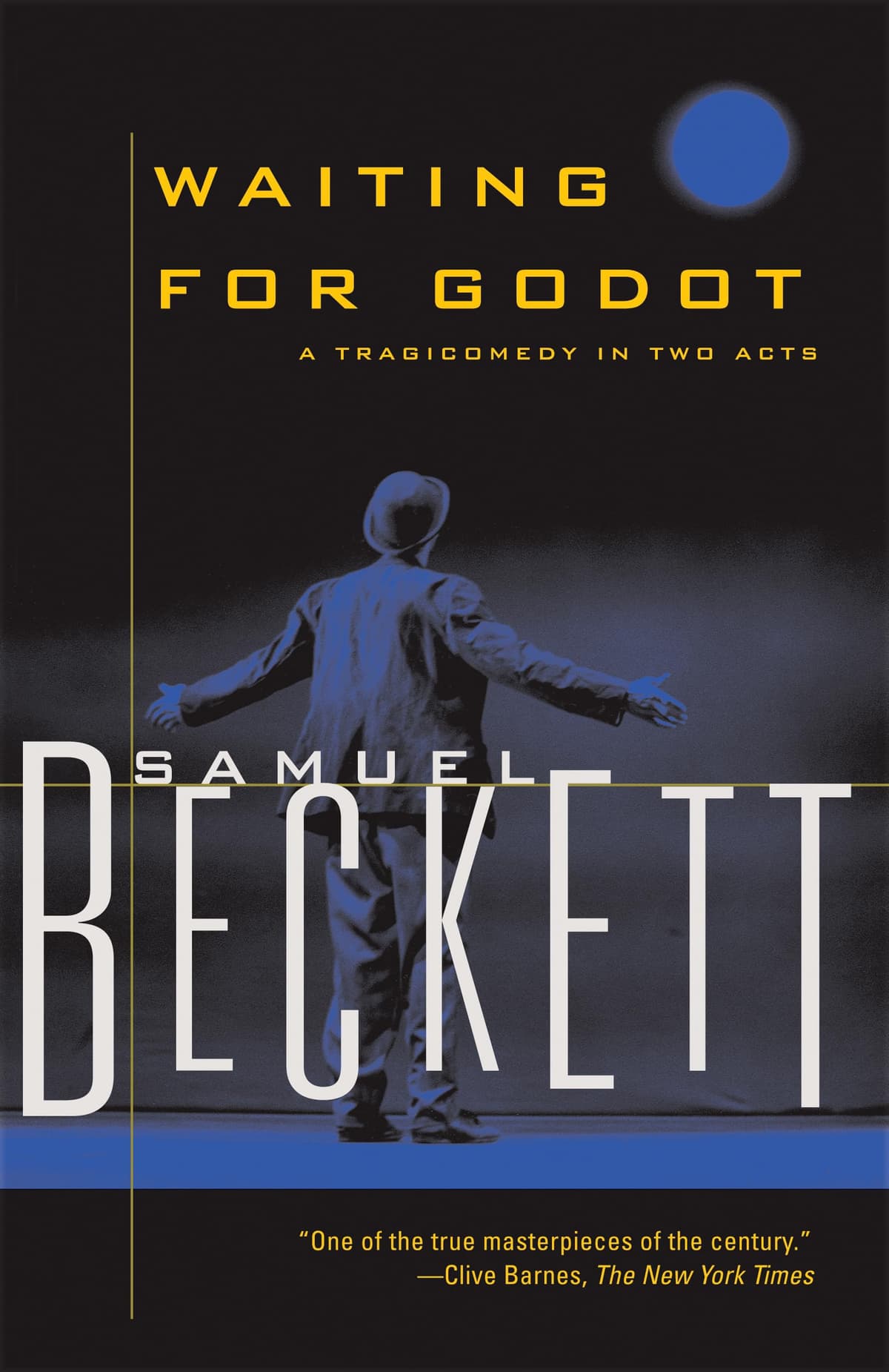
Waiting for Godot
“Let us not waste our time in idle discourse! Let us do something, while we have the chance!”
Waiting for Godot Summary
Two tramps, Vladimir and Estragon, wait by a bare tree on a country road for someone named Godot. He does not come. They talk, argue, eat a carrot, consider hanging themselves, and encounter a master-slave pair named Pozzo and Lucky. A boy arrives to say that Godot will surely come tomorrow. The next day, everything repeats with slight, unsettling variations. Godot does not come. They wait.
Beckett stripped theater down to its most elemental components—two figures, an empty stage, the act of waiting—and in doing so created the most influential play of the twentieth century. There is no plot in the conventional sense, no character development, no resolution. What remains is the irreducible human situation: we are here, we do not know why, and we cannot leave. The genius of the play is that this bleak premise produces some of the funniest dialogue ever written for the stage.
Why Read Waiting for Godot?
Waiting for Godot changed what theater could be. Before Beckett, plays had plots, climaxes, and resolutions. Beckett proved that a play could consist of almost nothing—two men, a tree, the act of waiting—and still contain the entire human condition. Its premiere in Paris in 1953 bewildered audiences and electrified artists, and its influence on drama, fiction, and film has been incalculable.
But the play's reputation for difficulty is misleading. Waiting for Godot is, above all, funny—a vaudeville routine performed at the edge of the void. Vladimir and Estragon are one of literature's great double acts, and their banter has the timing of the finest comedy. Beneath the laughter lies a profound compassion: these two helpless figures, unable to leave each other, unable to stop hoping, are us. The play does not explain the meaning of life. It does something better—it shows what it feels like to live without one.
About Samuel Beckett
Samuel Beckett (1906–1989) was born in Foxrock, a suburb of Dublin, and educated at Trinity College, where he excelled in French and Italian. After a restless period as a lecturer, traveler, and literary assistant to James Joyce in Paris, he settled permanently in France and made the extraordinary decision to write in French rather than English—stripping his prose to its barest essentials.
Waiting for Godot made him famous overnight when it premiered in 1953. He went on to produce a body of work—plays, novels, short prose—of radical minimalism and haunting beauty. He received the Nobel Prize in Literature in 1969 and described it as a 'catastrophe.' Beckett was a man who spent his life paring language down to silence, and in that silence found something inexhaustibly human.
Reading Guide
Ranked #93 among the greatest books of all time, Waiting for Godot by Samuel Beckett has earned its place in the literary canon. Originally written in French and published in 1953, this moderate read from Ireland continues to resonate with readers today.
This book belongs to our Philosophy & Faith and Modern Mind collections, where you can discover more books that share its spirit and themes.
If you enjoy moderate reads like this one, you might also like One Hundred Years of Solitude, Nineteen Eighty-Four, or Wuthering Heights.
From the Philosophy & Faith Collection
If you enjoyed Waiting for Godot, discover more masterpieces that share its spirit.
 #11View Book
Crime and Punishment
Fyodor Dostoevsky
High•20-25 hours #18View Book
The Bible
Various
Variable•60-80 hours #19View Book
The Brothers Karamazov
Fyodor Dostoevsky
Very High•35-40 hours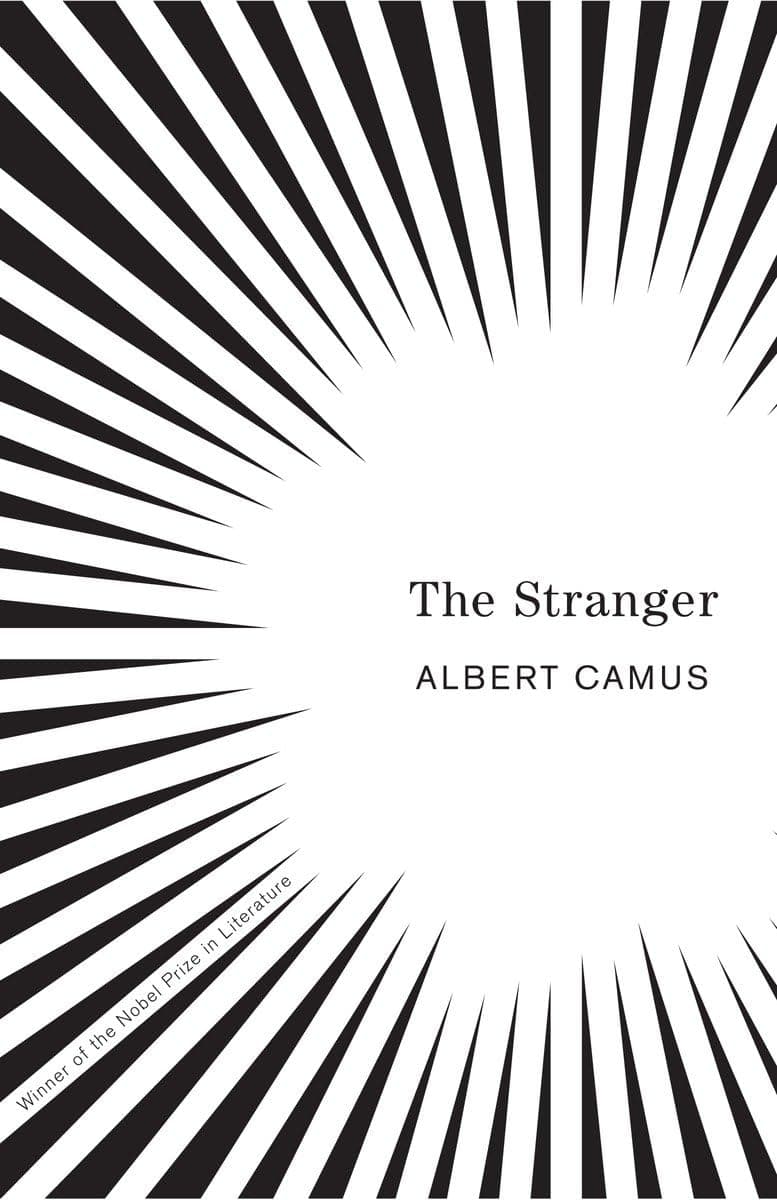 #21View Book
The Stranger
Albert Camus
Moderate•3-4 hours
Browse more collections