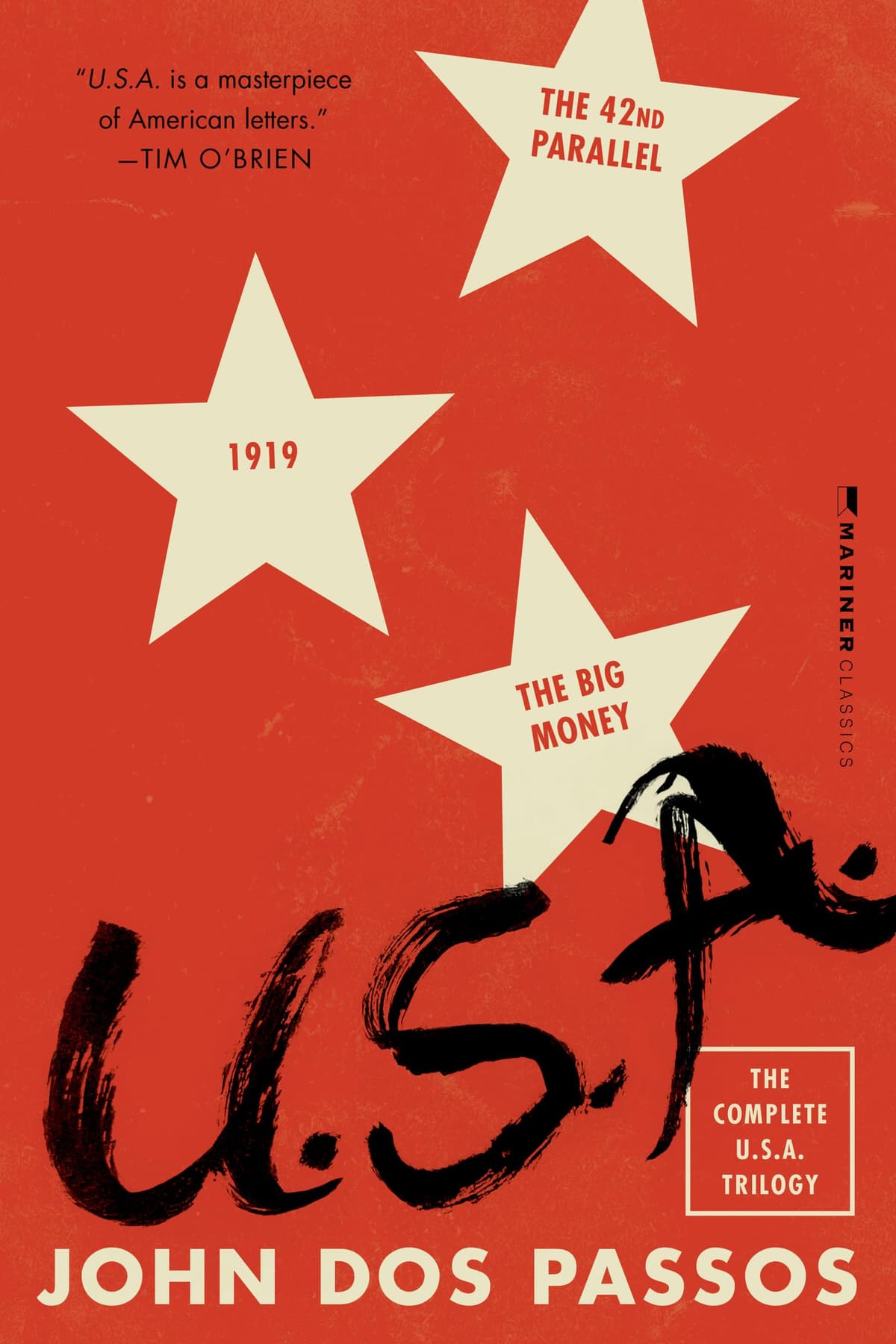
U.S.A. Trilogy
“U.S.A. is the slice of a continent. U.S.A. is a group of holding companies, some aggregations of trade unions, a set of laws bound in calf, a radio network, a chain of moving picture theatres, a column of stockquotations rubbed out and written in by a Western Union boy on a blackboard, a public-library full of old newspapers and dogeared historybooks with protests scrawled on the margins in pencil.”
U.S.A. Trilogy Summary
John Dos Passos shatters the traditional novel into a thousand fragments and reassembles them into a panoramic mural of American life in the first three decades of the twentieth century. The U.S.A. Trilogy—comprising The 42nd Parallel, 1919, and The Big Money—follows a sprawling cast of characters whose lives intersect and diverge across the continent: a printer's apprentice who drifts into labor radicalism, a public relations man who sells his soul to corporate America, a stenographer clawing her way through Depression-era New York, and many more. Their stories are interwoven with three revolutionary narrative devices—"Newsreels" that collage headlines and song lyrics, "Camera Eye" sections of lyrical stream-of-consciousness, and biographical portraits of real historical figures like Henry Ford, the Wright Brothers, and Isadora Duncan.
The result is nothing less than an attempt to capture the consciousness of a nation. Dos Passos pioneered a cinematic, montage-driven technique decades before postmodernism had a name, cutting between private lives and public history with dizzying speed. The trilogy chronicles America's transformation from agrarian republic to industrial empire—the boom of the twenties, the bust of the crash, the rot beneath the chrome. It is a bitter, exhilarating, technically audacious masterpiece that insists the story of a country cannot be told through any single life, but only through the cacophony of all of them together.
Why Read U.S.A. Trilogy?
If you have ever wondered what it would feel like to hold an entire country in your hands, this is the book that comes closest. The U.S.A. Trilogy does not merely describe America—it attempts to become America, absorbing its newspapers, its songs, its advertisements, its private dreams and public catastrophes into a single, sprawling narrative organism. Dos Passos invented a form capacious enough to contain multitudes, and reading it feels like tuning a radio dial across the full spectrum of a civilization.
The trilogy's experimental techniques—once considered radical—now feel prophetic. In an age of social media feeds, fragmented attention, and competing narratives, Dos Passos's montage method mirrors how we actually experience the world. His characters chase the American Dream and are chewed up by the machinery of capital, and their stories remain devastatingly relevant. This is the great American novel as symphony, as collage, as time capsule—and once you surrender to its rhythms, it will change the way you think about what fiction can do.
About John Dos Passos
John Dos Passos (1896–1970) was born in Chicago, the son of a prominent corporate lawyer. He graduated from Harvard, drove ambulances in World War I alongside Hemingway, and emerged from the war radicalized and determined to reinvent the American novel. His early works—Three Soldiers and Manhattan Transfer—established him as a bold experimenter, but the U.S.A. Trilogy cemented his reputation as one of the most innovative writers of the twentieth century.
Once considered Hemingway's and Fitzgerald's equal, Dos Passos's literary reputation has fluctuated over the decades, in part because of his dramatic political shift from left-wing radicalism to conservative anti-communism. Yet his formal innovations—the Newsreel, the Camera Eye, the biographical portrait—influenced writers from Norman Mailer to Don DeLillo and anticipated the fragmented, media-saturated narratives of postmodern fiction. Jean-Paul Sartre called him "the greatest writer of our time," and his trilogy remains one of the most ambitious attempts to capture a nation in prose.
Reading Guide
Ranked #186 among the greatest books of all time, U.S.A. Trilogy by John Dos Passos has earned its place in the literary canon. Originally written in English and published in 1930–1936, this challenging read from United States continues to resonate with readers today.
This book belongs to our American Spirit and Modern Mind collections, where you can discover more books that share its spirit and themes.
If you enjoy challenging reads like this one, you might also like Ulysses, Moby-Dick, or Lolita.
From the American Spirit Collection
If you enjoyed U.S.A. Trilogy, discover more masterpieces that share its spirit.
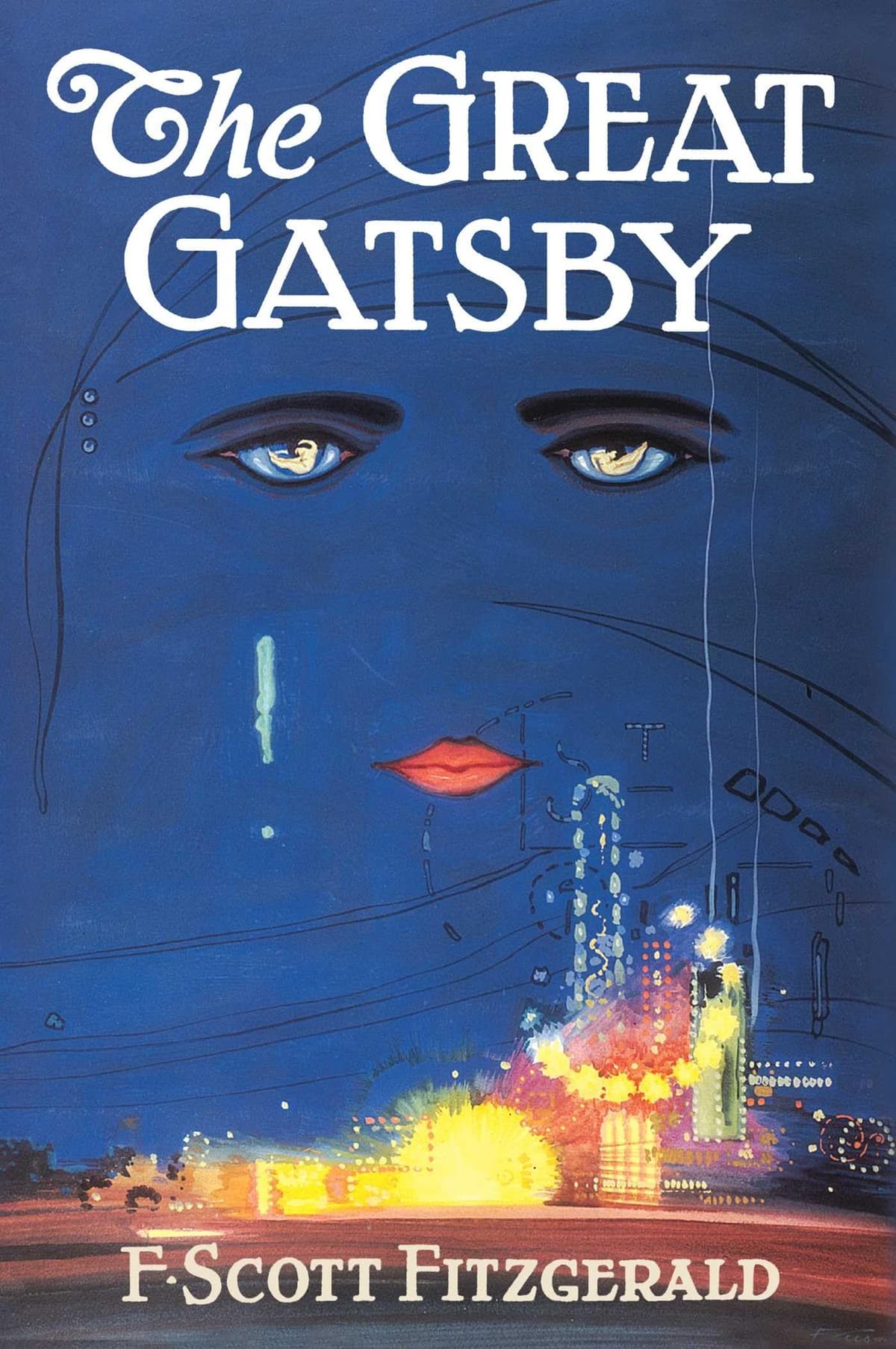 #3View Book
The Great Gatsby
F. Scott Fitzgerald
Accessible•5-6 hours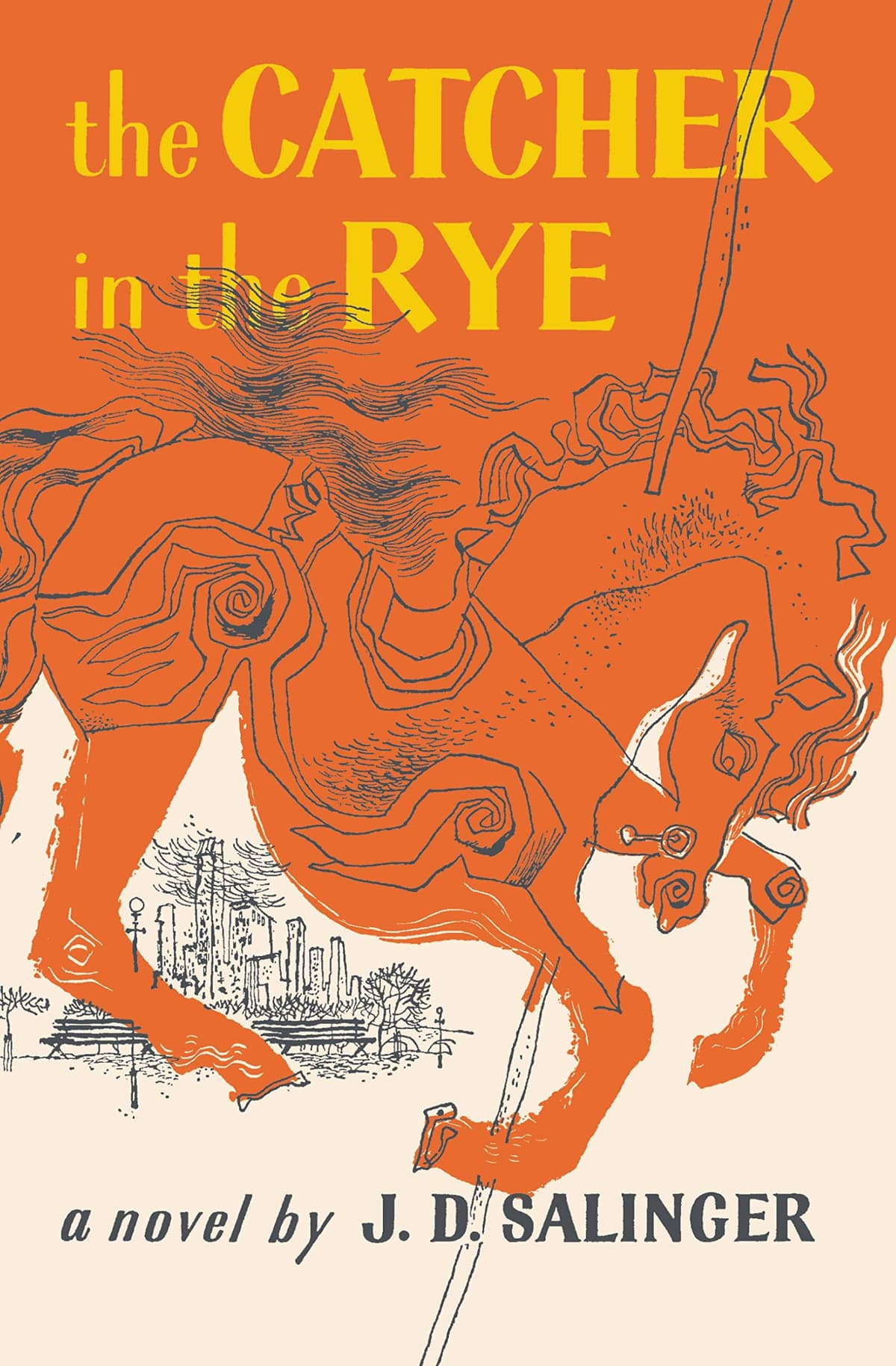 #4View Book
The Catcher in the Rye
J. D. Salinger
Accessible•6-8 hours #13View Book
Lolita
Vladimir Nabokov
Challenging•12-15 hours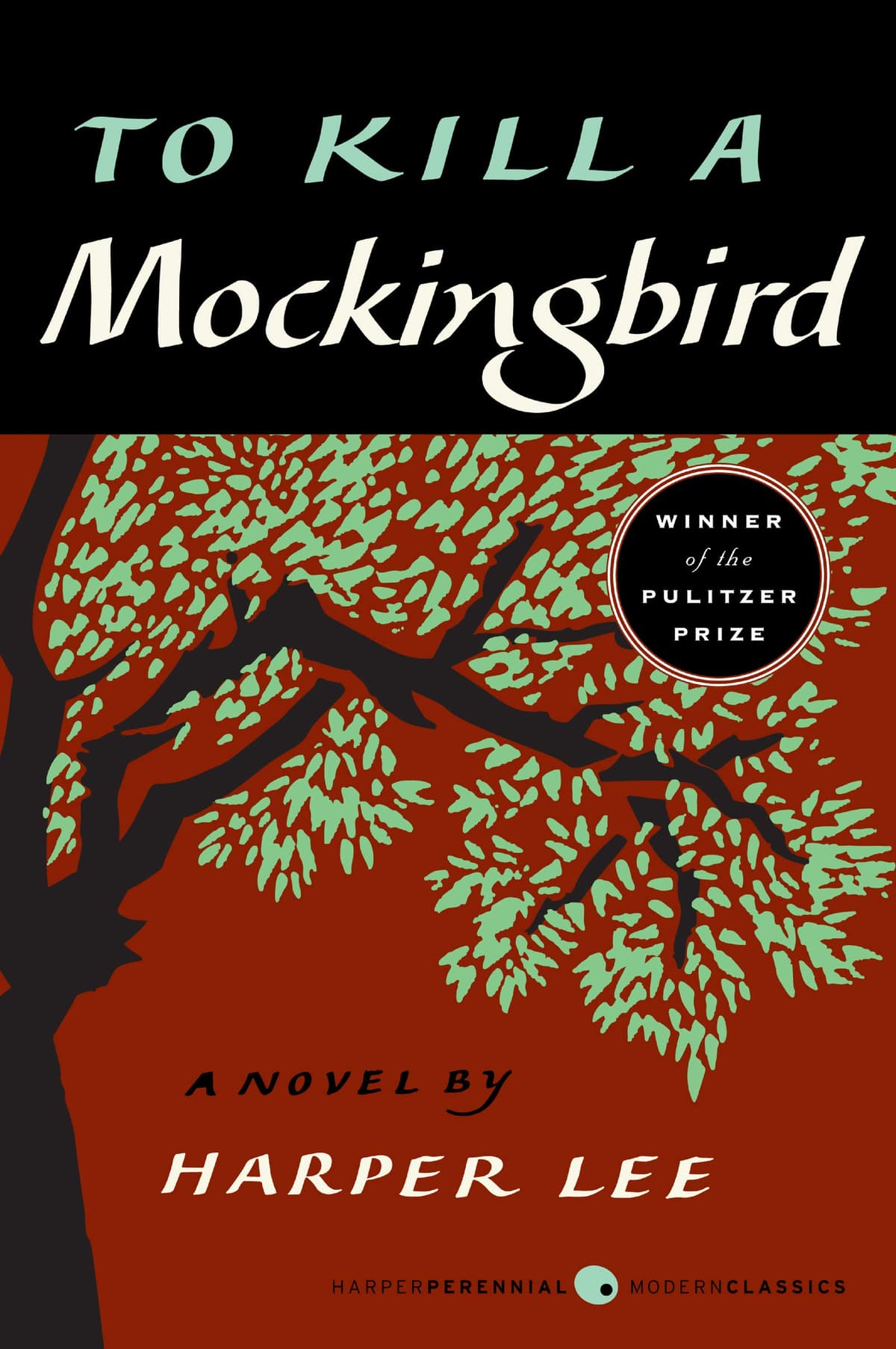 #17View Book
To Kill a Mockingbird
Harper Lee
Accessible•8-10 hours
Browse more collections