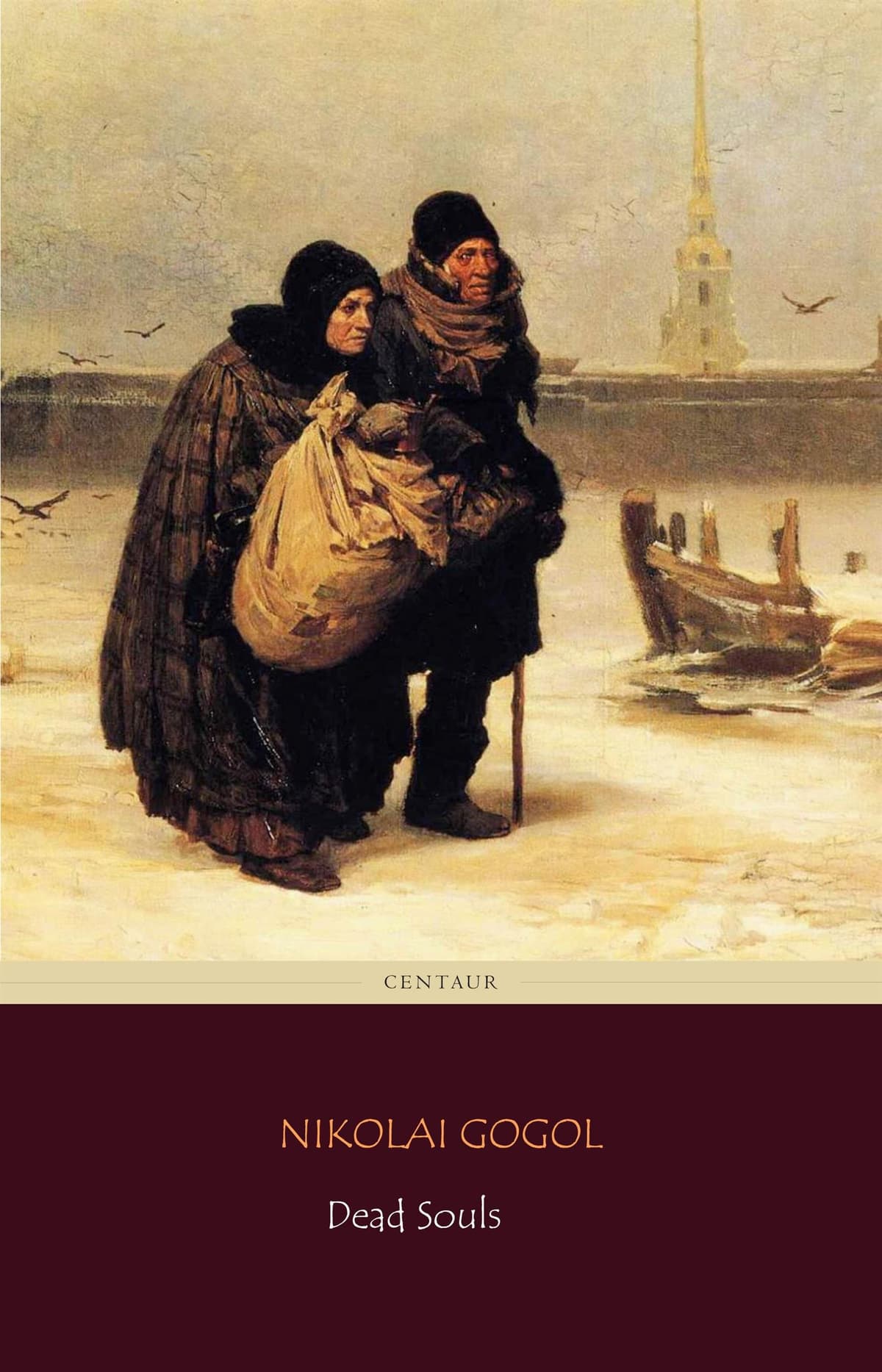
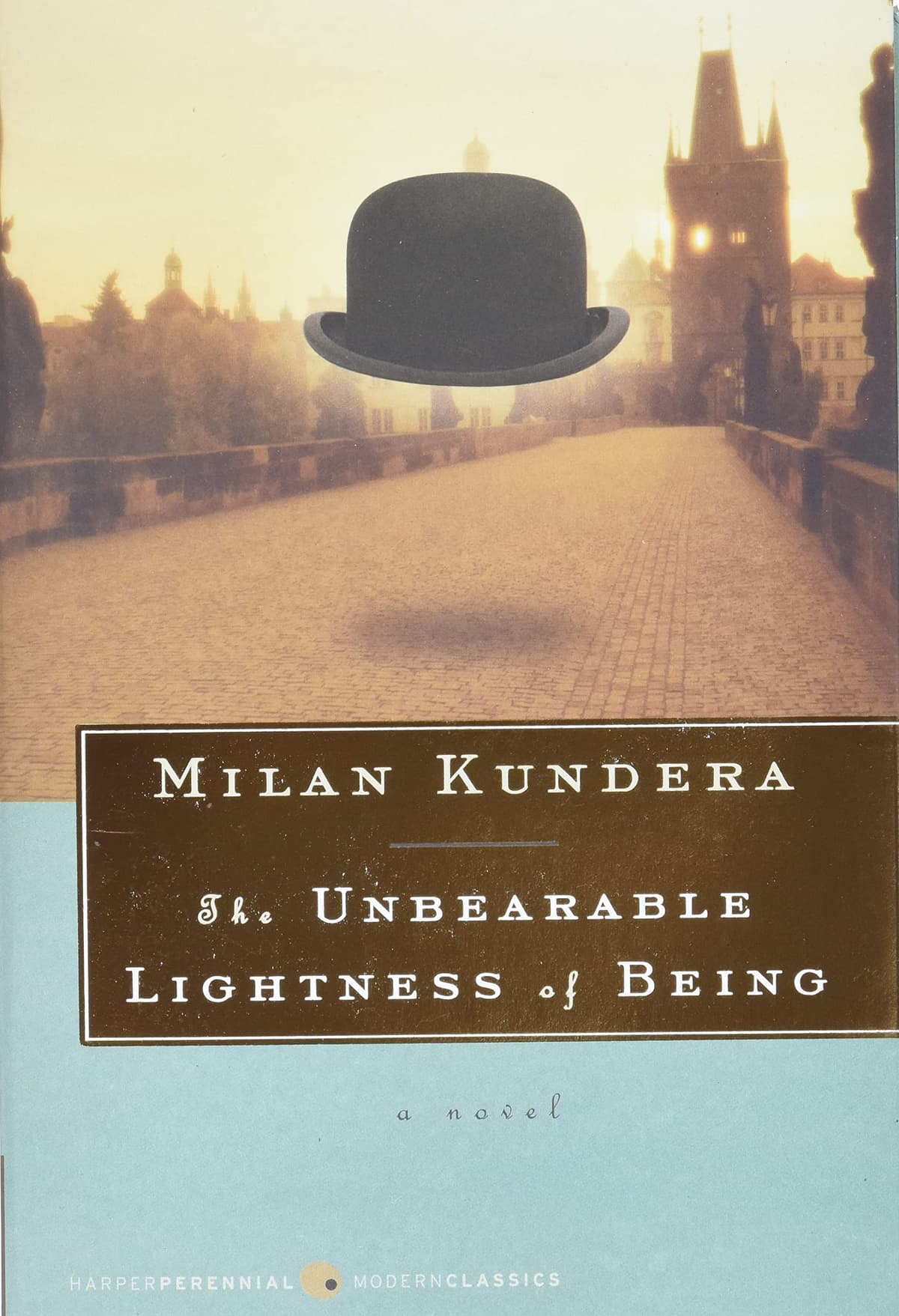
The Unbearable Lightness of Being
“The heaviest of burdens is therefore simultaneously an image of life's most intense fulfillment.”
The Unbearable Lightness of Being Summary
Tomas is a brilliant Prague surgeon who has organized his life around the principle of lightness: no commitments, no attachments, a parade of erotic adventures governed by a strict code of non-involvement. Then he meets Tereza, a young waitress who arrives at his door like a child placed in a bulrush basket, and his philosophy crumbles. Their love unfolds against the backdrop of the 1968 Soviet invasion of Czechoslovakia—tanks in the streets, informers in the cafes, and the slow suffocation of an entire nation's freedom.
Kundera's novel is not a conventional narrative but a philosophical meditation in the form of fiction. It moves between four characters—Tomas, Tereza, the painter Sabina, and the professor Franz—weaving their love affairs, betrayals, and political compromises into a searching inquiry about the nature of existence. Is life heavy with meaning, or unbearably light? Is love a burden or a liberation? Kundera offers no answers, only the most beautiful questions.
Why Read The Unbearable Lightness of Being?
Kundera wrote the rare novel that is simultaneously a love story, a political thriller, and a work of philosophy—and succeeds completely as all three. His central question, drawn from Nietzsche's idea of eternal return, is devastatingly simple: if we live only once, do our choices carry any weight at all? If everything happens only once, it might as well not have happened. And yet we love, we suffer, we choose—as if it all matters infinitely.
The novel's portrait of life under Soviet occupation is among the finest in literature, not because of its political detail but because of its emotional truth. Kundera shows how totalitarianism invades the most intimate spaces—the bedroom, the operating room, the artist's studio—and forces every human relationship into a moral crucible. The Unbearable Lightness of Being is a book about the impossible choice between freedom and love, and it will haunt you long after you set it down.
About Milan Kundera
Milan Kundera (1929-2023) was born in Brno, Czechoslovakia, and lived through the Nazi occupation, the Communist takeover, the brief flowering of the Prague Spring, and the Soviet invasion that crushed it. He was expelled from the Communist Party twice, saw his books banned in his homeland, and emigrated to France in 1975, where he spent the rest of his life.
Kundera's novels—The Joke, The Book of Laughter and Forgetting, The Unbearable Lightness of Being—blend fiction with philosophical essay in a form uniquely his own. He insisted that the novel was Europe's supreme art form, a laboratory for exploring existence that no other medium could match. He refused interviews, forbade biographical readings of his work, and maintained that a writer's only biography is the totality of his books.
Reading Guide
Ranked #103 among the greatest books of all time, The Unbearable Lightness of Being by Milan Kundera has earned its place in the literary canon. Originally written in Czech and published in 1984, this moderate read from Czech Republic continues to resonate with readers today.
This book belongs to our Philosophy & Faith and Love & Loss collections, where you can discover more books that share its spirit and themes.
If you enjoy moderate reads like this one, you might also like One Hundred Years of Solitude, Nineteen Eighty-Four, or Wuthering Heights.
From the Philosophy & Faith Collection
If you enjoyed The Unbearable Lightness of Being, discover more masterpieces that share its spirit.
 #11View Book
Crime and Punishment
Fyodor Dostoevsky
High•20-25 hours #18View Book
The Bible
Various
Variable•60-80 hours #19View Book
The Brothers Karamazov
Fyodor Dostoevsky
Very High•35-40 hours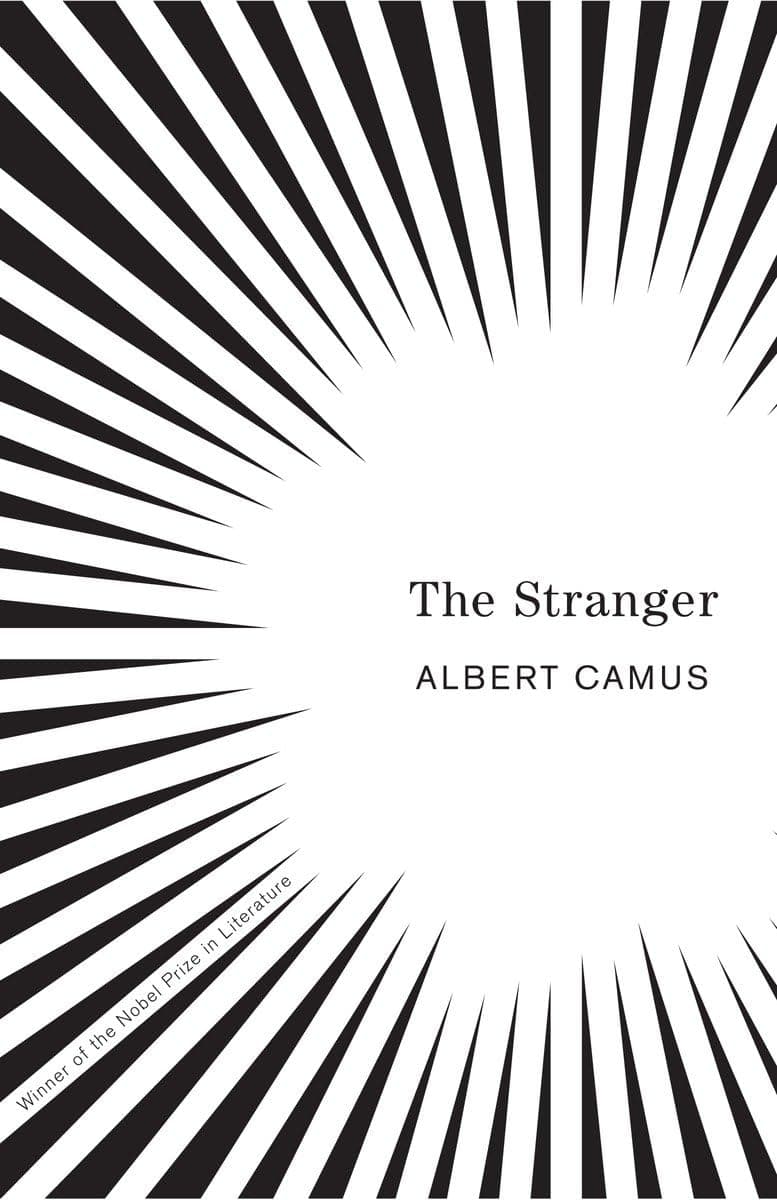 #21View Book
The Stranger
Albert Camus
Moderate•3-4 hours
Browse more collections