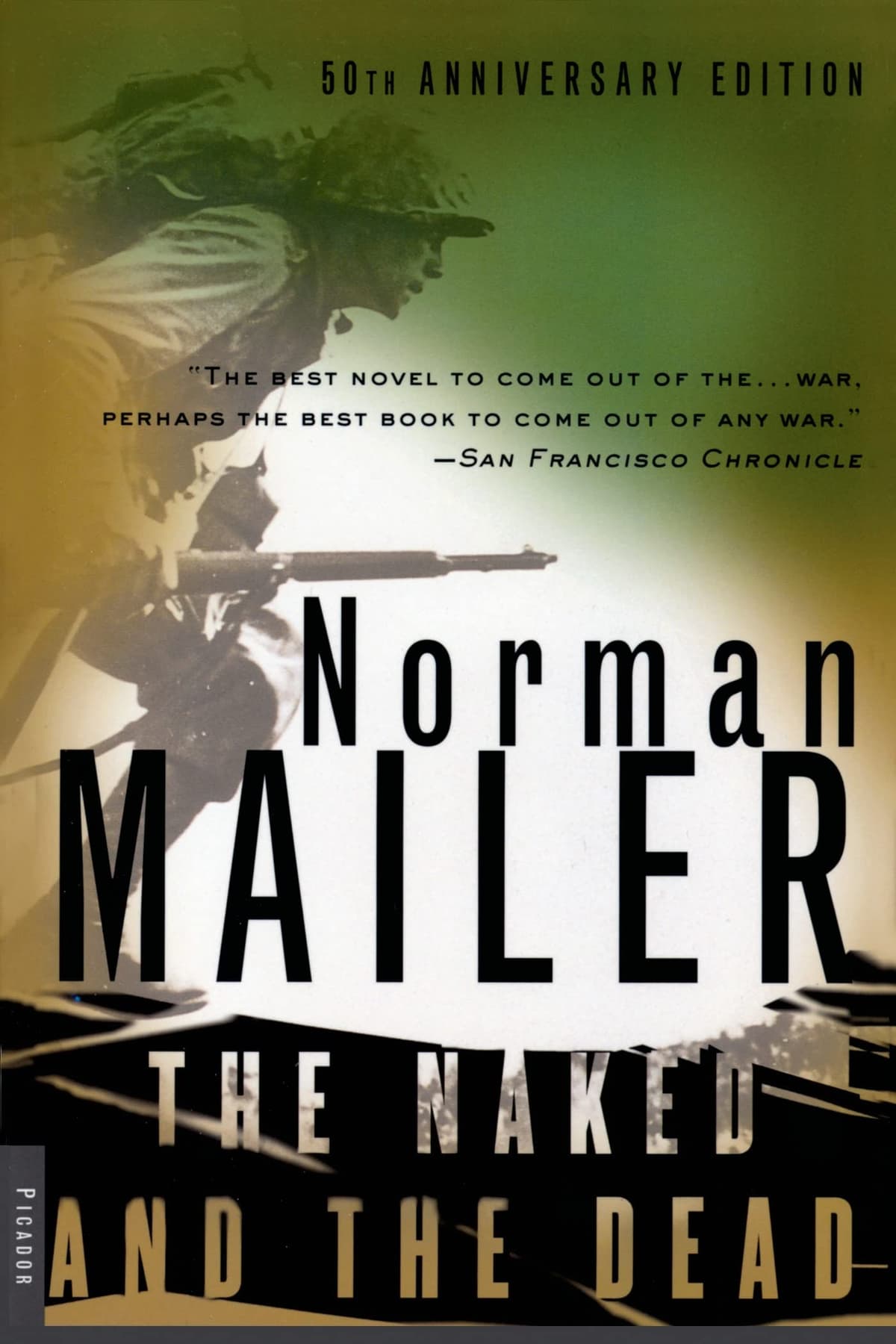
The Naked and the Dead
“Nobody ever gets to touch the real talent of a man, his real growth. Always eddies and diversions and, of course, sometimes long stretches of listless unproductive living.”
The Naked and the Dead Summary
An American reconnaissance platoon hacks its way through the steaming jungles of a Japanese-held Pacific island called Anopopei, a fictional landscape drawn from Norman Mailer's own wartime service in the Philippines and Leyte. The novel follows the platoon under the command of the liberal, ineffectual Lieutenant Hearn and the ruthless, fascist-leaning General Cummings, whose intellectual sparring over the nature of power and authority forms the novel's philosophical spine. Around them, Mailer assembles a sprawling cast of enlisted men drawn from every corner of American society: the embittered Texan Sergeant Croft, whose will to dominate mirrors the general's; the sensitive, bookish Goldstein; the cynical, streetwise Polack; Red Valsen, the drifting loner; and a dozen others whose backstories Mailer unfolds in brilliantly rendered "Time Machine" flashback chapters that trace each man's path from Depression-era America to this malarial island. The patrol's suicidal mission to cross a mountain range behind Japanese lines becomes a crucible in which every man's character is tested and the power dynamics of the entire campaign are distilled to their essence.
Norman Mailer's debut novel, published when he was just twenty-five, is the most ambitious American novel to come out of the Second World War. Its scope is Tolstoyan: Mailer moves fluidly between the general's tent and the foxhole, between strategic calculation and primal terror, between the grand sweep of military operations and the intimate details of men's bodies breaking down in the tropical heat. The novel is a savage examination of how war reveals and amplifies the authoritarian impulses that lurk within democratic societies, and its portrait of Cummings as the intellectual fascist remains one of the most chilling characterizations in American fiction. The prose is raw, muscular, and unsparing, establishing the confrontational style that would define Mailer's career.
Why Read The Naked and the Dead?
The Naked and the Dead is the great American novel of the Second World War, a book of such ambition and ferocity that it announced a major literary talent on every page. Mailer gives you war not as heroism or adventure but as a system of power in which every relationship, from general to private, replicates the domination and submission that the war itself was supposedly being fought to defeat. The jungle of Anopopei is rendered with hallucinatory intensity: you will feel the mud, the insects, the crushing weight of a pack on a body pushed beyond endurance. The Time Machine chapters, which flash back to each soldier's civilian life, are miniature novels in themselves, portraits of American class, race, and geography that make the platoon a microcosm of the nation.
What makes the novel endure is not just its war writing but its ideas. The intellectual combat between Cummings and Hearn, between the fascist vision of power as the organizing principle of human life and the liberal faith in individual dignity, remains as urgent now as it was in 1948. Mailer refuses to let either side win cleanly, and the novel's bitter conclusion suggests that history moves not according to the designs of great men but through the accidents and stupidities of ordinary ones. This is essential reading for anyone who wants to understand what war does to men and what men's wars reveal about the societies that produce them.
About Norman Mailer
Norman Mailer was born in 1923 in Long Branch, New Jersey, and grew up in Brooklyn. He entered Harvard at sixteen, where he studied aeronautical engineering before discovering his vocation as a writer. After graduating in 1943, he was drafted into the Army and served in the Pacific theater as a rifleman with the 112th Cavalry, an experience that provided the material for The Naked and the Dead. Published in 1948, the novel became an immediate bestseller and made Mailer famous at twenty-five.
Mailer spent the next six decades as one of the most visible and controversial figures in American letters, a writer who refused to separate literature from politics, celebrity, or the raw energies of American life. His major works include The Armies of the Night, which won both the Pulitzer Prize and the National Book Award for its account of the 1967 March on the Pentagon; The Executioner's Song, a true-life novel about the murderer Gary Gilmore that won a second Pulitzer; and Advertisements for Myself, a collection that redefined the literary essay. Mailer ran for mayor of New York, co-founded The Village Voice, and was involved in public feuds and scandals that made him as famous for his personality as for his prose. He died in 2007, leaving behind a body of work that, at its best, captures the violent, restless, contradictory energy of postwar America with a force that no other writer of his generation could match.
Reading Guide
Ranked #415 among the greatest books of all time, The Naked and the Dead by Norman Mailer has earned its place in the literary canon. Originally written in English and published in 1948, this challenging read from United States continues to resonate with readers today.
This book belongs to our American Spirit collection, where you can discover more books that share its spirit and themes.
If you enjoy challenging reads like this one, you might also like Ulysses, Moby-Dick, or Lolita.
From the American Spirit Collection
If you enjoyed The Naked and the Dead, discover more masterpieces that share its spirit.
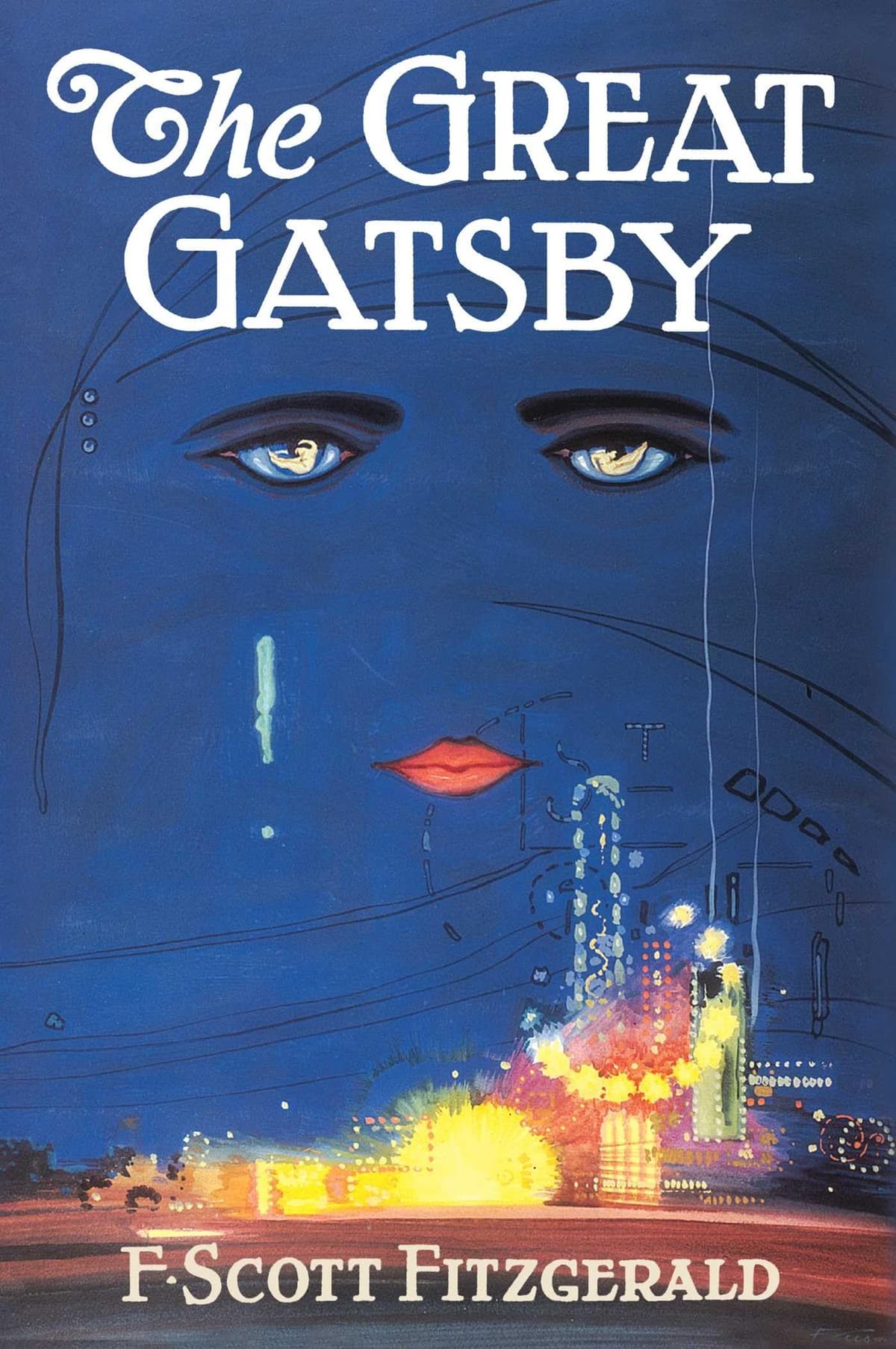 #3View Book
The Great Gatsby
F. Scott Fitzgerald
Accessible•5-6 hours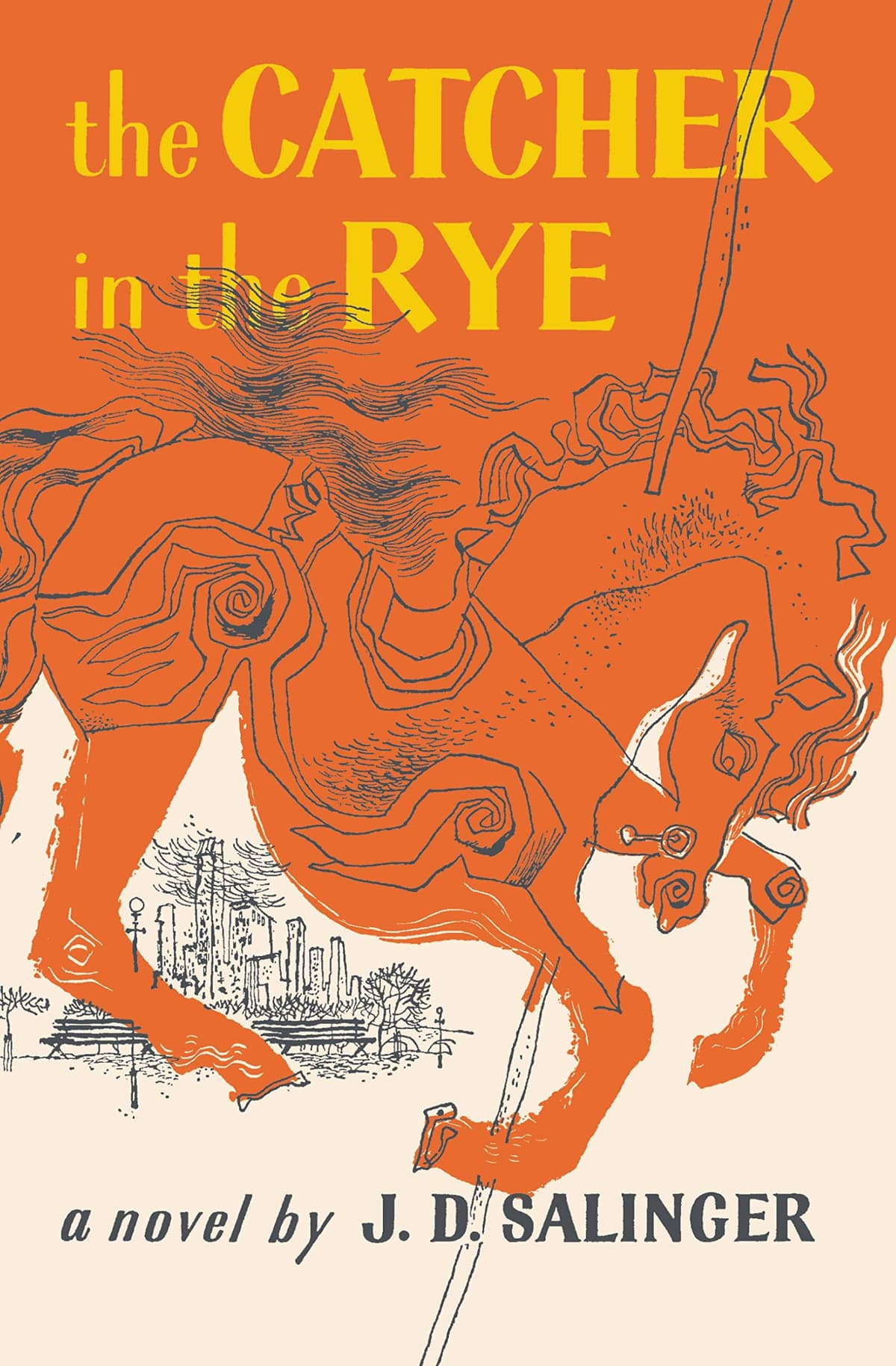 #4View Book
The Catcher in the Rye
J. D. Salinger
Accessible•6-8 hours #13View Book
Lolita
Vladimir Nabokov
Challenging•12-15 hours #17View Book
To Kill a Mockingbird
Harper Lee
Accessible•8-10 hours
Browse more collections