The Interpretation of Dreams
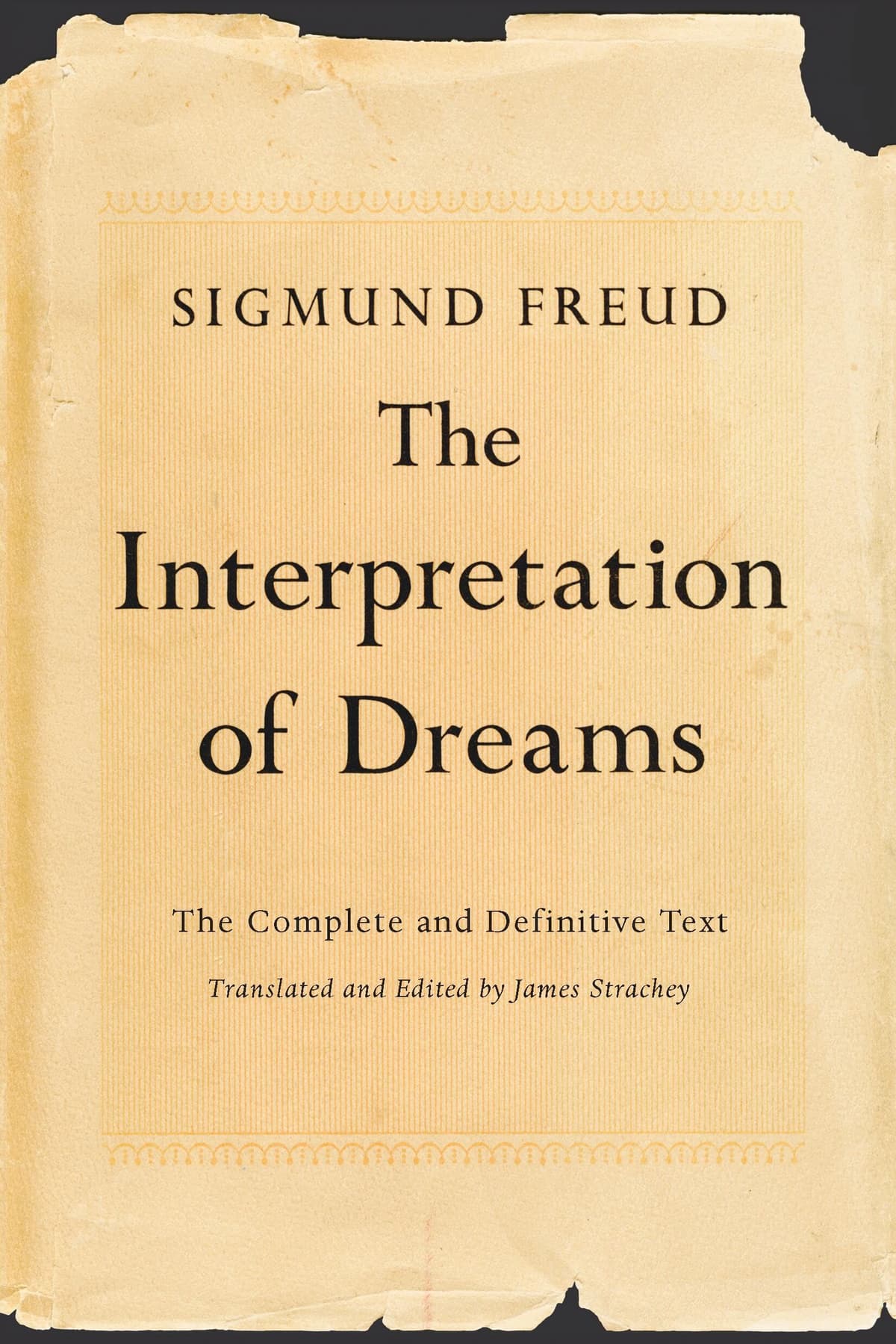
“The interpretation of dreams is the royal road to a knowledge of the unconscious activities of the mind.”
The Interpretation of Dreams Summary
Sigmund Freud opens the locked door of the sleeping mind and walks boldly through it. Published at the turn of the twentieth century, The Interpretation of Dreams argues that dreams are not random neural noise or divine messages but the disguised fulfillments of repressed wishes—the "royal road to the unconscious." Freud dissects dozens of dreams, beginning with his own famous "Dream of Irma's Injection," unraveling their surface absurdity to reveal the hidden logic of desire, guilt, and memory beneath. He maps the mechanisms of the "dream-work"—condensation, displacement, symbolism, and secondary revision—showing how the mind transforms forbidden thoughts into the strange theater of sleep.
The book is far more than a clinical manual; it is an intellectual autobiography, a philosophical manifesto, and a work of literary interpretation that draws on Sophocles, Shakespeare, and Goethe as freely as on case studies. Freud's prose is lucid, persuasive, and often surprisingly personal—he lays bare his own ambitions, jealousies, and anxieties with a candor that gives the work its unsettling power. Whether or not one accepts his theories in their entirety, the book's central insight—that the mind contains vast, hidden territories that shape our waking lives—transformed Western thought irrevocably. It inaugurated psychoanalysis, reshaped literature and art, and gave the twentieth century its defining metaphor: that beneath the surface of every human life lies a deeper, stranger, more dangerous truth.
Why Read The Interpretation of Dreams?
This is the book that taught the modern world to look beneath the surface. Before Freud, dreams were curiosities or superstitions; after him, they became evidence of an inner life too vast and unruly to be contained by waking reason. To read The Interpretation of Dreams is to watch a brilliant mind construct an entirely new way of understanding human experience—one that would reshape psychology, literature, philosophy, and the way you think about your own midnight wanderings.
Even if you are skeptical of Freud's specific claims, the book's method is electrifying: the patient unraveling of symbols, the detective work of tracing an image back to its hidden source, the sheer audacity of insisting that nothing in the mind is accidental. You will never look at your own dreams the same way again. More than that, you will carry with you Freud's unsettling conviction that the self you present to the world is only the visible fraction of something far deeper—and that the truest truths are the ones you work hardest to conceal.
About Sigmund Freud
Sigmund Freud (1856–1939) was born in Freiberg, Moravia (now Příbor, Czech Republic), and raised in Vienna, where he lived and worked for nearly eight decades. He trained as a neurologist at the University of Vienna, studied under Jean-Martin Charcot in Paris, and gradually developed the theory and practice of psychoanalysis—a method of treating mental illness through free association, dream analysis, and the exploration of the unconscious. His consulting room at Berggasse 19 became the birthplace of a revolution in human self-understanding.
Freud's influence extends far beyond clinical psychology. Works such as The Psychopathology of Everyday Life, Three Essays on the Theory of Sexuality, and Civilization and Its Discontents reshaped how the Western world thinks about desire, memory, repression, and the fragile architecture of the self. He fled Nazi-occupied Vienna for London in 1938, dying there the following year. Though many of his specific theories have been revised or rejected, his core insight—that unconscious forces drive human behavior—remains one of the most consequential ideas in intellectual history.
Reading Guide
Ranked #167 among the greatest books of all time, The Interpretation of Dreams by Sigmund Freud has earned its place in the literary canon. Originally written in German and published in 1899, this challenging read from Austria continues to resonate with readers today.
This book belongs to our Philosophy & Faith and Modern Mind collections, where you can discover more books that share its spirit and themes.
If you enjoy challenging reads like this one, you might also like Ulysses, Moby-Dick, or Lolita.
From the Philosophy & Faith Collection
If you enjoyed The Interpretation of Dreams, discover more masterpieces that share its spirit.
 #11View Book
Crime and Punishment
Fyodor Dostoevsky
High•20-25 hours #18View Book
The Bible
Various
Variable•60-80 hours #19View Book
The Brothers Karamazov
Fyodor Dostoevsky
Very High•35-40 hours #21View Book
The Stranger
Albert Camus
Moderate•3-4 hours
Browse more collections