The Glass Bead Game
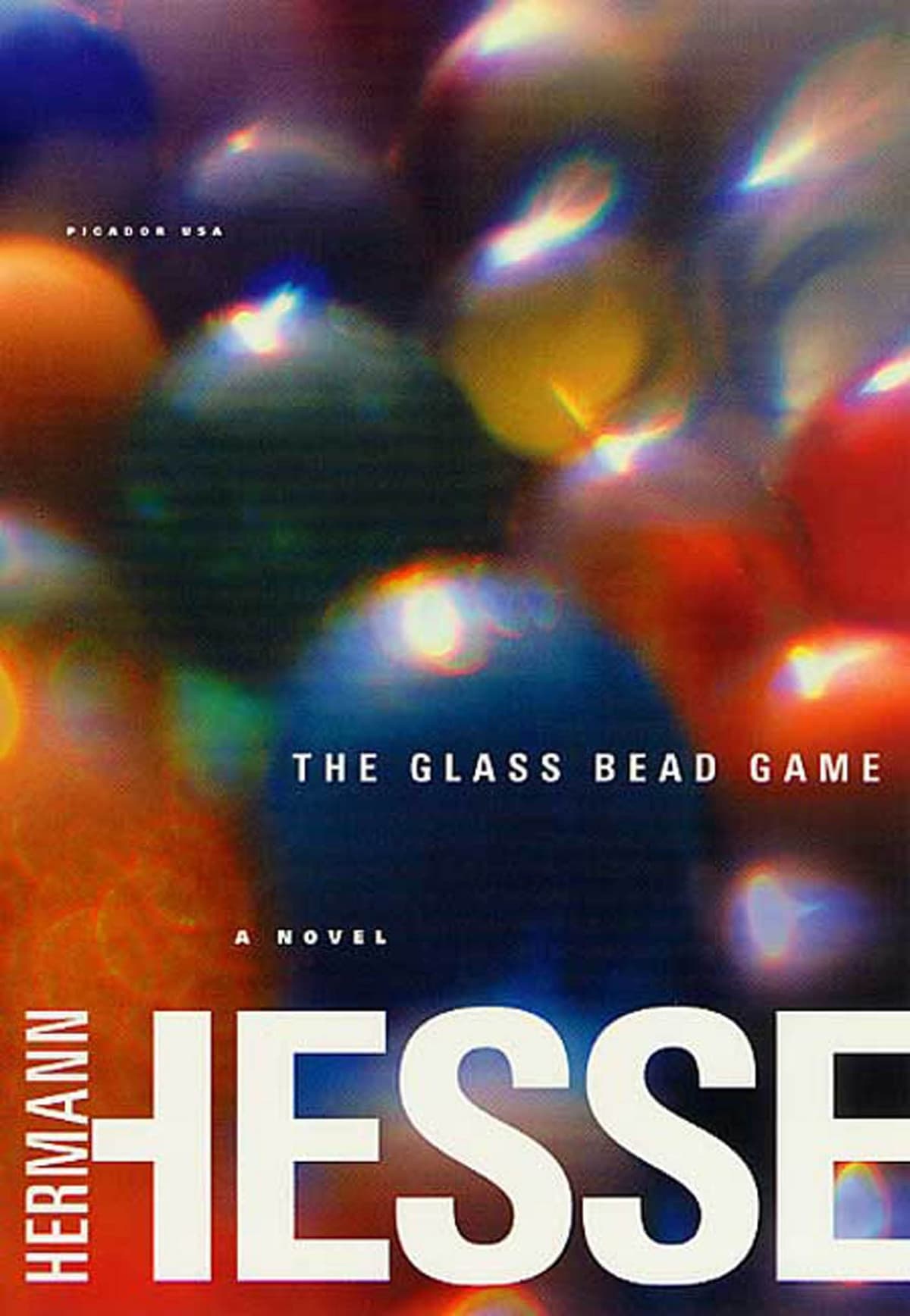
“The game as I conceive it... encompasses the player after the completion of meditation just as the surface of a sphere encompasses its center, and leaves him with the feeling of having extracted from the universe of accident and confusion a totally symmetrical and harmonious world.”
The Glass Bead Game Summary
Set in the twenty-fifth century, The Glass Bead Game takes the form of a biography of Joseph Knecht, written by an unnamed narrator from the scholarly province of Castalia. This elite, monastic community has been established by a future European civilization to preserve intellectual and cultural life, and at its center stands the Glass Bead Game itself, an enormously complex synthesis of all arts and sciences played by linking themes from music, mathematics, philosophy, and every other field of human knowledge into a unified aesthetic experience. Knecht rises through Castalia's rigorous educational hierarchy to become the Magister Ludi, the Master of the Game, the highest honor the province can bestow. Yet at the pinnacle of his achievement, he grows increasingly troubled by Castalia's isolation from the practical world and its inhabitants' disdain for history and ordinary human life. His ultimate decision to resign his position and leave Castalia to become a simple tutor constitutes a radical rejection of the ivory tower.
Hesse's final and most ambitious novel is a profound meditation on the tension between contemplation and engagement, between the life of the mind and the life of action. Castalia's Glass Bead Game represents the highest possible synthesis of human knowledge, yet the province's deliberate separation from the world renders it sterile and vulnerable. Knecht's journey from devoted student to dissenting master mirrors Hesse's own lifelong exploration of Eastern and Western spiritual traditions, and his choice to abandon perfection for service embodies the novel's deepest wisdom. Published in 1943 and cited prominently when Hesse received the Nobel Prize in 1946, the novel anticipated the modern university's debates about the purpose of education and the social responsibility of intellectuals.
Why Read The Glass Bead Game?
Hesse constructs an entire civilization dedicated to the life of the mind and then asks the devastating question: is it enough? The Glass Bead Game itself is one of the most seductive inventions in all of fiction, a game that synthesizes music, mathematics, and philosophy into pure aesthetic play. The temptation to retreat into such a world of perfect intellectual beauty is presented with genuine sympathy before Hesse reveals its fatal limitation. Joseph Knecht's journey from devoted acolyte to principled dissident is a quietly thrilling narrative of intellectual awakening.
This novel speaks with particular urgency to anyone who has ever felt the pull of academic or creative work and wondered about its relationship to the wider world. Hesse does not dismiss the contemplative life but insists that wisdom must ultimately be tested through engagement with the messy, mortal, ordinary world of human experience. The Glass Bead Game is both a love letter to learning and a warning about its dangers, and its central insight, that the highest form of mastery is knowing when to leave the game, resonates far beyond its fictional setting.
About Hermann Hesse
Hermann Hesse was born in 1877 in Calw, Germany, into a family of Pietist missionaries and publishers. He struggled against his strict religious upbringing and the rigid German educational system, experiences that profoundly shaped the themes of rebellion and self-discovery in his fiction. After finding success with Peter Camenzind and Beneath the Wheel, he underwent a personal crisis during World War I that led him to Jungian psychoanalysis and a deep engagement with Eastern philosophy, transforming his work into the spiritually searching novels for which he is best known: Demian, Siddhartha, Steppenwolf, and Narcissus and Goldmund.
Hesse became a Swiss citizen in 1924 and lived in the village of Montagnola for the rest of his life, producing The Glass Bead Game over more than a decade of painstaking work. He received the Nobel Prize in Literature in 1946, and his novels experienced a massive revival among the counterculture movements of the 1960s and 1970s, particularly in the United States. He died in 1962. Hesse's work, which bridges European and Asian philosophical traditions with a deeply personal search for authenticity, continues to speak powerfully to readers navigating the tension between individual fulfillment and social obligation.
Reading Guide
Ranked #335 among the greatest books of all time, The Glass Bead Game by Hermann Hesse has earned its place in the literary canon. Originally written in German and published in 1943, this challenging read from Germany continues to resonate with readers today.
This book belongs to our Philosophy & Faith and Speculative Futures collections, where you can discover more books that share its spirit and themes.
If you enjoy challenging reads like this one, you might also like Ulysses, Moby-Dick, or Lolita.
From the Philosophy & Faith Collection
If you enjoyed The Glass Bead Game, discover more masterpieces that share its spirit.
 #11View Book
Crime and Punishment
Fyodor Dostoevsky
High•20-25 hours #18View Book
The Bible
Various
Variable•60-80 hours #19View Book
The Brothers Karamazov
Fyodor Dostoevsky
Very High•35-40 hours #21View Book
The Stranger
Albert Camus
Moderate•3-4 hours
Browse more collections