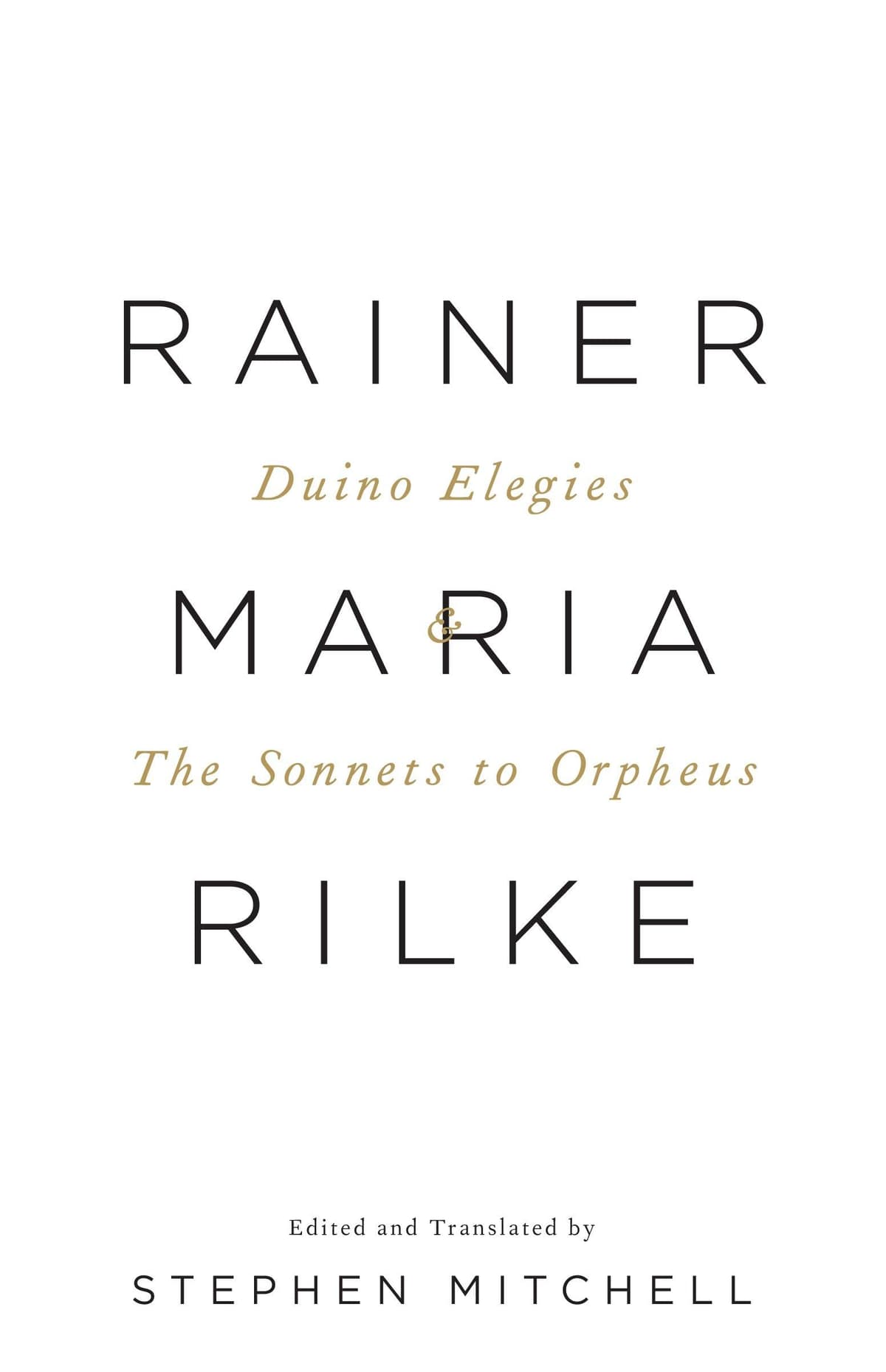
The Duino Elegies
“Who, if I cried out, would hear me among the Angels' Orders?”
The Duino Elegies Summary
The Duino Elegies is a cycle of ten elegies that constitute one of the supreme achievements in modern poetry. Begun in 1912 at Duino Castle on the Adriatic coast and completed a decade later in a sudden burst of inspiration at Muzot in Switzerland, the poems wrestle with the great existential questions: the nature of human suffering, the limits of consciousness, and our place in a cosmos indifferent to our longing. The elegies move through a vast landscape of thought, invoking angels as figures of terrifying completeness, exploring the grief of young lovers, meditating on acrobats and heroes, and descending into a mythic City of Pain where sorrow itself becomes a kind of geography.
What makes these poems extraordinary is Rilke's insistence that anguish and joy are inseparable, that embracing mortality is the highest act of praise. The sequence builds toward a visionary resolution in which the poet affirms the task of transforming the visible world into something inward and imperishable through language. Rilke's style fuses philosophical abstraction with startling sensory images—linden trees, fountains, starlit skies—creating a music that feels at once urgent and eternal. The Duino Elegies remain the defining statement of lyric poetry's power to confront the deepest questions of human existence.
Why Read The Duino Elegies?
If you have ever stood at the edge of something vast—an ocean, a loss, a silence you could not fill—these poems will articulate what you felt but could not say. Rilke does not offer comfort so much as companionship in the face of life's most unforgiving truths. The Duino Elegies will crack open your sense of what language can do, showing you that poetry is not decoration but a way of knowing the world at its most elemental.
You do not need to be a poetry reader to be transformed by these elegies. Their power lies in Rilke's ability to make abstract terror and beauty feel as immediate as a hand on your chest. Reading them is a rite of passage—a confrontation with mortality that leaves you not diminished but strangely enlarged, more capable of praise. They are short enough to read in an afternoon and deep enough to spend a lifetime returning to.
About Rainer Maria Rilke
Rainer Maria Rilke (1875–1926) was a Bohemian-Austrian poet born in Prague who became the most influential lyric voice of the twentieth century. Restless and peripatetic, he wandered across Europe—Paris, Rome, Scandinavia, Spain, Egypt—seeking the solitude and patronage his art demanded. His early works, including The Book of Hours and New Poems, established his reputation, but it was his encounter with the sculptor Auguste Rodin in Paris that transformed his poetics, teaching him to observe the world with the patience and precision of a craftsman shaping stone.
Rilke's major works—the Duino Elegies, the Sonnets to Orpheus, and the novel The Notebooks of Malte Laurids Brigge—form the cornerstone of modern European literature. He wrote with equal mastery in German and French and maintained a vast correspondence that itself ranks among the great literary documents of the century. He died of leukemia at fifty-one, having completed the Elegies only four years earlier in a legendary creative outpouring. His influence extends far beyond poetry into philosophy, theology, and psychology, and his work continues to be a touchstone for anyone seeking to understand the relationship between art and the depths of human experience.
Reading Guide
Ranked #356 among the greatest books of all time, The Duino Elegies by Rainer Maria Rilke has earned its place in the literary canon. Originally written in German and published in 1923, this challenging read from Germany continues to resonate with readers today.
This book belongs to our Philosophy & Faith and Love & Loss collections, where you can discover more books that share its spirit and themes.
If you enjoy challenging reads like this one, you might also like Ulysses, Moby-Dick, or Lolita.
From the Philosophy & Faith Collection
If you enjoyed The Duino Elegies, discover more masterpieces that share its spirit.
 #11View Book
Crime and Punishment
Fyodor Dostoevsky
High•20-25 hours #18View Book
The Bible
Various
Variable•60-80 hours #19View Book
The Brothers Karamazov
Fyodor Dostoevsky
Very High•35-40 hours #21View Book
The Stranger
Albert Camus
Moderate•3-4 hours
Browse more collections