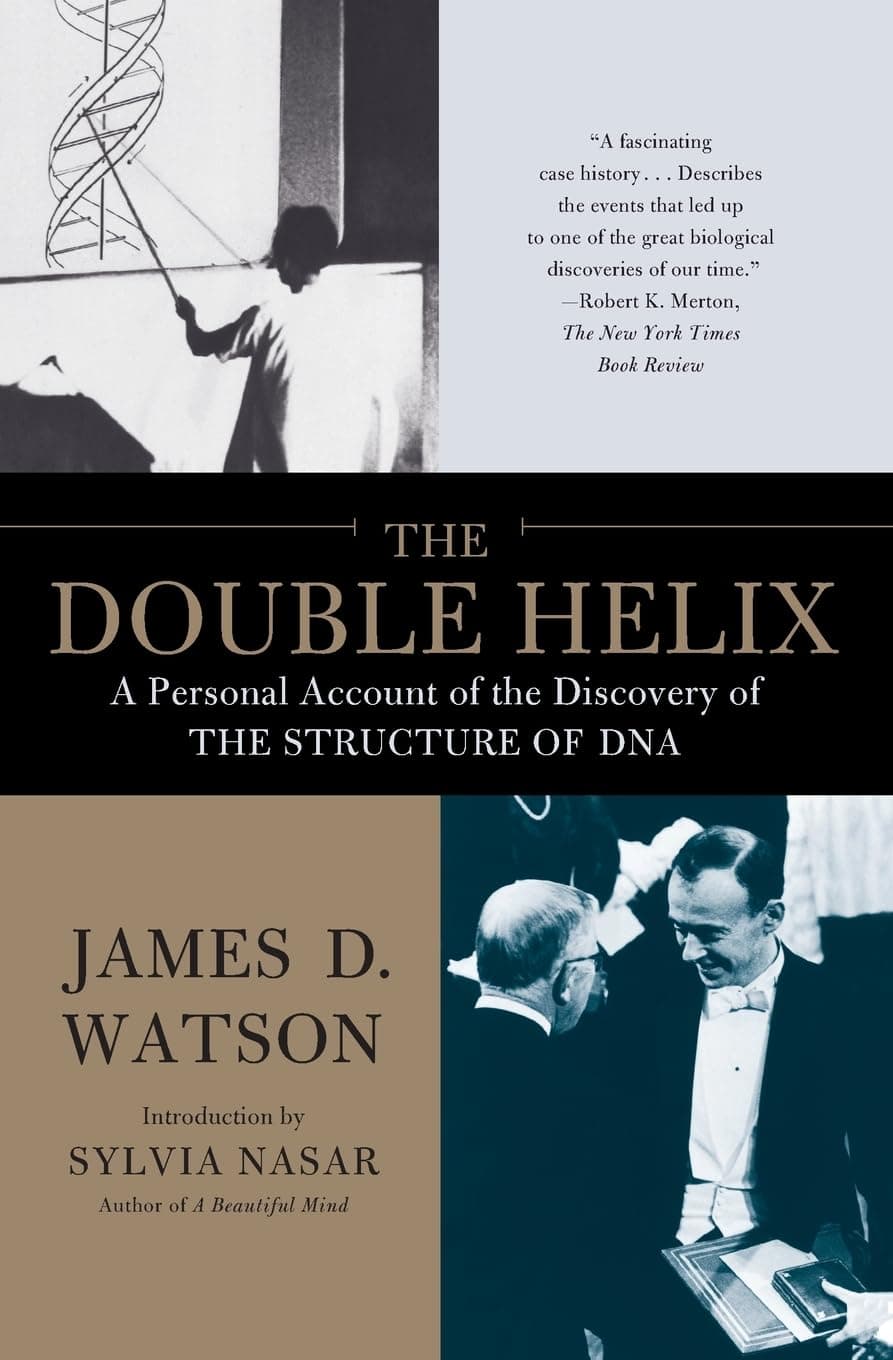
The Double Helix
“One could not be a successful scientist without realizing that, in contrast to the popular conception supported by newspapers and mothers of scientists, a goodly number of scientists are not only narrow-minded and dull, but also just stupid.”
The Double Helix Summary
James Watson's candid and controversial memoir recounts the race to discover the structure of DNA, one of the most consequential scientific breakthroughs of the twentieth century. Writing with brash immediacy, Watson describes how he and Francis Crick, working at Cambridge's Cavendish Laboratory in the early 1950s, pieced together the double-helix model of DNA through a combination of brilliant intuition, strategic borrowing of competitors' data, and sheer dogged persistence. The narrative captures the rivalry with Linus Pauling at Caltech, the fraught relationship with Maurice Wilkins and Rosalind Franklin at King's College London, and the electrifying moment when the pieces finally fell into place. Watson portrays science not as a pristine process of rational inquiry but as a messy, deeply human endeavor driven by ambition, ego, and luck.
The Double Helix transformed the popular understanding of how science actually works. Watson's unsparing honesty about his own competitiveness and occasional pettiness shocked the scientific establishment, while his treatment of Rosalind Franklin, whose critical X-ray crystallography data was shared with Watson and Crick without her knowledge, sparked debates about ethics and credit in research that continue to this day. The book reads like a thriller, building suspense as the competing teams converge on the same prize. It raises fundamental questions about collaboration and competition, the role of personality in discovery, and who gets written into the history of science. As both a firsthand account of a transformative moment and a provocative meditation on scientific ambition, the memoir remains essential and endlessly debated.
Why Read The Double Helix?
This is science writing at its most exhilarating and honest. Watson pulls back the curtain on one of the greatest discoveries in human history and reveals a story driven not by detached rationality but by rivalry, ambition, and flashes of insight that arrived over pub lunches and model-building sessions. The narrative moves with the pace of a detective novel, and the stakes could not be higher: understanding the very molecule that encodes life itself. Even readers with no background in biology will find themselves gripped by the human drama.
What makes The Double Helix enduringly important is its refusal to mythologize science. Watson's frank portrayal of his own flaws, his competitive instincts, and his dismissive attitude toward colleagues, particularly Rosalind Franklin, forces readers to grapple with uncomfortable truths about how breakthroughs actually happen. The book has sparked decades of discussion about scientific ethics, the erasure of women from discovery narratives, and the difference between the ideal of collaboration and the reality of competition. Reading it sharpens the way one thinks about knowledge, credit, and the tangled relationship between genius and opportunity.
About James D. Watson
James Dewey Watson was born in Chicago in 1928 and displayed a precocious interest in science from an early age, entering the University of Chicago at fifteen. He earned his doctorate in zoology from Indiana University at twenty-two and traveled to Cambridge, England, where his fateful collaboration with Francis Crick led to the elucidation of DNA's double-helix structure in 1953. This discovery earned Watson, Crick, and Maurice Wilkins the Nobel Prize in Physiology or Medicine in 1962.
After his Nobel Prize, Watson became a powerful figure in American science, serving as director of the Cold Spring Harbor Laboratory for nearly four decades and playing a key role in launching the Human Genome Project. The publication of The Double Helix in 1968 made him one of the most famous scientists alive and one of the most controversial, as critics objected to his portrayal of colleagues and his later public statements drew widespread condemnation. Despite these controversies, his memoir remains one of the most influential works of science writing ever published, inspiring countless young scientists and fundamentally changing how the public understands the process of scientific discovery.
Reading Guide
Ranked #289 among the greatest books of all time, The Double Helix by James D. Watson has earned its place in the literary canon. Originally written in English and published in 1968, this accessible read from United States continues to resonate with readers today.
This book belongs to our Modern Mind collection, where you can discover more books that share its spirit and themes.
If you enjoy accessible reads like this one, you might also like The Great Gatsby, The Catcher in the Rye, or Pride and Prejudice.
From the Modern Mind Collection
If you enjoyed The Double Helix, discover more masterpieces that share its spirit.
 #1View Book
Ulysses
James Joyce
Challenging•35-40 hours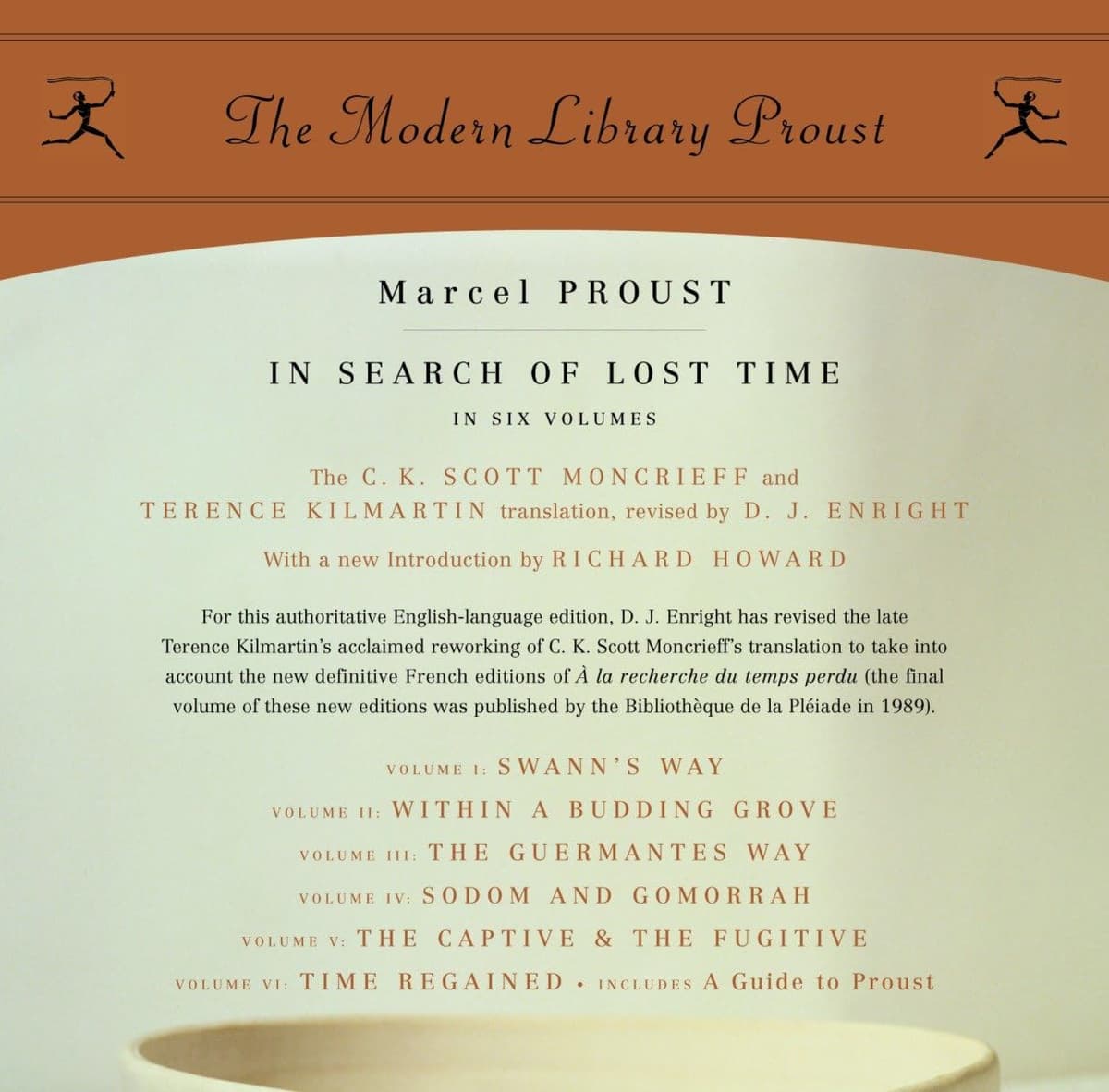 #2View Book
In Search of Lost Time
Marcel Proust
High•100+ hours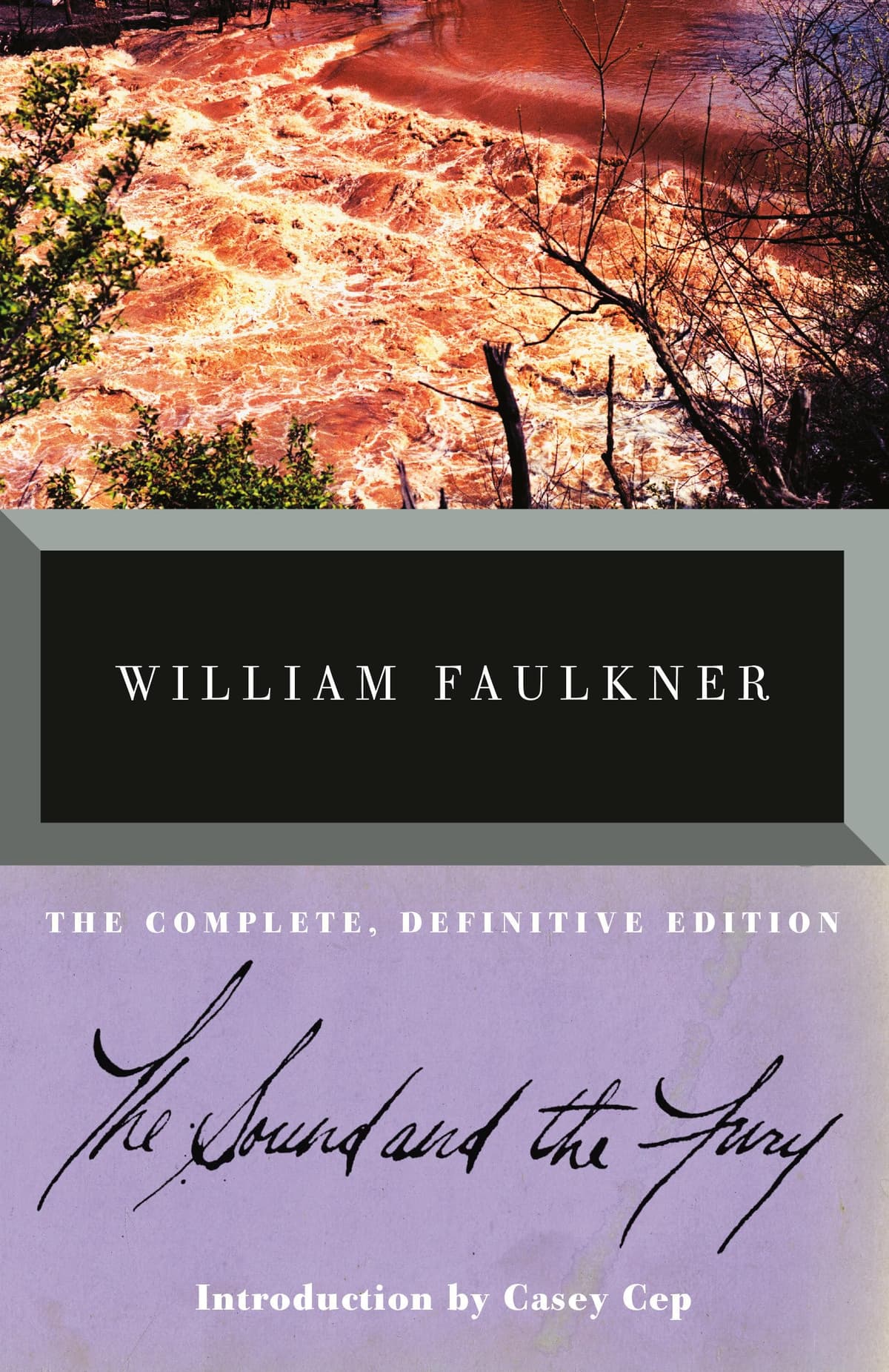 #8View Book
The Sound and the Fury
William Faulkner
Very High•12-15 hours #13View Book
Lolita
Vladimir Nabokov
Challenging•12-15 hours
Browse more collections