The Chronicles of Narnia
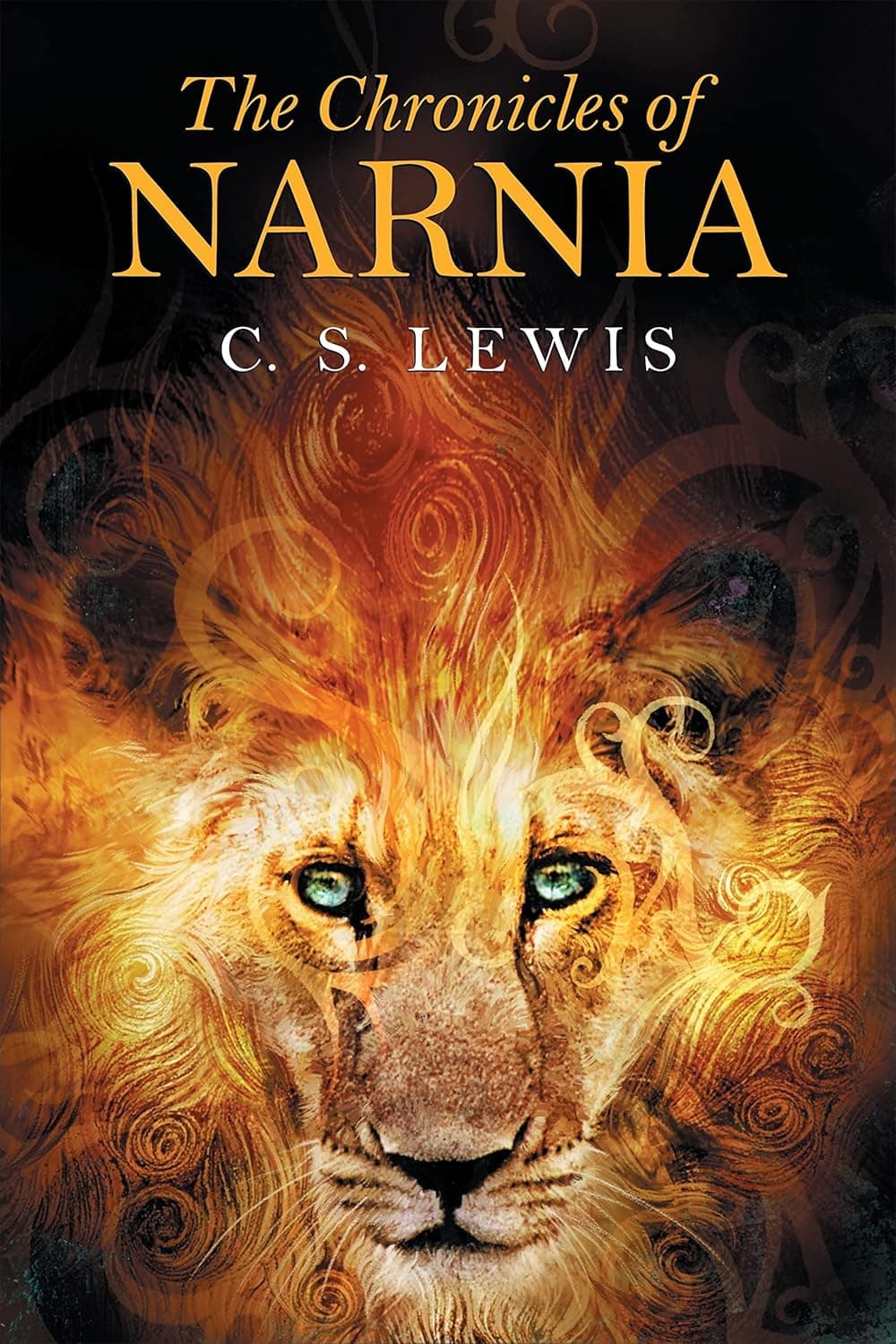
“Once a King or Queen of Narnia, always a King or Queen of Narnia.”
The Chronicles of Narnia Summary
Four children step through a wardrobe in an old professor's house and emerge into a land of eternal winter, talking animals, and ancient prophecy. Narnia—enslaved by the White Witch, who has made it always winter and never Christmas—awaits the return of the great lion Aslan and the fulfillment of a prophecy that four human children will sit on the thrones at Cair Paravel. So begins The Lion, the Witch and the Wardrobe, the first and most beloved volume of C. S. Lewis's seven-book saga. Across the full Chronicles, Lewis maps an entire world from its divine creation in The Magician's Nephew to its apocalyptic end in The Last Battle, sending different children through different doorways at different moments in Narnian history.
The Chronicles of Narnia operate on multiple levels simultaneously. For younger readers, they are pure enchantment—a world of fauns and centaurs, sea voyages and underground kingdoms, marshwiggles and talking mice. For those attuned to Lewis's intentions, the stories form an elaborate Christian allegory: Aslan's sacrifice and resurrection echo the Passion of Christ, the creation of Narnia mirrors Genesis, and the final battle reimagines Revelation. Yet Lewis was too fine a storyteller to let theology smother narrative. The books succeed because they honor the logic of their own world, because Edmund's Turkish Delight tastes real, because Reepicheep's courage feels genuine, because the lamp-post in the snow is an image that, once encountered, never leaves the imagination.
Why Read The Chronicles of Narnia?
Whether you first encountered Narnia as a child or come to it fresh as an adult, these books offer something rare: a world that feels both completely invented and completely true. Lewis writes with a warmth and clarity that makes his fantasy landscapes as vivid as any real place you have visited. The stories move at a gallop, the characters are drawn with economical precision, and the sense of wonder never flags across seven volumes.
The Chronicles endure because they speak to fundamental human longings—for courage in the face of evil, for sacrifice that redeems, for a world where goodness is not naive but fierce. You do not need to share Lewis's Christian faith to feel the power of Aslan's resurrection or the heartbreak of the final farewell. These are stories about what it means to grow up without growing cynical, to keep faith with the marvelous even when the wardrobe door seems closed forever. They have shaped the imaginations of millions, and they will shape yours.
About C. S. Lewis
C. S. Lewis (1898–1963) was a British scholar, novelist, and Christian apologist whose range of achievement is almost without parallel in twentieth-century letters. Born in Belfast, Northern Ireland, he lost his mother at nine, endured brutal English boarding schools, and was wounded in the trenches of World War I before settling into an academic career at Oxford and later Cambridge, where he became one of the foremost medievalists and literary historians of his generation.
Lewis's conversion from atheism to Christianity in 1931—influenced in part by his close friendship with J. R. R. Tolkien—transformed his literary output profoundly. He became the most popular defender of the Christian faith in the English-speaking world through works like Mere Christianity, The Screwtape Letters, and The Problem of Pain. His fiction—the Narnia chronicles, the Space Trilogy, and Till We Have Faces—demonstrated that theological imagination could produce literature of the highest order. He died on November 22, 1963, the same day as John F. Kennedy and Aldous Huxley.
Reading Guide
Ranked #219 among the greatest books of all time, The Chronicles of Narnia by C. S. Lewis has earned its place in the literary canon. Originally written in English and published in 1950–1956, this accessible read from United Kingdom continues to resonate with readers today.
This book belongs to our Philosophy & Faith and Speculative Futures collections, where you can discover more books that share its spirit and themes.
If you enjoy accessible reads like this one, you might also like The Great Gatsby, The Catcher in the Rye, or Pride and Prejudice.
From the Philosophy & Faith Collection
If you enjoyed The Chronicles of Narnia, discover more masterpieces that share its spirit.
 #11View Book
Crime and Punishment
Fyodor Dostoevsky
High•20-25 hours #18View Book
The Bible
Various
Variable•60-80 hours #19View Book
The Brothers Karamazov
Fyodor Dostoevsky
Very High•35-40 hours #21View Book
The Stranger
Albert Camus
Moderate•3-4 hours
Browse more collections