The Book of Disquiet
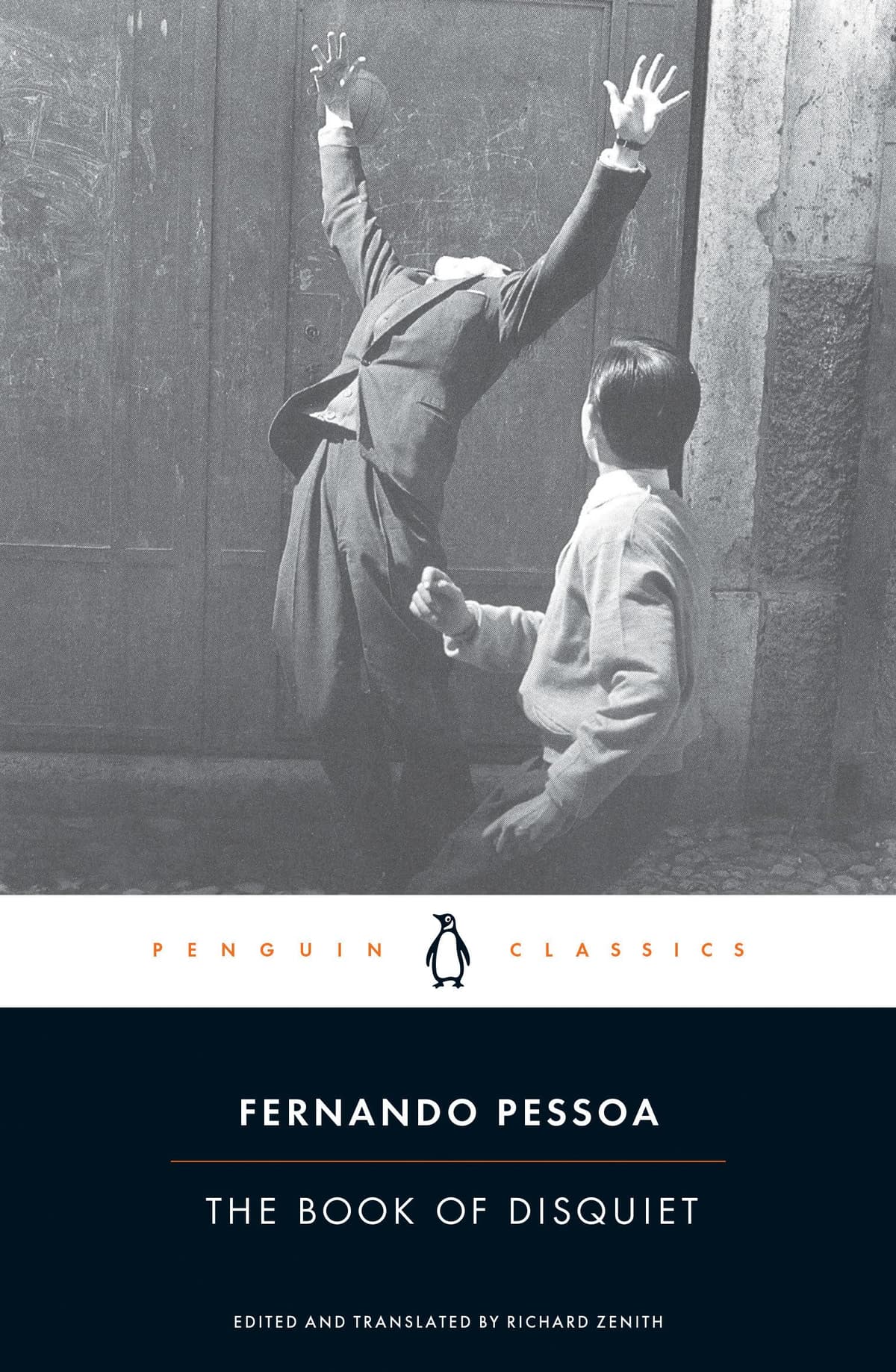
“I carry my awareness of defeat like a banner of victory.”
The Book of Disquiet Summary
There is no plot, no story, no beginning or end—only the inner life of Bernardo Soares, an assistant bookkeeper in Lisbon, who fills his solitary hours with fragments of prose that are among the most luminous in any language. The Book of Disquiet is a vast, unfinished collection of journal entries, aphorisms, dreams, and philosophical meditations discovered in a trunk after Fernando Pessoa's death—hundreds of loose pages that he labored over for decades without ever assembling into a final form. Soares walks the streets of Lisbon, observes the light on the Tagus, sits at his desk in an office on the Rua dos Douradores, and transforms the mundane details of his uneventful existence into a shimmering inquiry into consciousness, beauty, and the unbearable strangeness of being alive.
The result is a masterpiece of literary introversion—a book that makes the inner life seem as vast and varied as any adventure novel. Pessoa writes about boredom, insomnia, the texture of a rainy afternoon, the terror of self-awareness, and the consolation of dreams with a precision that borders on the mystical. The Book of Disquiet dissolves the boundary between philosophy and poetry, confession and fiction, and its fragmentary nature—far from being a weakness—becomes its greatest strength, mirroring the discontinuity of consciousness itself. It is the ultimate book for those who live inside their own heads.
Why Read The Book of Disquiet?
If you have ever stared out a window and felt the weight of your own existence—felt the strange sadness of an ordinary afternoon, the beauty of a street you walk every day, the vertigo of being conscious in a world that does not explain itself—then this book already belongs to you. Pessoa's fragments speak directly to the inner life, to the part of you that observes and wonders and cannot stop thinking. Each page is a small miracle of perception, a sentence or paragraph that captures something you have always felt but never been able to articulate.
The Book of Disquiet asks nothing of you except attention. There is no story to follow, no characters to track—only the extraordinary spectacle of a human mind in conversation with itself. You can open it anywhere, read a single page, and feel the world shift slightly on its axis. It is the perfect companion for solitary evenings, for melancholy moods, for those moments when you need to be reminded that the life of the mind is the richest life of all.
About Fernando Pessoa
Fernando Pessoa (1888–1935) was born in Lisbon but raised in Durban, South Africa, where he received an English-language education that shaped his literary sensibility. He returned to Lisbon at seventeen and spent the rest of his life there, working as a commercial translator while producing one of the most extraordinary bodies of work in modern literature—much of it unpublished during his lifetime.
Pessoa's great invention was the heteronym: not a mere pseudonym but a fully realized literary personality, complete with biography, style, and philosophical outlook. He created over seventy heteronyms, the most famous being Alberto Caeiro, Ricardo Reis, and Alvaro de Campos, each a distinct poet with a distinct voice. Pessoa published only one book of Portuguese poetry in his lifetime, Mensagem, and died in obscurity. The trunk of manuscripts he left behind—including The Book of Disquiet—has since established him as one of the giants of twentieth-century literature, the equal of Joyce and Proust in ambition and originality.
Reading Guide
Ranked #190 among the greatest books of all time, The Book of Disquiet by Fernando Pessoa has earned its place in the literary canon. Originally written in Portuguese and published in 1982, this challenging read from Portugal continues to resonate with readers today.
This book belongs to our Modern Mind and Philosophy & Faith collections, where you can discover more books that share its spirit and themes.
If you enjoy challenging reads like this one, you might also like Ulysses, Moby-Dick, or Lolita.
From the Modern Mind Collection
If you enjoyed The Book of Disquiet, discover more masterpieces that share its spirit.
 #1View Book
Ulysses
James Joyce
Challenging•35-40 hours #2View Book
In Search of Lost Time
Marcel Proust
High•100+ hours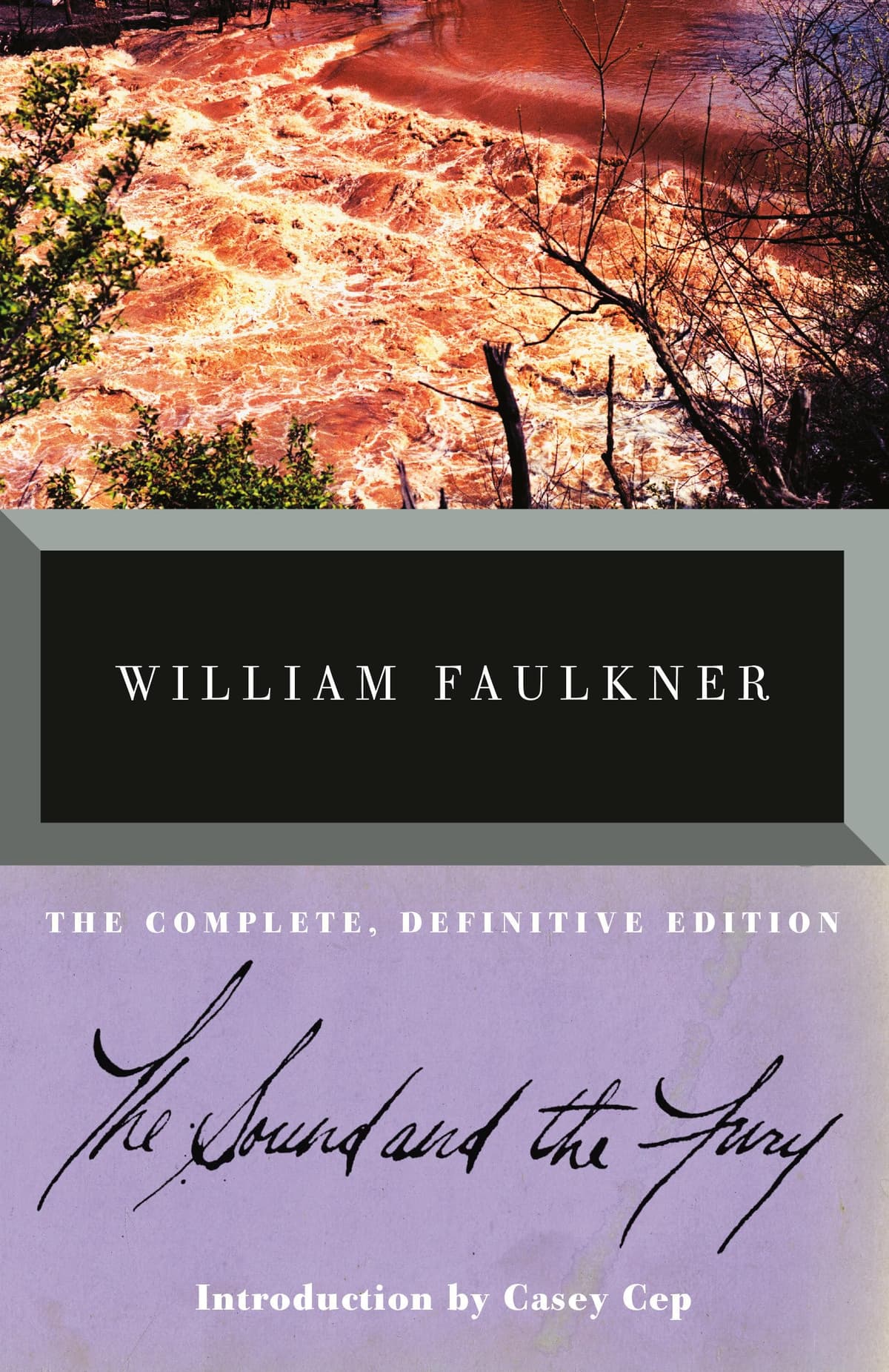 #8View Book
The Sound and the Fury
William Faulkner
Very High•12-15 hours #13View Book
Lolita
Vladimir Nabokov
Challenging•12-15 hours
Browse more collections