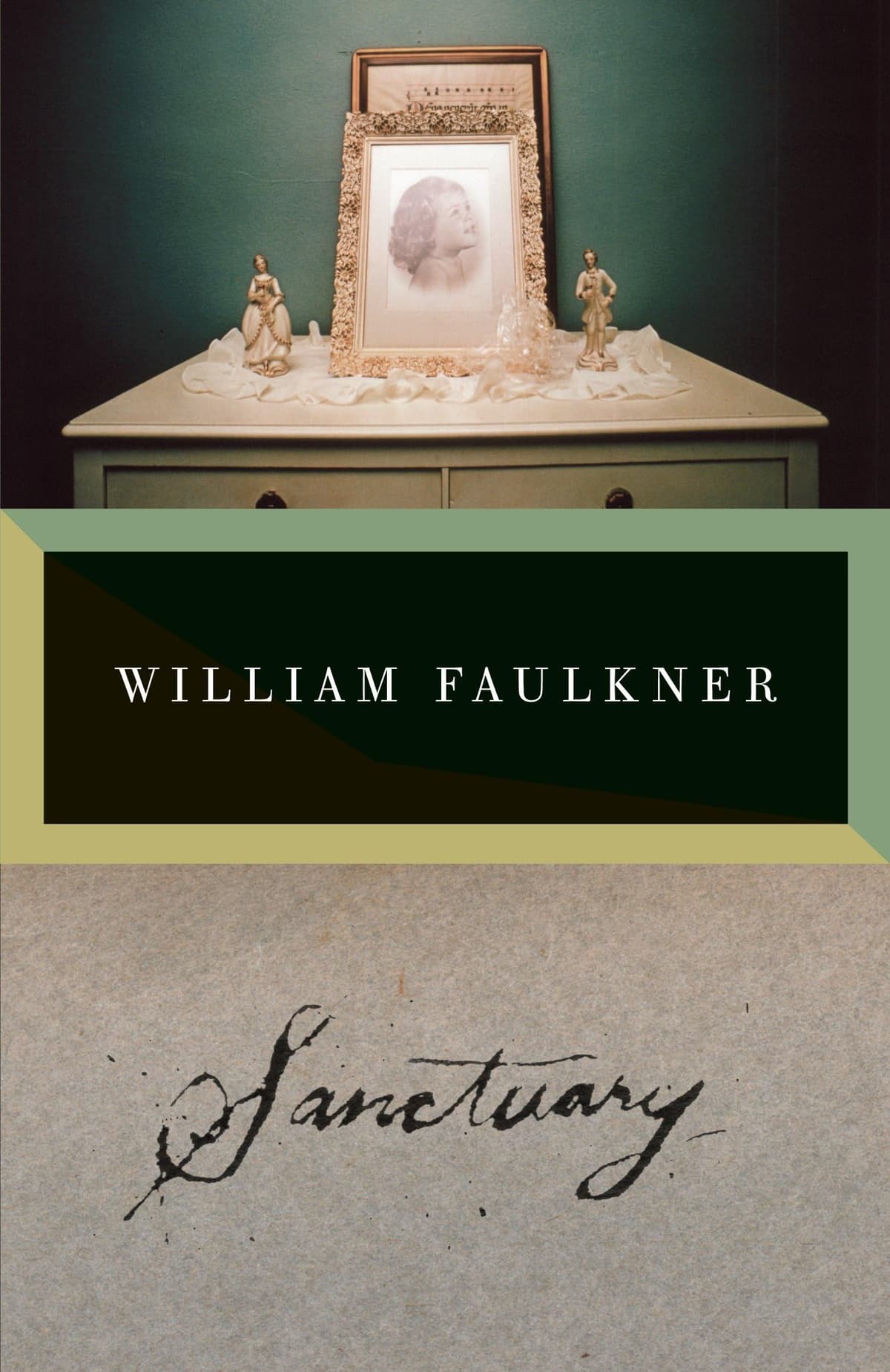
Sanctuary
“The thing to do is, you got to set down and think about trouble. It ain't the thing to do to run from it.”
Sanctuary Summary
In the fictional Yoknapatawpha County of Mississippi, Temple Drake, a privileged young woman from a prominent family, finds herself stranded with her drunken escort at the crumbling plantation of the Old Frenchman's Place, now inhabited by a bootlegger named Lee Goodwin and a collection of desperate men. Among them is Popeye, a cold, impotent gangster whose eyes are described as rubber knobs, a figure of pure malevolence who embodies a mechanized, modern evil. What follows is a nightmare of violation and captivity: Popeye murders Tommy, a simple-minded guard, and commits a horrific assault on Temple before abducting her to a Memphis brothel, where she is kept in a state of degradation and psychological collapse. The novel's second half follows the trial of Lee Goodwin, who is wrongly accused of the murder, while Horace Benbow, an idealistic lawyer, attempts to uncover the truth and secure justice. But the forces of corruption, cowardice, and social respectability prove far more powerful than any individual's pursuit of justice, and the novel's conclusion is devastatingly bleak.
Sanctuary is often described as Faulkner's most sensational novel, and he himself initially dismissed it as a potboiler written to make money. Yet the revised version he published is a work of genuine artistic power, a novel in which the Gothic horrors of the plot serve as vehicles for a searing indictment of Southern society and the American justice system. Faulkner exposes a world in which respectability is merely a veneer for moral cowardice, in which the privileged protect their own at the expense of truth, and in which violence against women and the poor is absorbed into the social order without consequence. The novel's taut, elliptical prose style, its refusal to flinch from depravity, and its corrosive vision of institutional corruption make it one of the most disturbing and powerful works of American fiction.
Why Read Sanctuary?
Sanctuary is Faulkner at his most visceral and accessible, a novel that grabs you by the throat and refuses to let go. If you have found Faulkner's more experimental works challenging, this is a compelling entry point: the prose is leaner, the plot more linear, and the narrative drive relentless. But do not mistake accessibility for simplicity. Beneath the surface of this crime novel lies one of Faulkner's most devastating portraits of a society rotted from within, a world where the machinery of justice exists to protect the powerful and condemn the innocent, where respectability is the most dangerous form of corruption.
You should read Sanctuary because it exposes truths about power, violence, and moral cowardice that remain urgently relevant. Faulkner's depiction of how an entire community conspires, through action and inaction, to bury the truth rather than confront it will resonate with anyone who has watched institutions fail their most vulnerable members. The novel is also a masterclass in atmospheric writing: the decaying plantation, the squalid Memphis brothel, the suffocating courtroom are rendered with a precision that makes them unforgettable. This is not comfortable reading, but it is essential reading for anyone who wants to understand the darkest currents of the American experience.
About William Faulkner
William Faulkner was born in 1897 in New Albany, Mississippi, and grew up in Oxford, Mississippi, the town that would serve as the model for his fictional Jefferson, seat of the mythical Yoknapatawpha County in which most of his major fiction is set. He dropped out of high school, briefly attended the University of Mississippi, and served in the Royal Air Force in Canada during World War I, though the war ended before he saw combat. After years of odd jobs and literary obscurity, he published The Sound and the Fury in 1929, beginning one of the most remarkable sustained periods of creativity in literary history.
Between 1929 and 1942, Faulkner produced a body of work, including As I Lay Dying, Light in August, Absalom, Absalom!, and Go Down, Moses, that stands among the greatest achievements in twentieth-century fiction. His radical experiments with narrative structure, stream of consciousness, multiple perspectives, and the representation of time and memory transformed the possibilities of the novel form. He supported himself partly through screenwriting in Hollywood, contributing to films including The Big Sleep and To Have and Have Not. He received the Nobel Prize in Literature in 1949, delivering one of the most celebrated acceptance speeches in the prize's history. He died in 1962, recognized as the supreme novelist of the American South and one of the towering figures of world literature.
Reading Guide
Ranked #496 among the greatest books of all time, Sanctuary by William Faulkner has earned its place in the literary canon. Originally written in English and published in 1931, this moderate read from United States continues to resonate with readers today.
This book belongs to our Gothic & Dark and American Spirit collections, where you can discover more books that share its spirit and themes.
If you enjoy moderate reads like this one, you might also like One Hundred Years of Solitude, Nineteen Eighty-Four, or Wuthering Heights.
From the Gothic & Dark Collection
If you enjoyed Sanctuary, discover more masterpieces that share its spirit.
 #15View Book
Wuthering Heights
Emily Brontë
Moderate•10-12 hours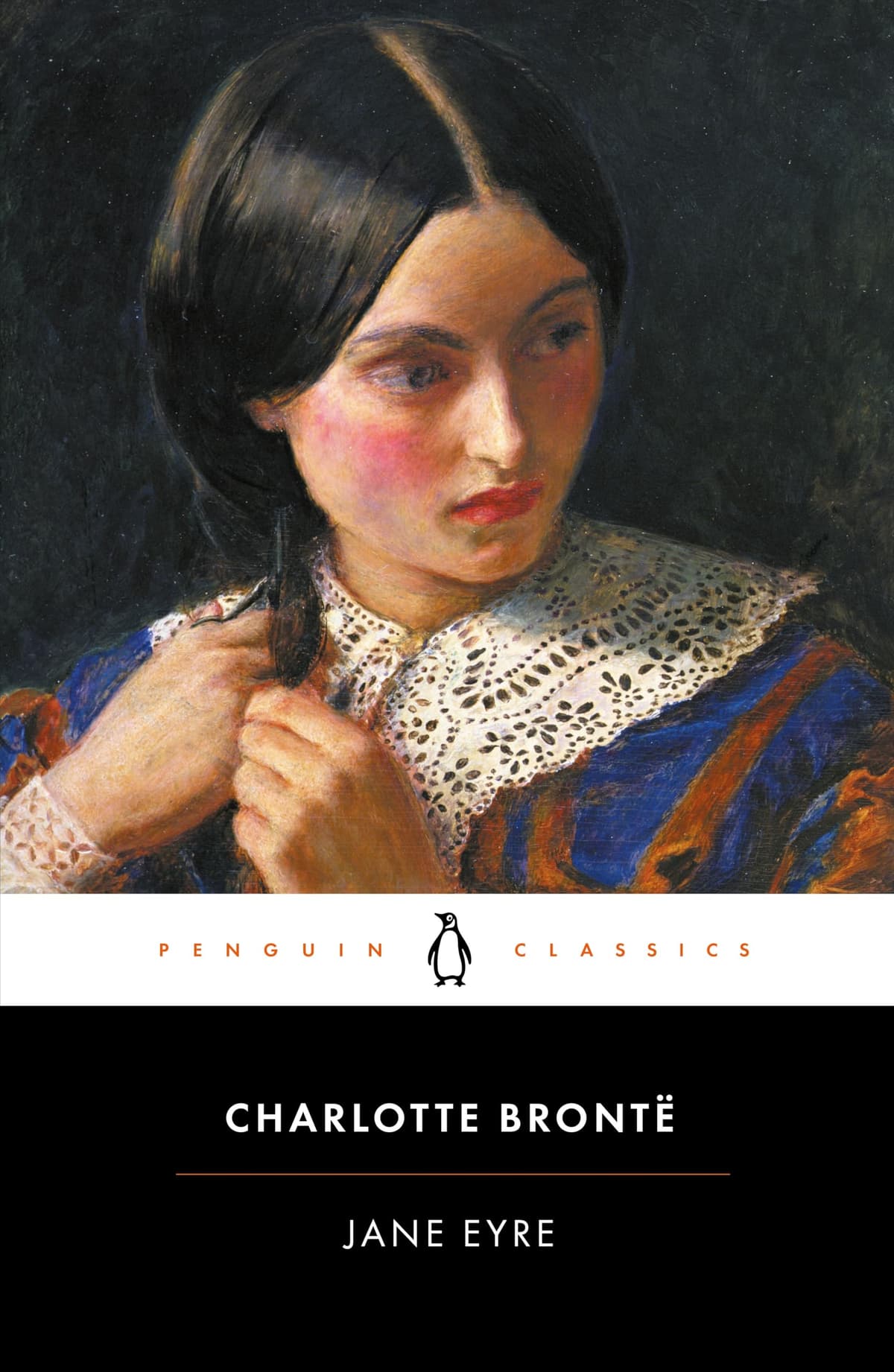 #29View Book
Jane Eyre
Charlotte Brontë
Accessible•15-20 hours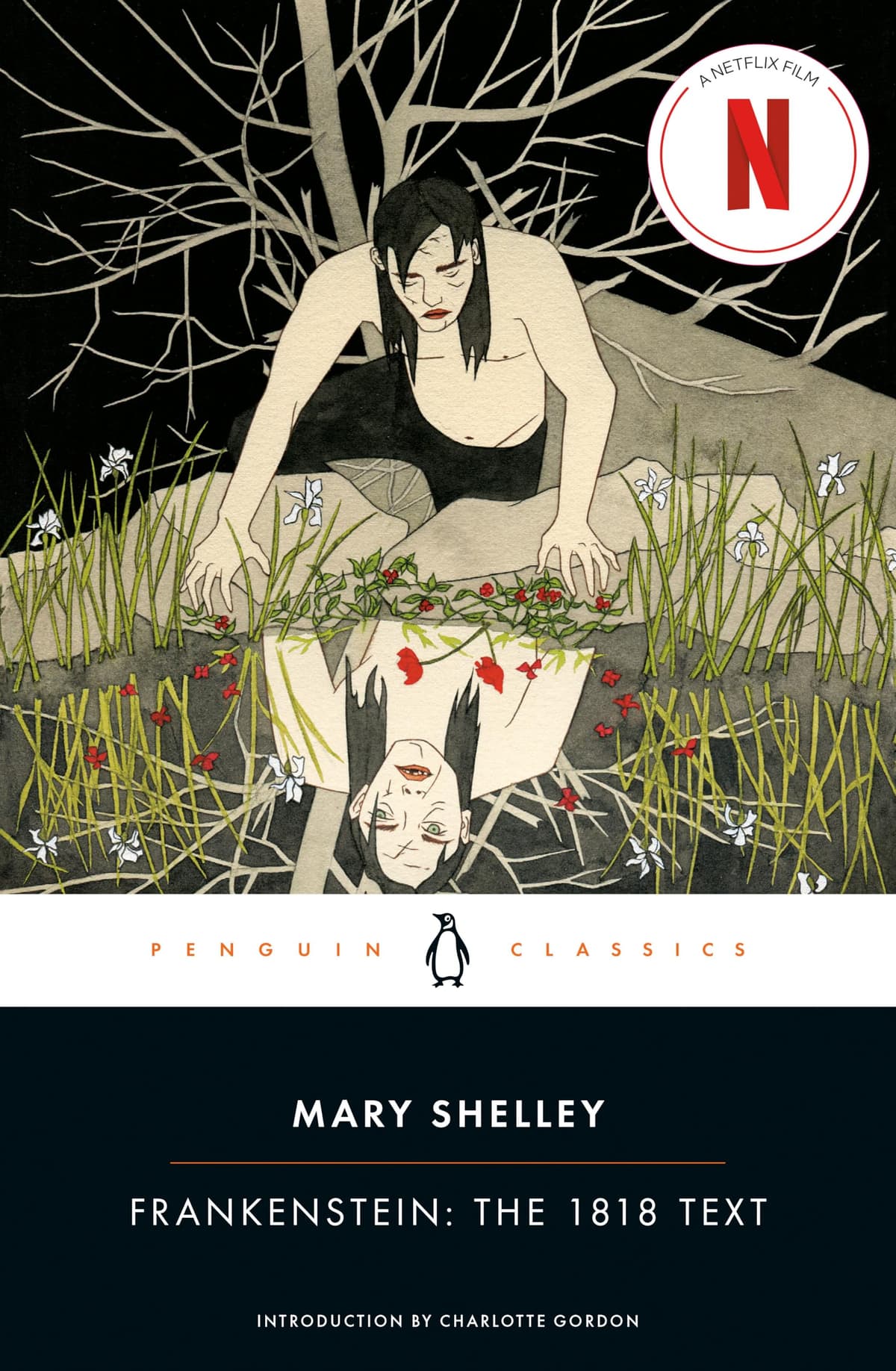 #41View Book
Frankenstein
Mary Shelley
Accessible•6-8 hours #44View Book
Absalom, Absalom!
William Faulkner
Very High•12-15 hours
Browse more collections