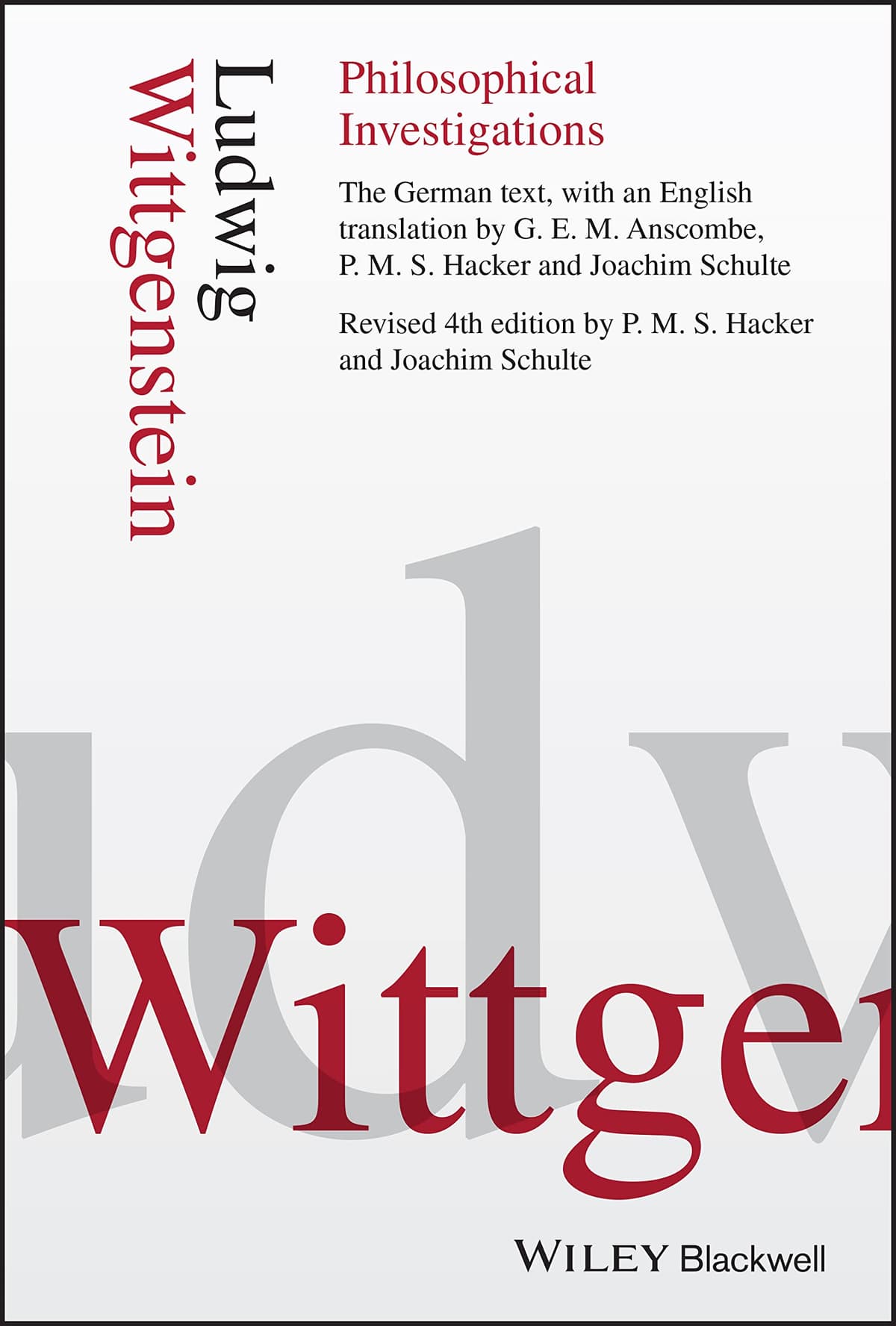
Philosophical Investigations
“The limits of my language mean the limits of my world.”
Philosophical Investigations Summary
Philosophical Investigations dismantles the very foundations of how we think about language, meaning, and the mind, not through systematic argument but through a series of provocative thought experiments, questions, and observations that accumulate into one of the most radical intellectual achievements of the twentieth century. Wittgenstein abandons the picture theory of language he had advanced in his earlier Tractatus Logico-Philosophicus and replaces it with the concept of language games: the idea that words derive their meaning not from correspondence with objects but from their use within particular forms of life. He asks us to consider a builder and an assistant using only four words, to imagine a beetle in a box that no one else can see, to follow a rule and then ask what it means to follow a rule. The text proceeds not linearly but in overlapping waves, circling back to the same problems from different angles, each remark a small detonation that destabilizes assumptions you did not know you held. There is no grand conclusion, no triumphant system, only the painstaking, liberating work of untying philosophical knots.
Published posthumously, Philosophical Investigations represents one of the most profound challenges to Western philosophy since Kant. Wittgenstein's method is therapeutic rather than constructive: he does not build a theory of meaning but dissolves the confusions that make us think we need one. His writing is austere, aphoristic, and deceptively simple, with a poetic compression that rewards rereading across a lifetime. The book's influence extends far beyond academic philosophy into linguistics, psychology, anthropology, and literary theory, and its central insight, that meaning is use, has become one of the most consequential ideas of the modern era.
Why Read Philosophical Investigations?
Philosophical Investigations is one of those rare books that genuinely changes how you think, not by giving you new information but by showing you that questions you assumed were straightforward are in fact deeply confused. Wittgenstein does not tell you what meaning is; instead, he leads you through a series of deceptively simple thought experiments that cause your certainties to dissolve one by one. The experience is unsettling and exhilarating in equal measure, like having the floor pulled out from under you and discovering that you can fly. You will never again use the word "meaning" without a flicker of awareness that you may not know what you mean by it.
This is philosophy as it is rarely practiced: not as system-building or argument-winning but as a form of intellectual liberation. Wittgenstein writes with a spare intensity that makes every sentence feel essential, and his method of questioning rather than asserting invites you to think alongside him rather than simply absorb his conclusions. Whether you are interested in philosophy, language, psychology, or simply in the strange machinery of human understanding, Philosophical Investigations is a book you will return to throughout your life, finding new depths each time.
About Ludwig Wittgenstein
Ludwig Wittgenstein was born in Vienna in 1889 into one of Europe's wealthiest and most cultured families. His father was a steel magnate, his house hosted performances by Brahms and Mahler, and three of his four brothers would later take their own lives. Wittgenstein studied engineering in Berlin and Manchester before becoming obsessed with the foundations of mathematics, which led him to Bertrand Russell at Cambridge. He served in the Austrian army during World War I, and it was in the trenches and as a prisoner of war that he completed the Tractatus Logico-Philosophicus, a work he believed had solved all the problems of philosophy. He then gave away his enormous inheritance and spent years as a village schoolteacher, a gardener, and an architect before returning to Cambridge in 1929.
Wittgenstein is widely regarded as one of the two or three most important philosophers of the twentieth century, remarkable for having produced two profoundly different and influential philosophies in a single lifetime. The Tractatus, with its crystalline logical structure, dominated early analytic philosophy, while Philosophical Investigations, published posthumously in 1953, repudiated the Tractatus and revolutionized the field again. His influence pervades not only philosophy of language and mind but also aesthetics, anthropology, and literary theory. Wittgenstein died of cancer in Cambridge in 1951, his last words reportedly being: "Tell them I've had a wonderful life."
Reading Guide
Ranked #420 among the greatest books of all time, Philosophical Investigations by Ludwig Wittgenstein has earned its place in the literary canon. Originally written in German and published in 1953, this very high read from Austria continues to resonate with readers today.
This book belongs to our Philosophy & Faith collection, where you can discover more books that share its spirit and themes.
If you enjoy very high reads like this one, you might also like The Sound and the Fury, War and Peace, or The Brothers Karamazov.
From the Philosophy & Faith Collection
If you enjoyed Philosophical Investigations, discover more masterpieces that share its spirit.
 #11View Book
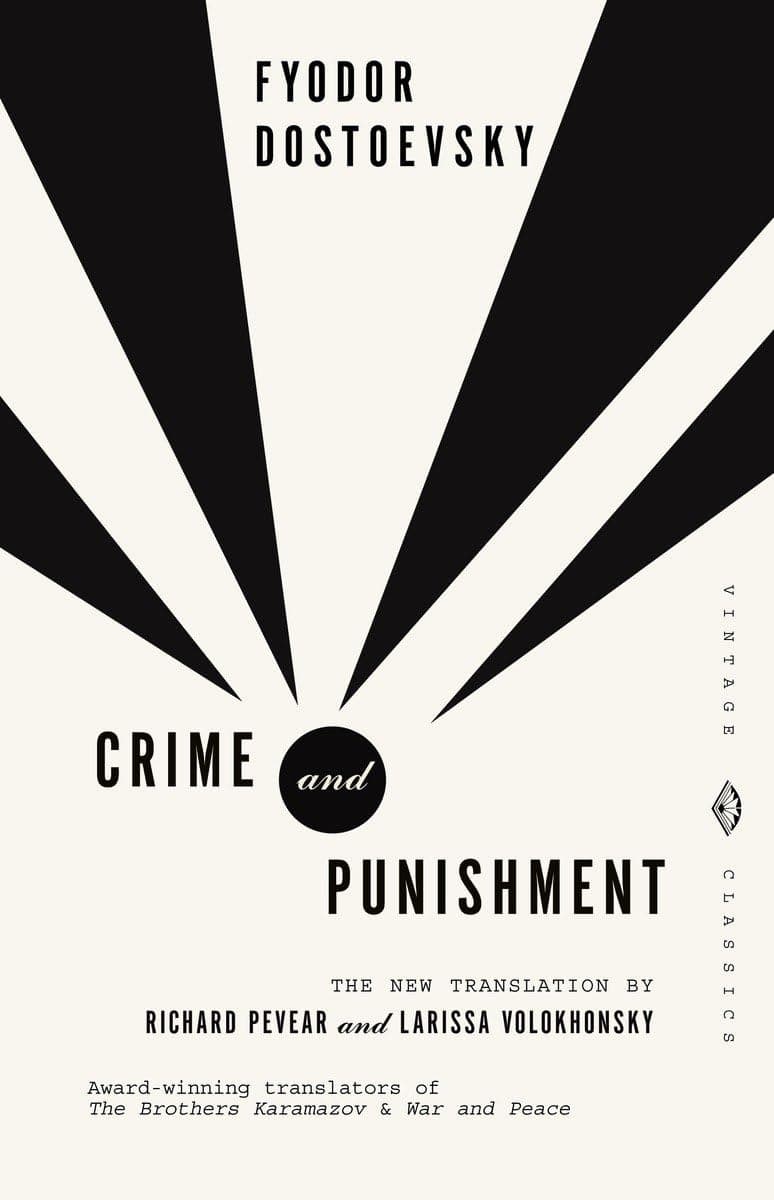
Crime and Punishment
Fyodor Dostoevsky
High•20-25 hours #18View Book
The Bible
Various
Variable•60-80 hours #19View Book
The Brothers Karamazov
Fyodor Dostoevsky
Very High•35-40 hours #21View Book
The Stranger
Albert Camus
Moderate•3-4 hours
Browse more collections