Pamela
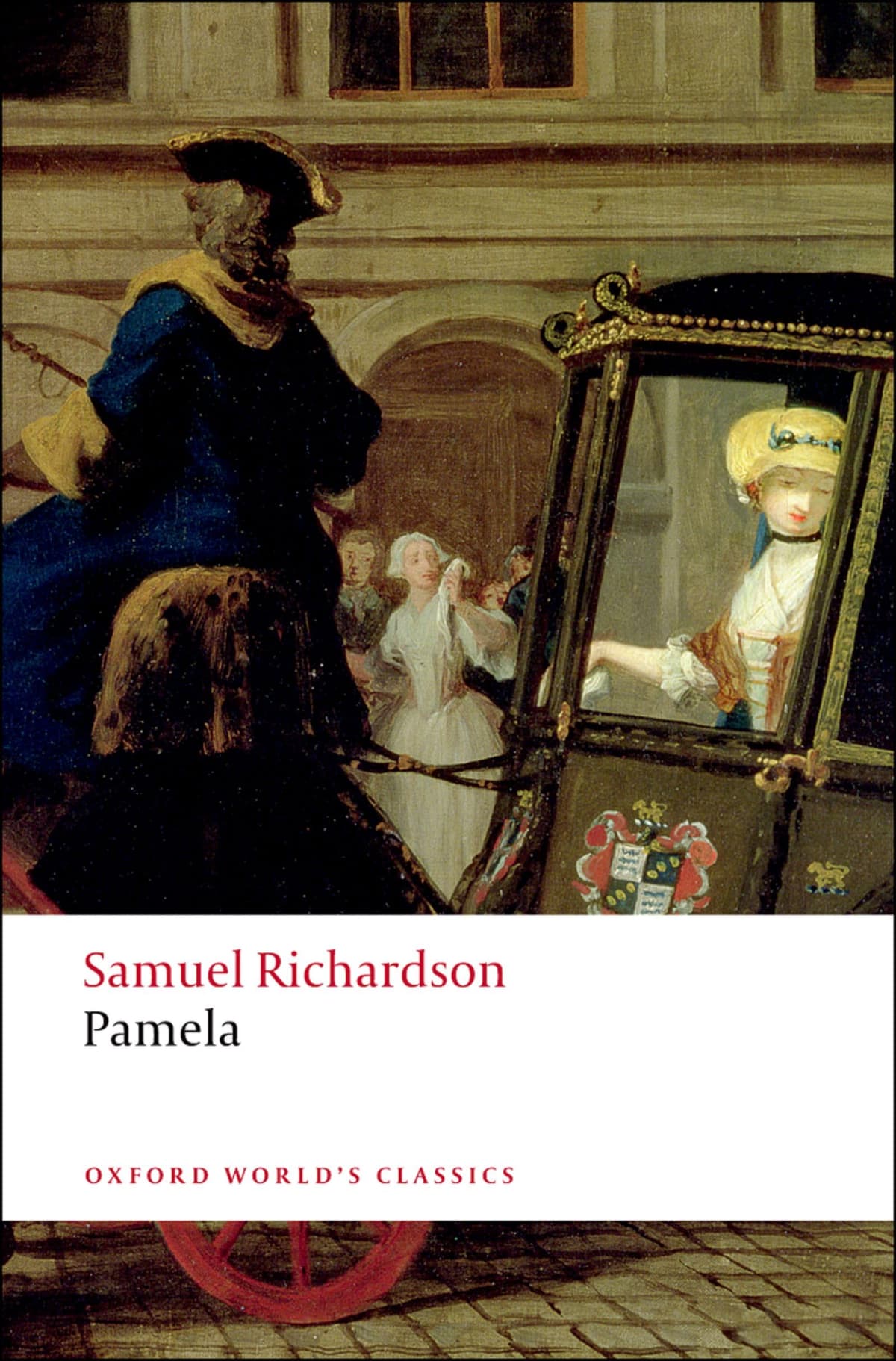
“I know nothing in the world so much worth my wishes, and my tears, as the liberty of going back to my poor parents.”
Pamela Summary
Pamela, or Virtue Rewarded tells the story of a fifteen-year-old servant girl whose master, the wealthy Mr. B, relentlessly pursues her after the death of his mother, Pamela's former employer. Told entirely through Pamela's own letters and journal entries, the novel chronicles her desperate attempts to preserve her chastity against Mr. B's escalating schemes of seduction, abduction, and intimidation. Pamela is kidnapped and imprisoned at a remote country estate, where her captor alternates between threats and declarations of love. Despite her helplessness and isolation, she remains steadfast in her virtue, and her moral integrity eventually transforms Mr. B from a predatory rake into a repentant suitor. The novel concludes with their marriage and Pamela's elevation into genteel society, where she wins over even her harshest critics with her grace and goodness.
Richardson's novel was a cultural earthquake upon its publication, becoming one of the first true bestsellers in the English language and helping to establish the novel as a serious literary form. Its epistolary format, which allows readers direct access to Pamela's thoughts and feelings in real time, created an unprecedented sense of intimacy and psychological immediacy. The novel provoked fierce debate from the moment of its publication: was Pamela a genuine moral exemplar, or a calculating social climber using her virtue as a bargaining chip? Henry Fielding's satirical response, Shamela, argued the latter. This controversy makes Pamela a fascinating document of eighteenth-century attitudes toward gender, class, and sexuality, and a foundational text in the history of the English novel.
Why Read Pamela?
Reading Pamela is like witnessing the birth of the novel as we know it. Richardson invented techniques of psychological intimacy that every novelist since has inherited, and encountering them at their source is a revelatory experience. Through Pamela's letters, you are placed inside the consciousness of a young woman in crisis with a directness that feels startlingly modern. Her voice is vivid, resourceful, and utterly compelling, whether she is describing her terror at Mr. B's advances or cataloguing the contents of her meager wardrobe.
Beyond its historical significance, Pamela remains a gripping read because it raises questions about power, consent, and social mobility that have lost none of their urgency. You will find yourself arguing with the text: Is Pamela's virtue genuine or strategic? Is Mr. B's reformation believable or convenient? Is the novel a feminist triumph or a patriarchal fantasy? These are questions that eighteenth-century readers debated passionately, and they will engage you just as powerfully. Pamela is essential reading for anyone who wants to understand where the English novel came from and why it matters.
About Samuel Richardson
Samuel Richardson (1689-1761) was born in Derbyshire, England, the son of a joiner. He received little formal education but was apprenticed to a London printer, eventually establishing his own successful printing business. He came to fiction late in life, beginning Pamela at the age of fifty after being commissioned to write a book of model letters for uneducated readers. The project sparked his imagination, and what began as a conduct manual became the most sensational novel of the eighteenth century. His quiet, industrious life as a tradesman contrasted sharply with the emotional intensity of his fiction.
Richardson is recognized as one of the founders of the English novel, and his influence on the development of the form is difficult to overstate. His second novel, Clarissa, is often considered the greatest novel of the eighteenth century, extending the psychological depth of Pamela into a vast tragic narrative. His epistolary technique inspired writers across Europe, from Rousseau to Laclos to Goethe, and his focus on female consciousness and domestic life opened territory that the novel would explore for centuries. Though less widely read today than his contemporaries, Richardson remains an indispensable figure in literary history.
Reading Guide
Ranked #488 among the greatest books of all time, Pamela by Samuel Richardson has earned its place in the literary canon. Originally written in English and published in 1740, this challenging read from United Kingdom continues to resonate with readers today.
This book belongs to our Society & Satire collection, where you can discover more books that share its spirit and themes.
If you enjoy challenging reads like this one, you might also like Ulysses, Moby-Dick, or Lolita.
From the Society & Satire Collection
If you enjoyed Pamela, discover more masterpieces that share its spirit.
 #9View Book
Don Quixote
Miguel de Cervantes
High•35-40 hours #12View Book
Pride and Prejudice
Jane Austen
Accessible•10-12 hours #22View Book
Madame Bovary
Gustave Flaubert
Moderate•12-15 hours #30View Book
Middlemarch
George Eliot
High•30-35 hours
Browse more collections