Nausea
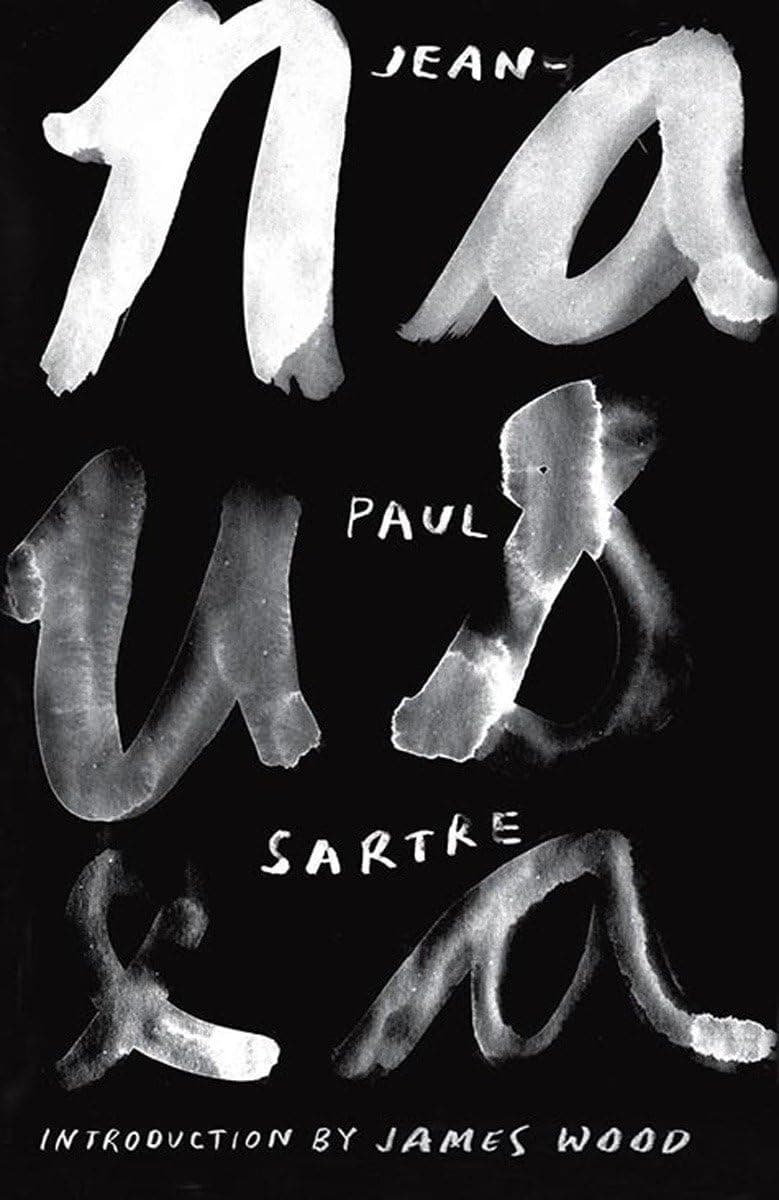
“Every existing thing is born without reason, prolongs itself out of weakness and dies by chance.”
Nausea Summary
Antoine Roquentin, a solitary historian living in the fictional French coastal town of Bouville, begins to notice something deeply wrong with the world—and with himself. Objects lose their reassuring familiarity; a pebble on the beach, a glass of beer, his own hand all seem to throb with a nauseating, overwhelming existence that defies all human categories. Through his diary entries, we follow Roquentin as he abandons his biographical research on an eighteenth-century adventurer, drifts through cafes and parks, and watches the bourgeois citizens of Bouville perform their rituals of self-deception. His relationships dissolve—the Self-Taught Man at the library, his former lover Anny—and he is left alone with the terrifying, ecstatic revelation that existence is absurd, contingent, and without justification.
Sartre's first novel is the founding text of literary existentialism—a philosophical bomb wrapped in the pages of a diary. The famous scene in the park, where Roquentin stares at the root of a chestnut tree and experiences the raw, obscene facticity of being, remains one of the most extraordinary passages in modern fiction. Yet Nausea is more than a philosophical treatise in disguise; it is a darkly comic portrait of a man stripped of every comforting illusion, forced to confront the vertiginous freedom of a universe without inherent meaning. The prose shimmers with a cold, hallucinatory precision that makes the ordinary world feel alien and newly visible.
Why Read Nausea?
If you have ever felt the ground shift beneath your certainties—if you have ever looked at the world and felt it suddenly strange, unjustified, simply there—then Nausea will articulate what you could not. Sartre takes the vague unease of modern existence and gives it a name, a shape, and a terrifying philosophical precision. This is the novel that made existentialism not just a philosophy but a lived experience, felt in the pit of the stomach rather than in the seminar room.
Beyond its philosophical importance, Nausea is a startlingly vivid work of fiction—funny in its portrait of bourgeois self-satisfaction, devastating in its loneliness, and unexpectedly beautiful in its final pages, where a jazz melody hints that art might offer the only escape from the prison of contingency. It is a book that will make you see the world differently, whether you welcome that transformation or not. Once you have read it, you will never look at a tree root—or your own reflection—the same way again.
About Jean-Paul Sartre
Jean-Paul Sartre (1905–1980) was a French philosopher, playwright, novelist, and political activist who became the most prominent intellectual figure of the twentieth century. Born in Paris, he studied at the Ecole Normale Superieure, taught philosophy at various lycees, and was a prisoner of war during World War II. His philosophical masterwork, Being and Nothingness, established existentialism as the dominant intellectual movement of the postwar era.
Sartre was awarded the Nobel Prize in Literature in 1964 but famously declined it, stating that a writer should not allow himself to be turned into an institution. His lifelong partnership with Simone de Beauvoir was one of the great intellectual alliances of modern history. Beyond Nausea, his major works include the trilogy The Roads to Freedom, the play No Exit, and the monumental philosophical biography of Flaubert, The Family Idiot. He remains a towering figure whose ideas about freedom, responsibility, and bad faith continue to shape contemporary thought.
Reading Guide
Ranked #237 among the greatest books of all time, Nausea by Jean-Paul Sartre has earned its place in the literary canon. Originally written in French and published in 1938, this moderate read from France continues to resonate with readers today.
This book belongs to our Philosophy & Faith and Modern Mind collections, where you can discover more books that share its spirit and themes.
If you enjoy moderate reads like this one, you might also like One Hundred Years of Solitude, Nineteen Eighty-Four, or Wuthering Heights.
From the Philosophy & Faith Collection
If you enjoyed Nausea, discover more masterpieces that share its spirit.
 #11View Book
Crime and Punishment
Fyodor Dostoevsky
High•20-25 hours #18View Book
The Bible
Various
Variable•60-80 hours #19View Book
The Brothers Karamazov
Fyodor Dostoevsky
Very High•35-40 hours #21View Book
The Stranger
Albert Camus
Moderate•3-4 hours
Browse more collections