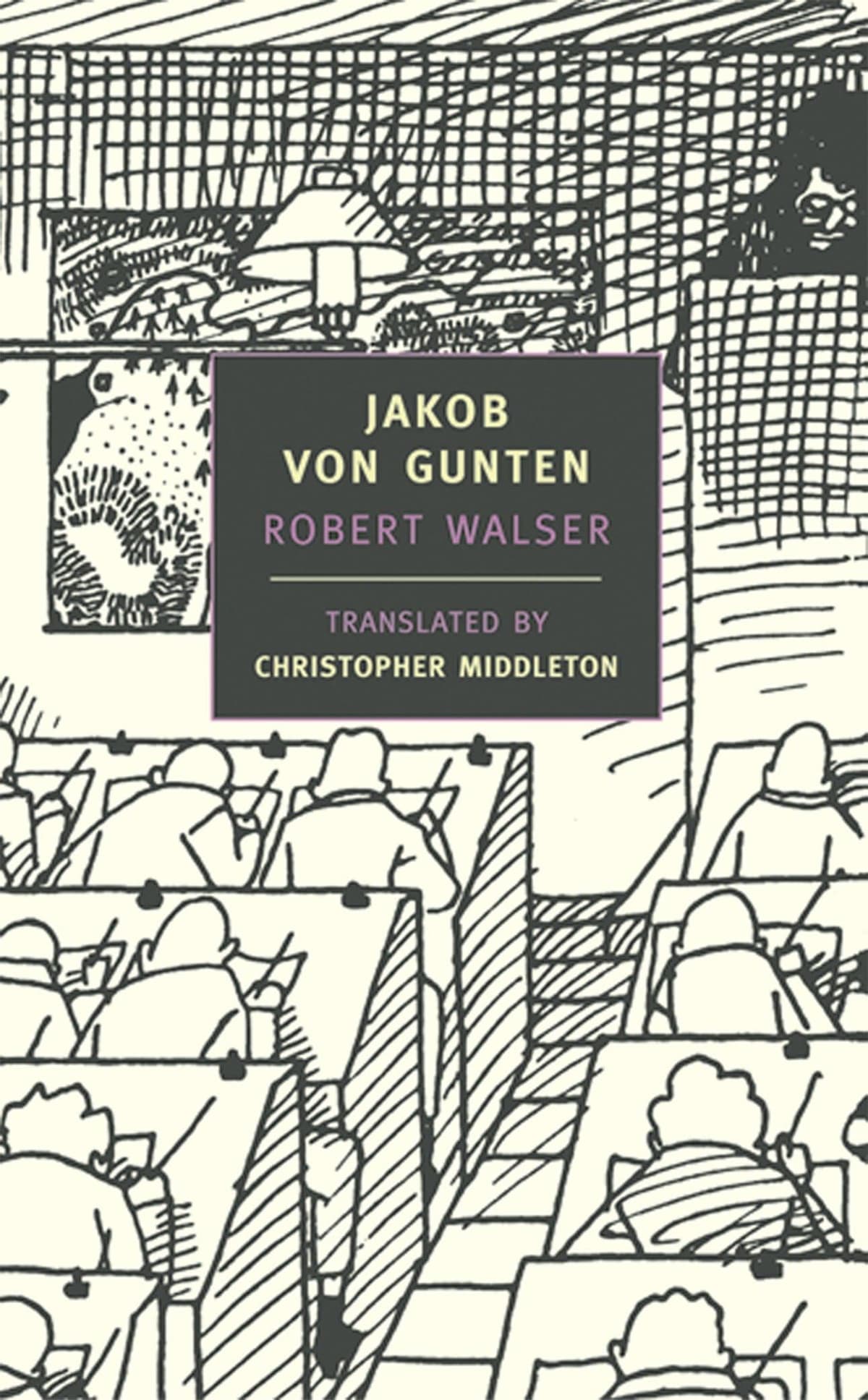
Jakob von Gunten
“I want to learn how to be a charming, utterly spherical zero.”
Jakob von Gunten Summary
Jakob von Gunten unfolds as the diary of a young man from a good family who deliberately enrolls in the Benjamenta Institute, a peculiar school for servants where almost nothing is taught. Jakob records his daily experiences at the institute with a mixture of wonder, irony, and philosophical detachment, observing the enigmatic rituals that govern life within its walls. The school's curriculum consists of a single lesson repeated endlessly: the rules of obedience and self-effacement. His fellow students, including the brutish Kraus whom Jakob both admires and puzzles over, submit to this regime with varying degrees of resignation. The institute is ruled by Herr Benjamenta and his ethereal sister Lisa, who teaches the sole lesson and whose mysterious inner life exerts a powerful fascination over Jakob. As the narrative progresses, the school begins to disintegrate: students leave, Lisa falls gravely ill, and the boundary between the institutional order and something stranger, more dreamlike, grows increasingly porous.
Walser's novel is a masterpiece of literary miniaturism and existential comedy, a work that dismantles conventional narrative expectations with the lightest possible touch. Jakob's diary entries oscillate between self-deprecation and grandiosity, submission and defiance, creating a narrator whose very identity seems to flicker and dissolve on the page. The novel anticipates Kafka's explorations of institutional absurdity and Beckett's comedy of diminishment, yet Walser's sensibility is entirely his own: gentler, more whimsical, suffused with a tenderness for the marginal and the overlooked. The Benjamenta Institute becomes a metaphor for modern existence itself, where the individual must negotiate between the desire for meaning and the suspicion that all systems of meaning are elaborate performances. Walser's prose, deceptively simple and luminously precise, transforms the smallest observations into philosophical provocations, making Jakob von Gunten one of the most quietly radical novels of the twentieth century.
Why Read Jakob von Gunten?
If you are drawn to fiction that unsettles your expectations with quiet, almost imperceptible subversion, Jakob von Gunten will reward you with one of the most original voices in modern literature. Walser writes with a deceptive lightness that conceals profound depths, creating a narrator who is at once obedient and anarchic, humble and secretly proud. You will find yourself laughing at Jakob's deadpan observations one moment and startled by their existential implications the next. The novel's brevity and apparent simplicity make it approachable, yet its resonances multiply with each reading, revealing new layers of irony and tenderness.
Reading Jakob von Gunten also places you at a crucial junction in literary history. Walser was admired by Kafka, Benjamin, and Musil, and his influence extends through Beckett to contemporary writers who explore the comedy of self-erasure and institutional absurdity. This is a novel about what it means to choose smallness in a world that demands ambition, to find freedom in apparent servitude, and to resist categorization through the sheer elusiveness of one's inner life. If you have ever felt the strange liberation of refusing to compete, or wondered what lies beneath the surface of polite submission, Walser's masterpiece will speak to you with uncanny precision.
About Robert Walser
Robert Walser was born in 1878 in Biel, Switzerland, into a large family of modest means. He left school at fourteen and drifted through a series of clerical and domestic positions, experiences that would profoundly shape his fiction. After brief periods in Stuttgart and Zurich, he moved to Berlin in 1905, where he wrote his three novels, including Jakob von Gunten, and began publishing the short prose pieces that would become his signature form. Despite early recognition from figures such as Franz Kafka, Christian Morgenstern, and Kurt Tucholsky, Walser never achieved commercial success. He returned to Switzerland in 1913 and continued writing prolifically, producing hundreds of stories, sketches, and the mysterious "microscripts" written in a tiny, nearly illegible pencil hand. In 1929, suffering from anxiety and hallucinations, he entered a sanatorium in Waldau, and in 1933 was transferred to the asylum at Herisau, where he lived for the remaining twenty-three years of his life. He was found dead in the snow on Christmas Day, 1956, during a solitary walk.
Walser's posthumous reputation has undergone one of the most remarkable rehabilitations in literary history. Once nearly forgotten, he is now recognized as one of the most important and influential writers of the twentieth century. His work anticipated key developments in modernist and postmodernist fiction, from Kafka's parables of bureaucratic entrapment to Beckett's explorations of diminished selfhood. Writers as diverse as W.G. Sebald, Susan Sontag, and J.M. Coetzee have championed his achievement. His prose, with its quicksilver shifts between sincerity and irony, humility and defiance, represents a unique literary sensibility that continues to inspire readers and writers seeking alternatives to conventional storytelling.
Reading Guide
Ranked #465 among the greatest books of all time, Jakob von Gunten by Robert Walser has earned its place in the literary canon. Originally written in German and published in 1909, this moderate read from Switzerland continues to resonate with readers today.
This book belongs to our Modern Mind collection, where you can discover more books that share its spirit and themes.
If you enjoy moderate reads like this one, you might also like One Hundred Years of Solitude, Nineteen Eighty-Four, or Wuthering Heights.
From the Modern Mind Collection
If you enjoyed Jakob von Gunten, discover more masterpieces that share its spirit.
 #1View Book
Ulysses
James Joyce
Challenging•35-40 hours #2View Book
In Search of Lost Time
Marcel Proust
High•100+ hours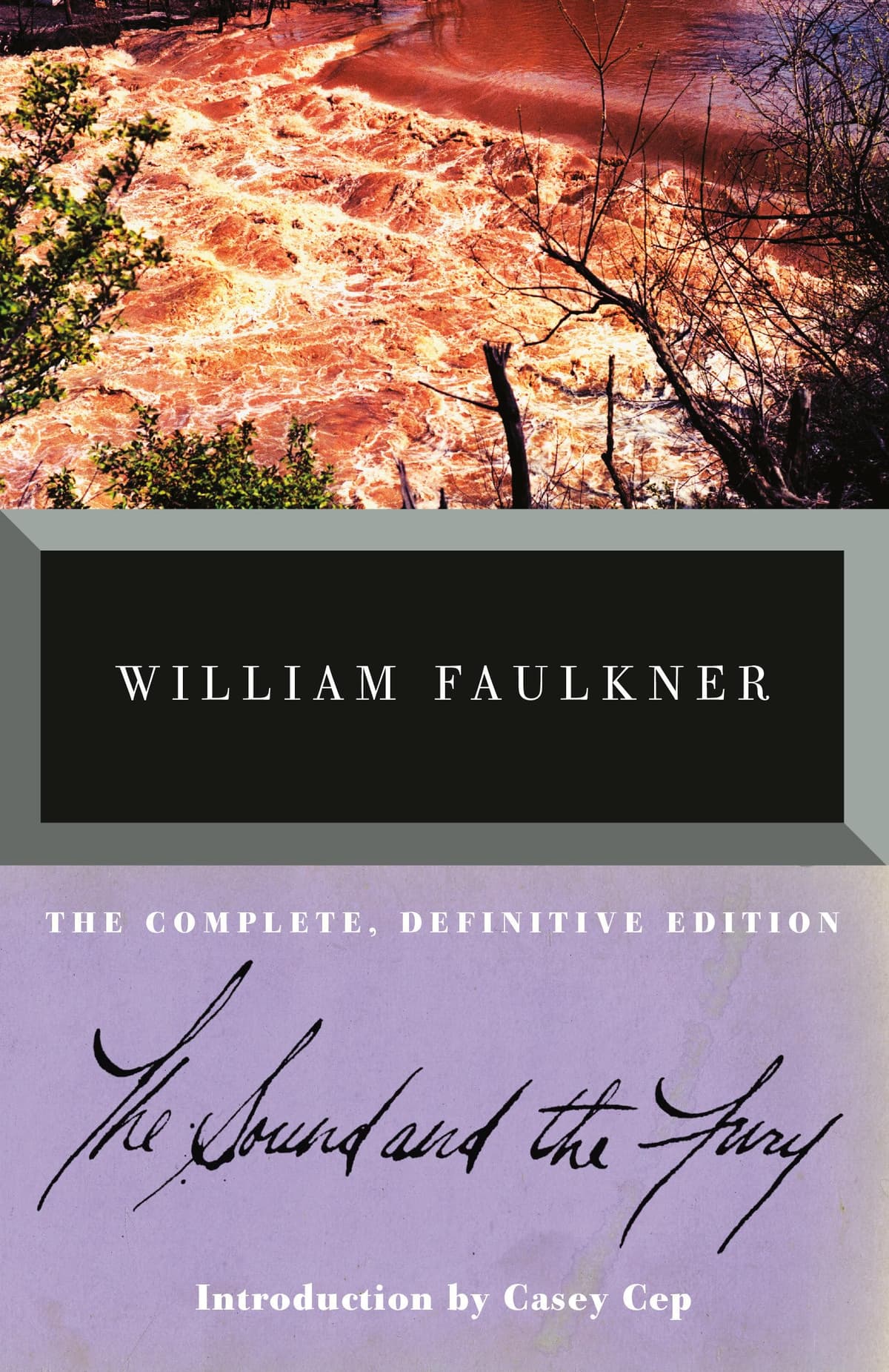 #8View Book
The Sound and the Fury
William Faulkner
Very High•12-15 hours #13View Book
Lolita
Vladimir Nabokov
Challenging•12-15 hours
Browse more collections