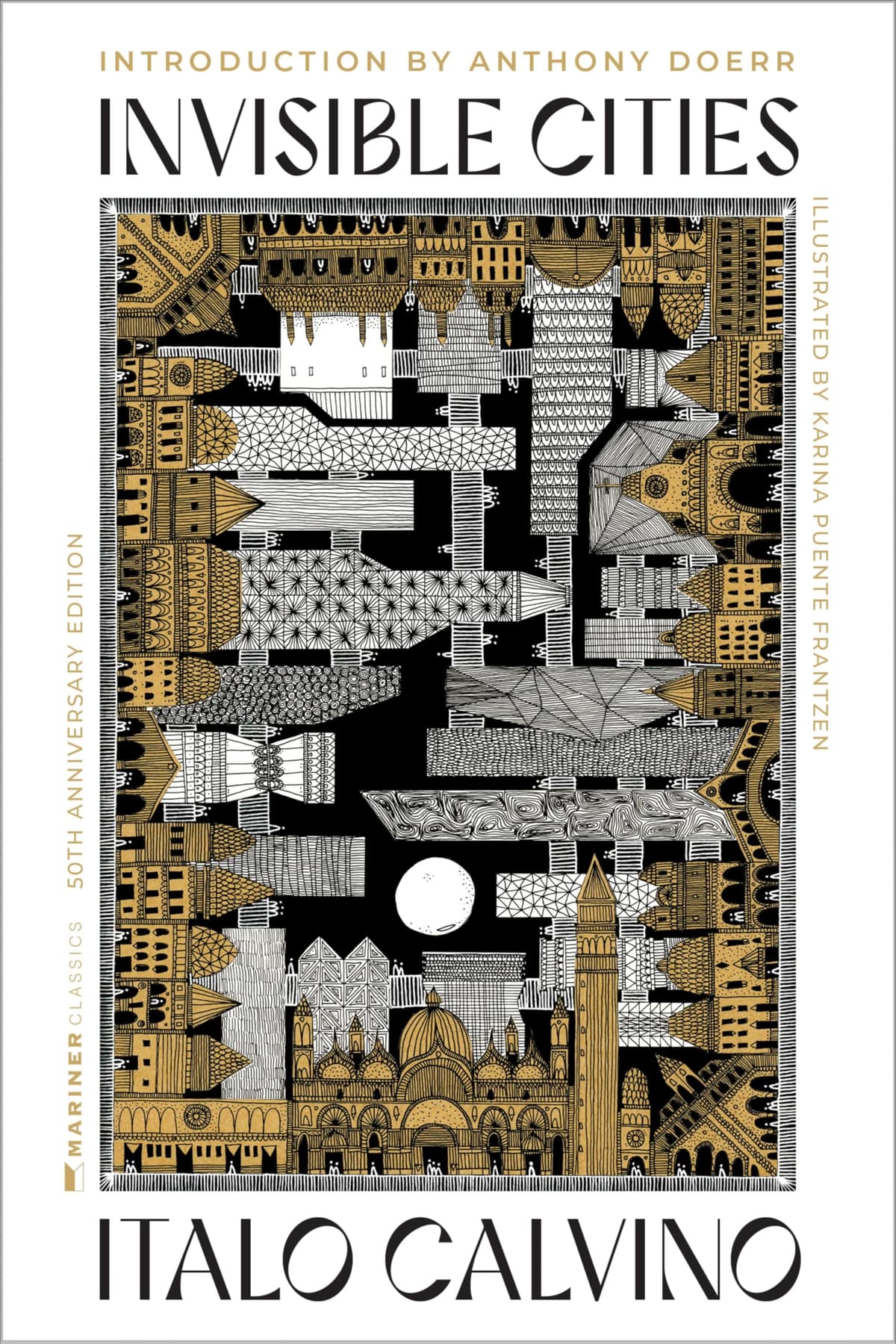
Invisible Cities
“Cities, like dreams, are made of desires and fears, even if the thread of their discourse is secret, their rules are absurd, their perspectives deceitful, and everything conceals something else.”
Invisible Cities Summary
Marco Polo sits in the court of the aging Kublai Khan, describing the cities he has visited across the emperor's vast dominion. But these are no ordinary cities. Diomira is a city with sixty silver domes; Isidora is the city of your dreams, which you can only reach in old age; Zenobia is built on stilts above a dry lake. There are cities of memory, cities of desire, cities of signs, thin cities, trading cities, hidden cities—fifty-five in all, each conjured in a few crystalline paragraphs that read like prose poems or philosophical parables. Between these descriptions, Marco and the Khan converse about the nature of empire, language, and the impossibility of truly knowing any place.
Invisible Cities is Calvino at his most distilled and enchanting—a book that dissolves the boundary between fiction and philosophy, between the novel and the essay. Each city is a meditation on a facet of human experience: memory, desire, death, communication, the relationship between the name of a thing and the thing itself. The frame story gradually reveals that all of Marco's cities may be refractions of a single city—perhaps Venice, perhaps the idea of a city itself. Calvino's prose, even in translation, possesses a mathematical elegance and a lightness that belies the depth of its thought. It is a book about everything and nothing, as inexhaustible as the cities it imagines.
Why Read Invisible Cities?
Open this book to any page and you will find a sentence that rearranges your understanding of what fiction can do. Calvino's cities are not places you visit but lenses through which you see your own world differently—the city of your childhood, the city of your longing, the city you carry inside you that corresponds to no map. At barely 165 pages, it is a book you can read in an afternoon, but each rereading uncovers new architectures of meaning.
Invisible Cities is one of those rare works that makes you feel smarter and more alive while you are reading it. Calvino writes with a clarity and playfulness that makes profound ideas feel like gifts rather than burdens. If you love language, if you love cities, if you have ever felt that the real and the imagined are not as far apart as they seem—this book was written for you. It is a perfect jewel of postmodern literature, and it will change the way you think about storytelling itself.
About Italo Calvino
Italo Calvino (1923–1985) was an Italian novelist and essayist who became one of the most inventive and widely translated writers of the twentieth century. Born in Santiago de las Vegas, Cuba, to Italian botanist parents and raised in San Remo, Italy, he fought as a partisan against the fascists during World War II—an experience that marked him deeply. He studied literature at the University of Turin and joined the intellectual circles around the publisher Einaudi, where he worked as an editor for decades.
Calvino's career moved from neorealist beginnings through fabulist fantasy to the crystalline postmodern experiments for which he is best remembered. His major works include If on a winter's night a traveler, The Baron in the Trees, Cosmicomics, and the Italian Folktales. He was deeply influenced by semiotics, combinatorial mathematics, and the Oulipo group, and his essays on literature—collected in Six Memos for the Next Millennium, left unfinished at his death—remain essential reading for writers and readers alike.
Reading Guide
Ranked #221 among the greatest books of all time, Invisible Cities by Italo Calvino has earned its place in the literary canon. Originally written in Italian and published in 1972, this moderate read from Italy continues to resonate with readers today.
This book belongs to our Modern Mind and Philosophy & Faith collections, where you can discover more books that share its spirit and themes.
If you enjoy moderate reads like this one, you might also like One Hundred Years of Solitude, Nineteen Eighty-Four, or Wuthering Heights.
From the Modern Mind Collection
If you enjoyed Invisible Cities, discover more masterpieces that share its spirit.
 #1View Book
Ulysses
James Joyce
Challenging•35-40 hours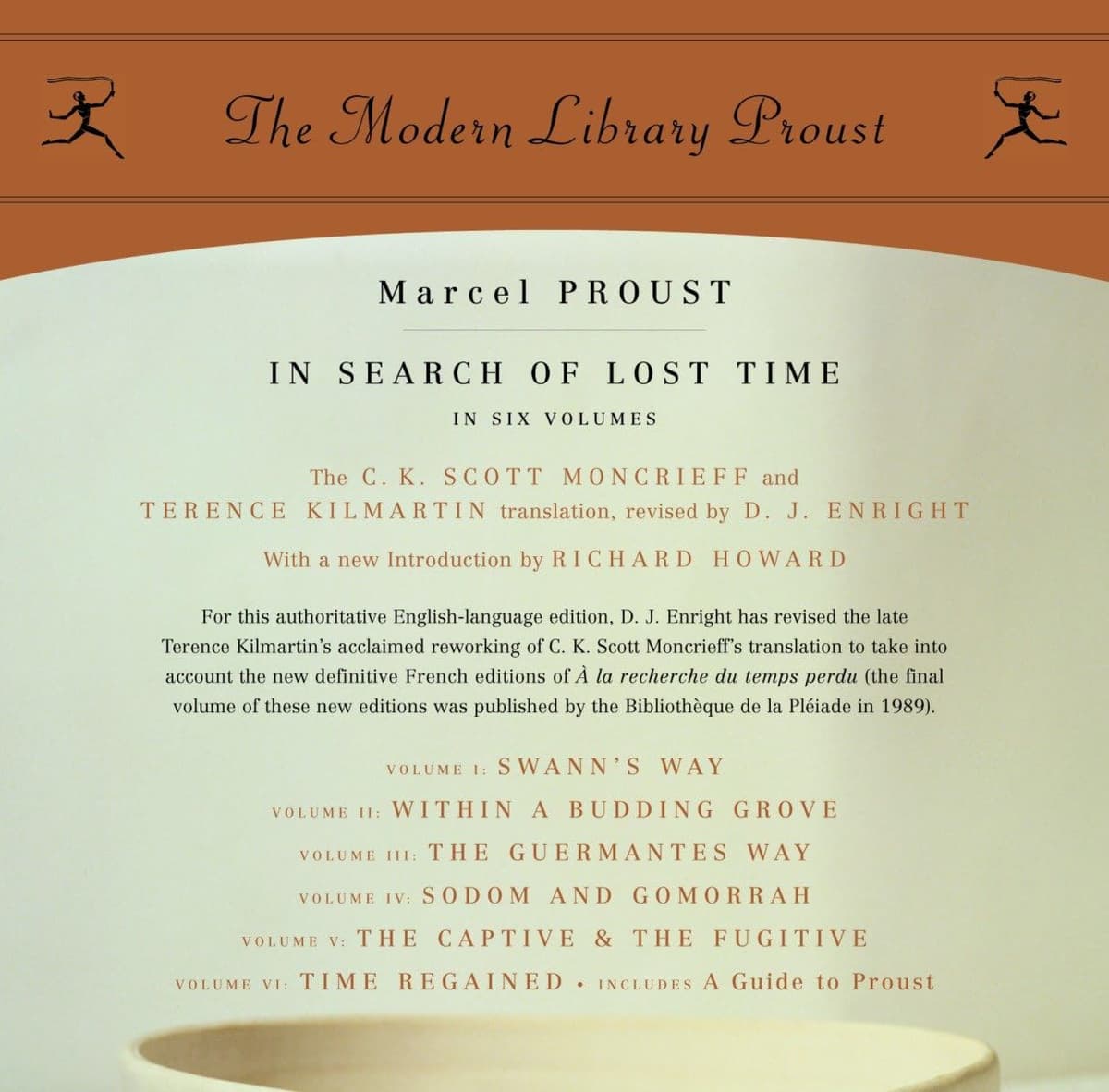 #2View Book
In Search of Lost Time
Marcel Proust
High•100+ hours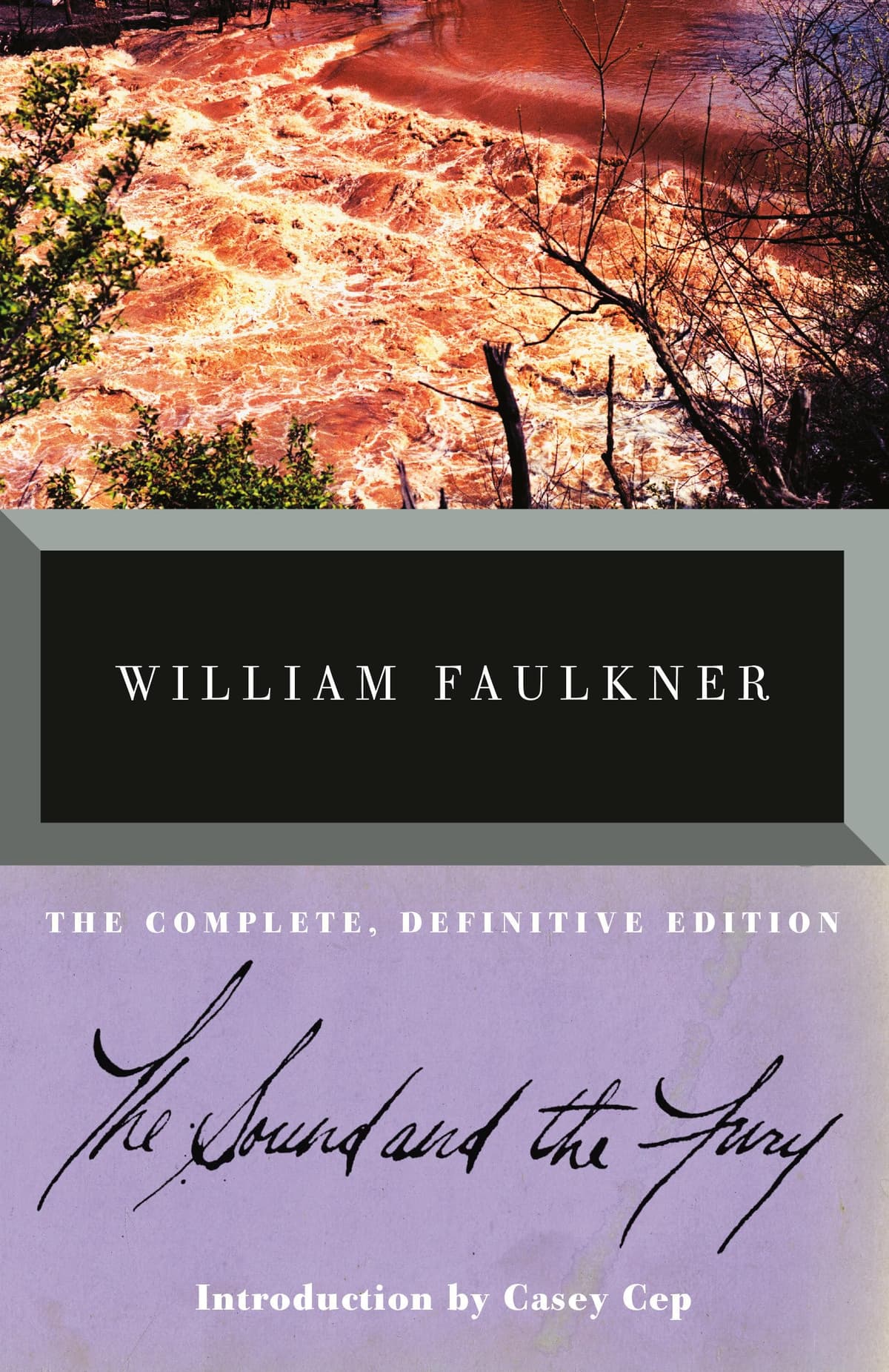 #8View Book
The Sound and the Fury
William Faulkner
Very High•12-15 hours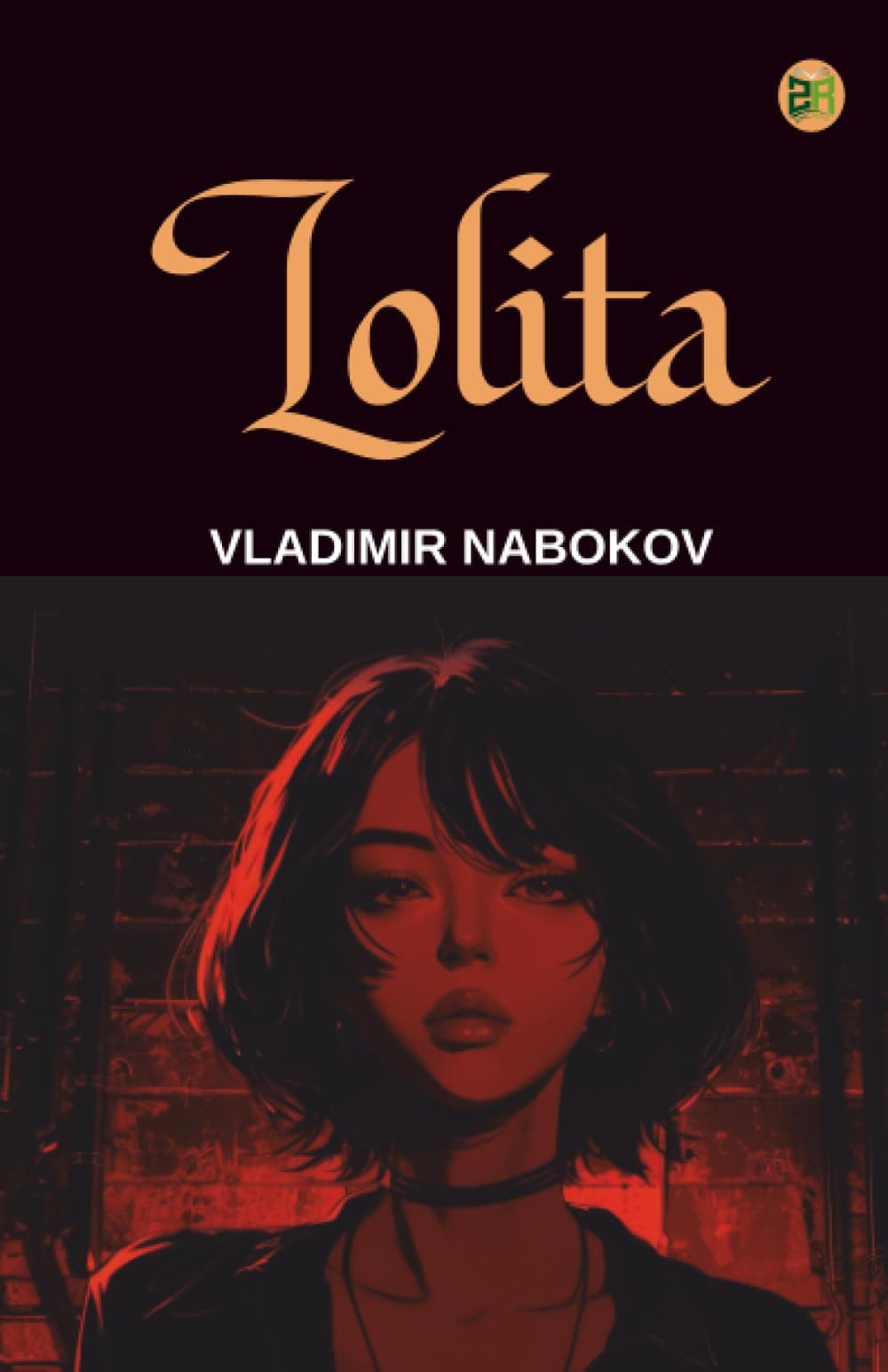 #13View Book
Lolita
Vladimir Nabokov
Challenging•12-15 hours
Browse more collections