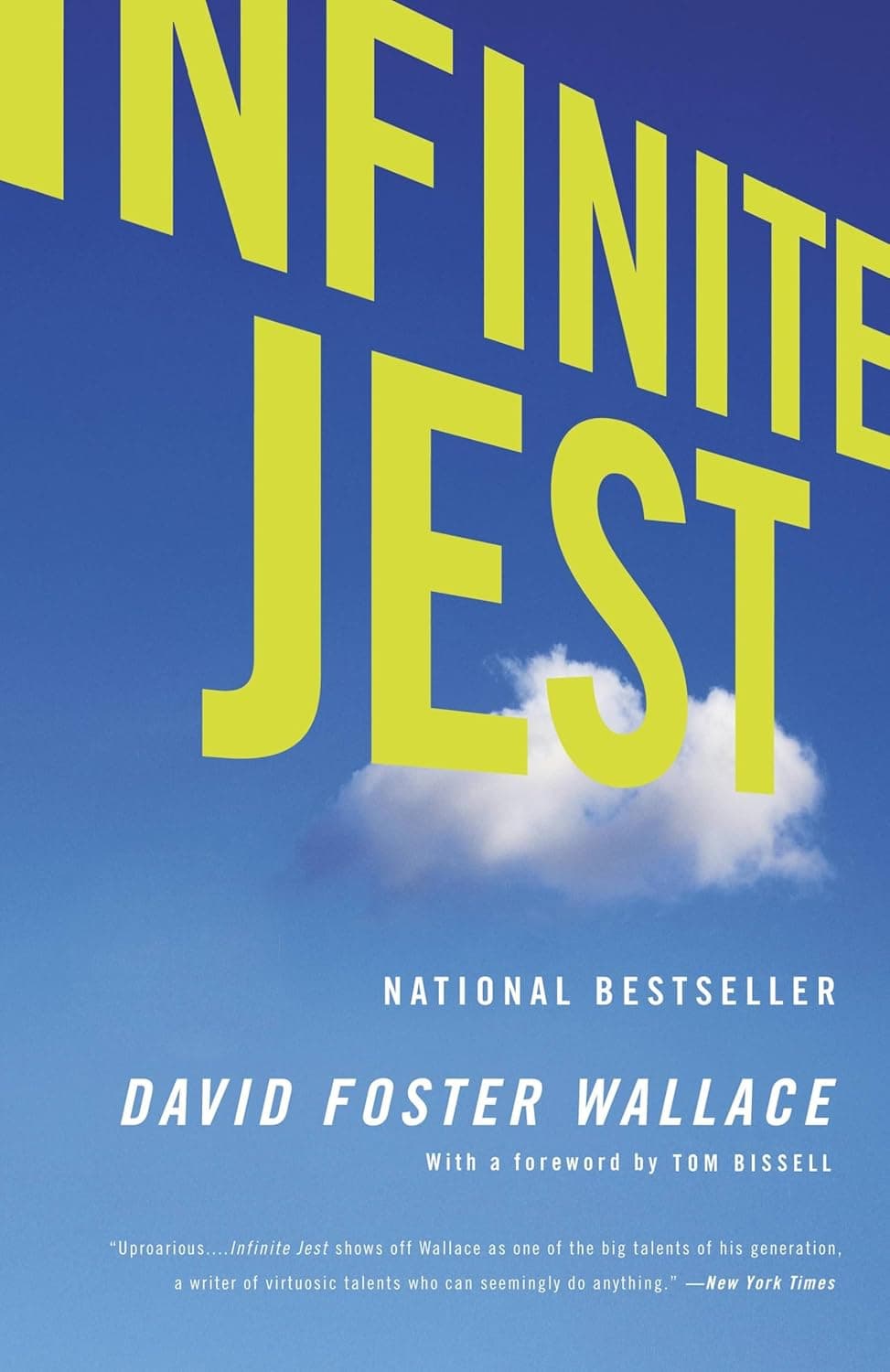
Infinite Jest
“You will become way less concerned with what other people think of you when you realize how seldom they do.”
Infinite Jest Summary
Infinite Jest sprawls across a near-future North America where the calendar years are subsidized by corporations, northern New England has become a toxic waste dump gifted to Canada, and entertainment has reached such addictive potency that a single film cartridge, the titular Entertainment, is lethal: anyone who watches it loses all desire to do anything but watch it again until they die. The novel braids together three main threads: the Incandenza family and their Enfield Tennis Academy, a halfway house for recovering addicts called Ennet House, and a cell of Quebecois separatist wheelchair assassins seeking the master copy of the deadly cartridge. At the center stands Hal Incandenza, a tennis prodigy and marijuana addict of extraordinary intelligence who is slowly losing his ability to communicate, and Don Gately, a recovering Demerol addict working at Ennet House whose hard-won sobriety is tested in ways both mundane and harrowing. The novel's hundreds of characters, labyrinthine subplots, and nearly four hundred pages of endnotes create a narrative ecosystem of staggering complexity.
David Foster Wallace's magnum opus is at once a ferocious satire of entertainment culture, a deeply sincere meditation on addiction, depression, and the desperate human need for meaning, and one of the most ambitious structural experiments in American fiction. The novel's recursive architecture, in which crucial plot events are either buried in endnotes or omitted entirely, mirrors the very problems of attention and connection it diagnoses. Wallace writes with a voice that can shift from pyrotechnic intellectual comedy to passages of devastating emotional rawness, and his empathy for his characters, even at their most broken, gives the novel its moral center. Infinite Jest remains the defining novel of its generation, a book that changed the possibilities of American fiction.
Why Read Infinite Jest?
Infinite Jest is a book that will fundamentally alter the way you think about fiction, about entertainment, and about the particular loneliness of contemporary life. Wallace wrote with a kind of manic brilliance that could make a description of a tennis match or a drug withdrawal or a bureaucratic meeting feel like the most important thing anyone had ever committed to paper. His great subject was the way that the modern world offers infinite options for distraction and stimulation while making genuine human connection feel almost impossible, and he explored this subject with a combination of intellectual firepower and raw emotional vulnerability that remains unmatched.
Yes, it is enormous. Yes, the endnotes are demanding. Yes, the plot is deliberately fractured and the ending will leave you turning back to the beginning. But the readers who give themselves to this novel, who follow its digressions and trust its silences, consistently report something close to a transformative experience. The passages about addiction and recovery at Ennet House are among the most honest and compassionate pages in American literature. The tennis academy sections are wickedly funny. And the novel's central insight, that the opposite of addiction is not sobriety but human connection, has the rare quality of genuine wisdom.
About David Foster Wallace
David Foster Wallace was born in 1962 in Ithaca, New York, and grew up in Champaign-Urbana, Illinois, the son of a philosophy professor and an English teacher. A nationally ranked junior tennis player and a student of exceptional brilliance, he earned degrees from Amherst College and the University of Arizona. His undergraduate philosophy thesis and his first novel, The Broom of the System, were completed simultaneously. He struggled with depression and addiction throughout his adult life, experiences that profoundly shaped his fiction.
Wallace published Infinite Jest in 1996 to enormous critical acclaim, establishing himself as the most important American novelist of his generation. His essay collections, including A Supposedly Fun Thing I'll Never Do Again and Consider the Lobster, displayed a restless intelligence and a gift for making complex ideas feel urgent and personal. He taught creative writing at Illinois State University and Pomona College, where he was beloved by students. Wallace took his own life in 2008 at the age of forty-six, leaving behind an unfinished novel, The Pale King, and a body of work that continues to define the literary landscape of the late twentieth century.
Reading Guide
Ranked #349 among the greatest books of all time, Infinite Jest by David Foster Wallace has earned its place in the literary canon. Originally written in English and published in 1996, this very high read from United States continues to resonate with readers today.
This book belongs to our American Spirit and Modern Mind collections, where you can discover more books that share its spirit and themes.
If you enjoy very high reads like this one, you might also like The Sound and the Fury, War and Peace, or The Brothers Karamazov.
From the American Spirit Collection
If you enjoyed Infinite Jest, discover more masterpieces that share its spirit.
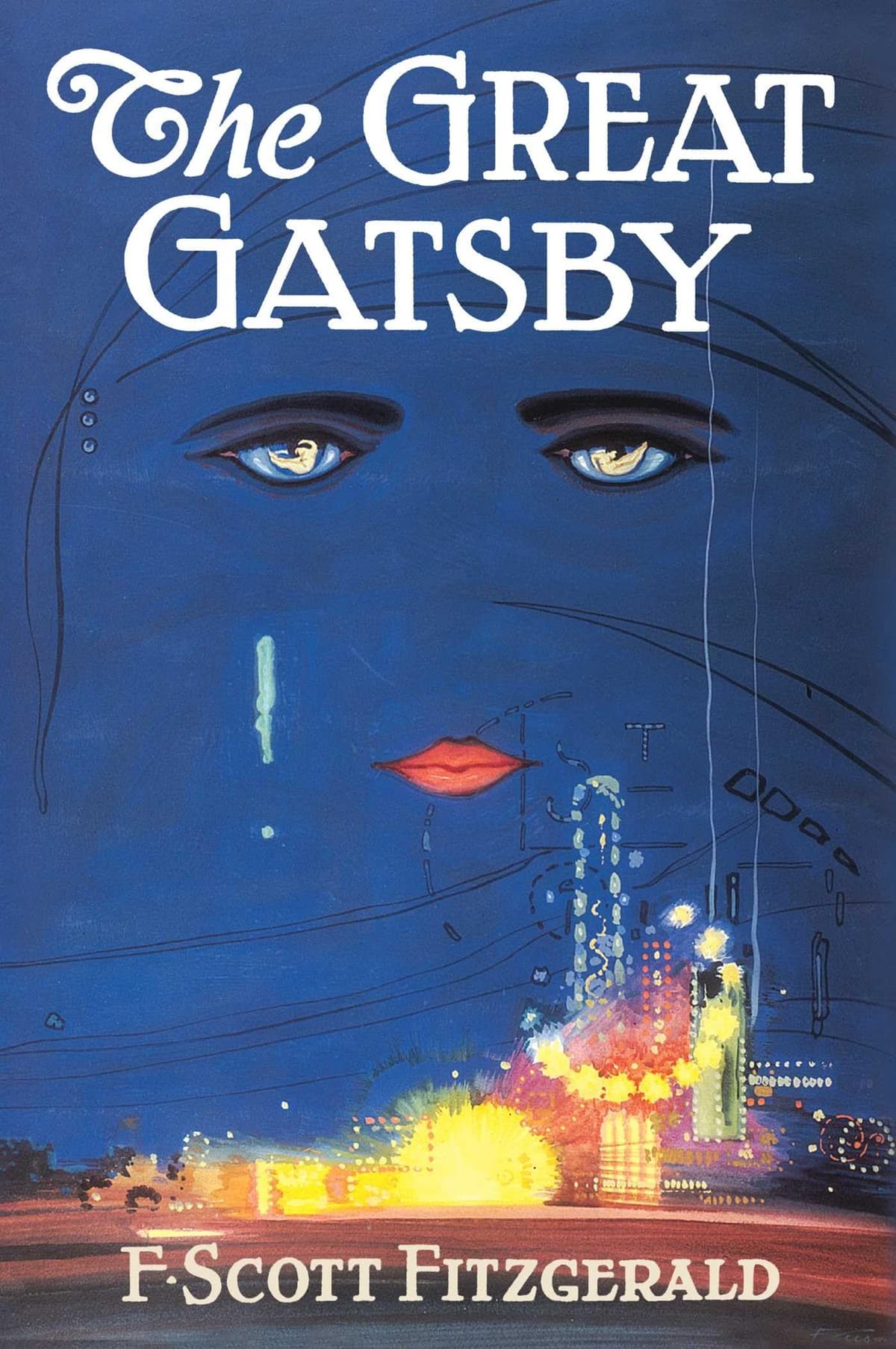 #3View Book
The Great Gatsby
F. Scott Fitzgerald
Accessible•5-6 hours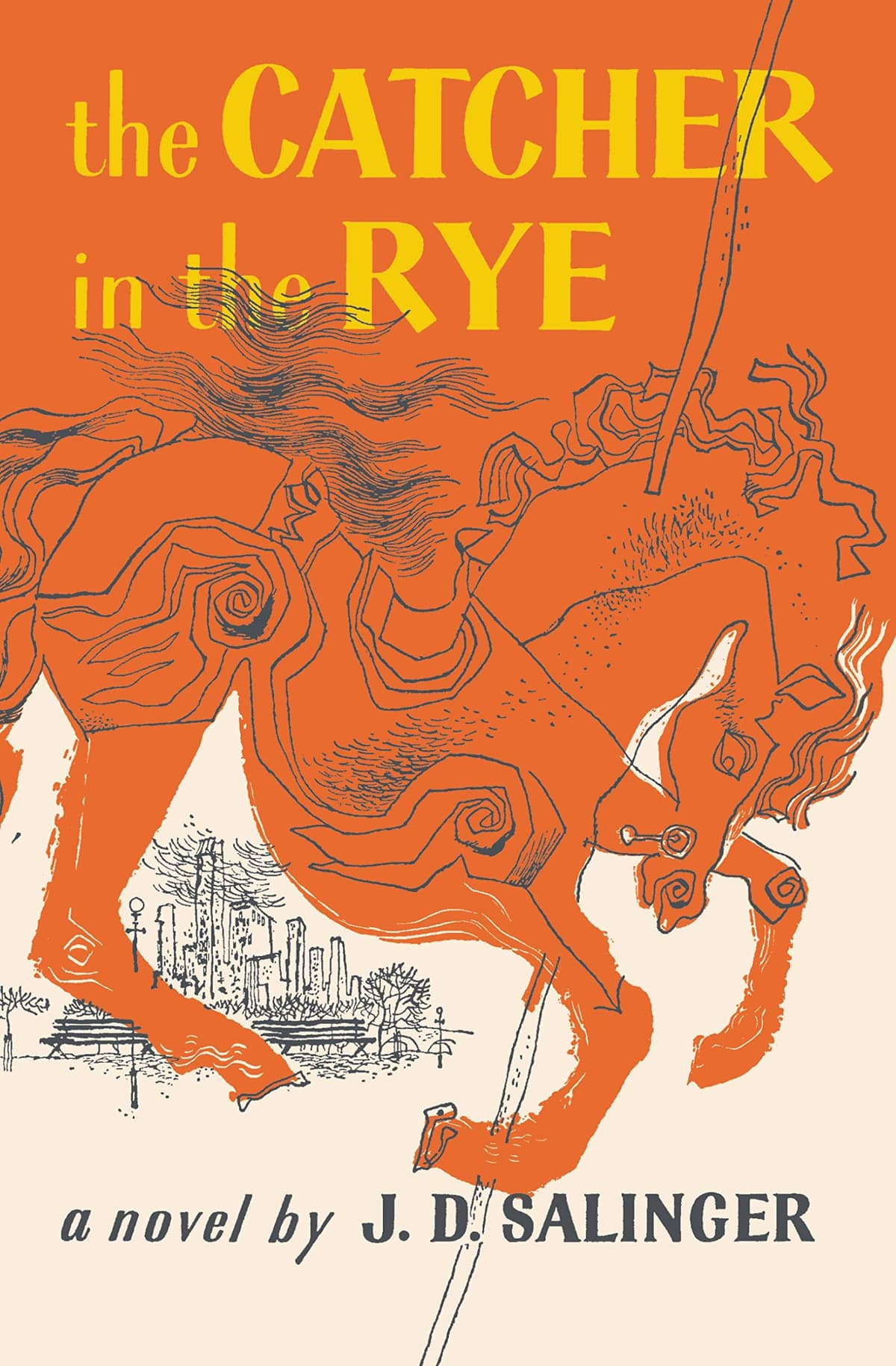 #4View Book
The Catcher in the Rye
J. D. Salinger
Accessible•6-8 hours #13View Book
Lolita
Vladimir Nabokov
Challenging•12-15 hours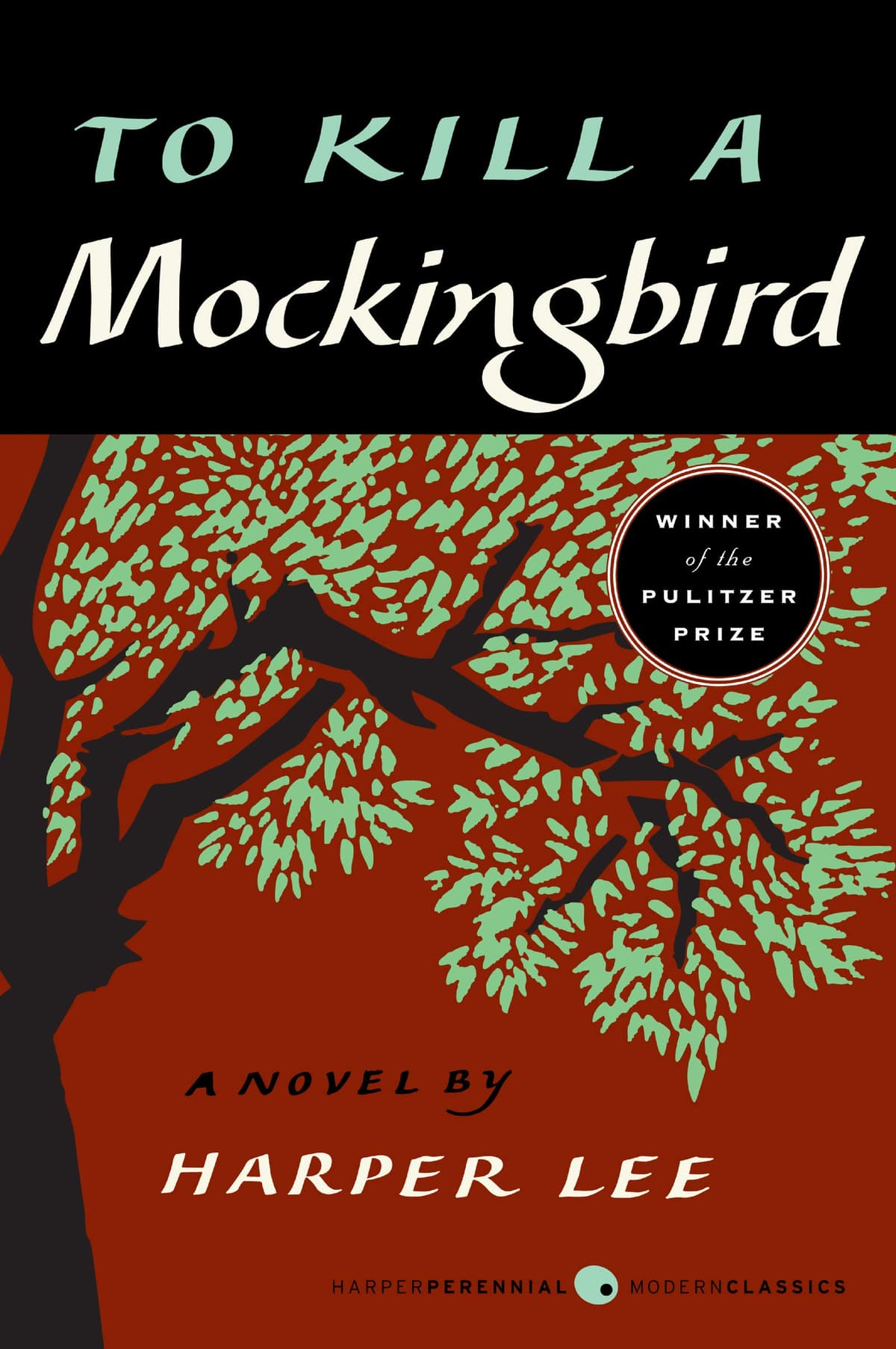 #17View Book
To Kill a Mockingbird
Harper Lee
Accessible•8-10 hours
Browse more collections