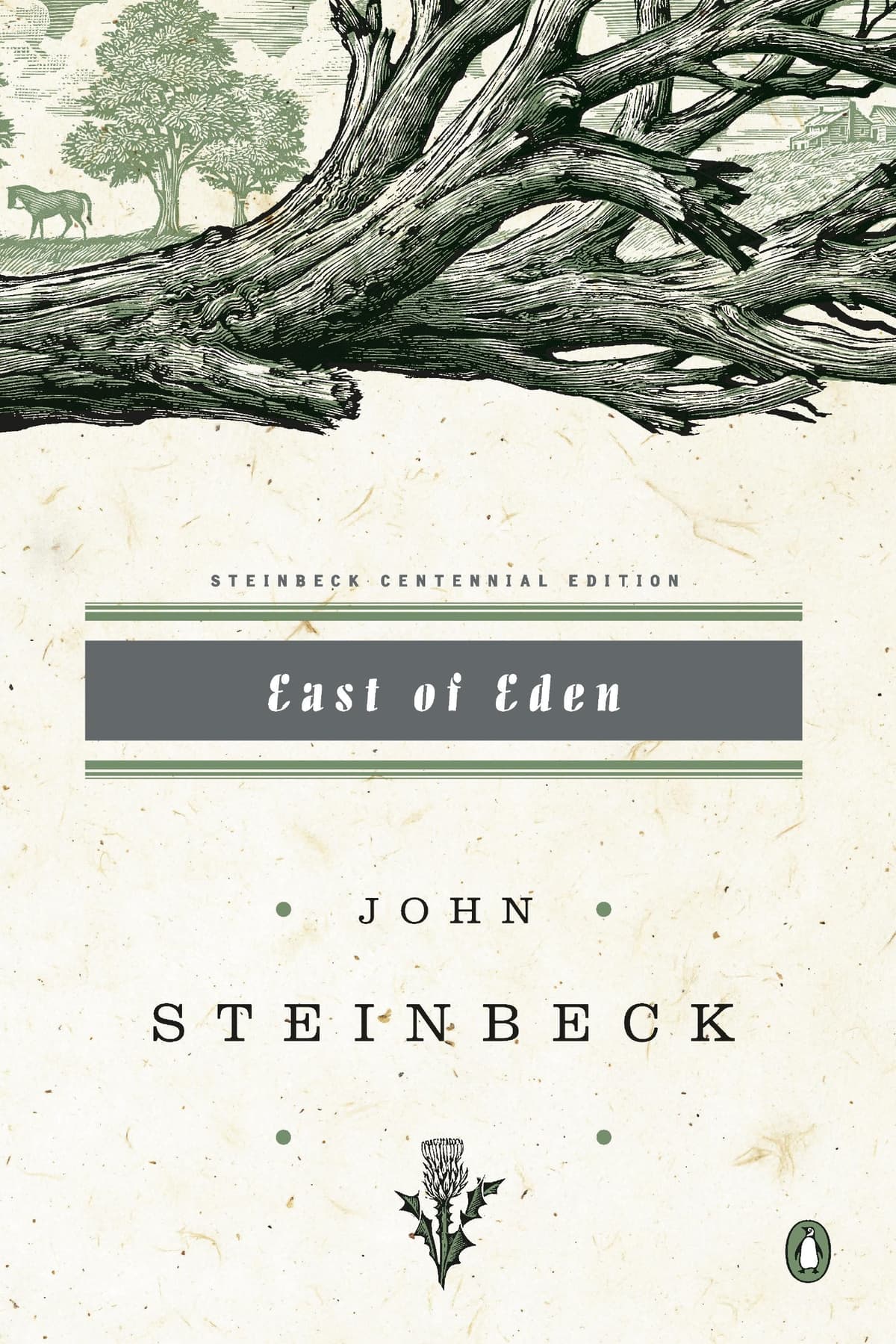
East of Eden
“And now that you don't have to be perfect, you can be good.”
East of Eden Summary
Two families—the Trasks and the Hamiltons—unfold across three generations in California's Salinas Valley, and their story is nothing less than the Book of Genesis retold on American soil. At the novel's dark center is the Cain and Abel myth, played out twice: first between Adam Trask and his brother Charles, then between Adam's twin sons, Cal and Aron. The catalyst of destruction is Cathy Ames, one of the most chilling figures in American fiction—a woman Steinbeck describes as a moral monster, born without the capacity for good, who abandons her newborn sons to run a brothel in nearby Salinas. Against her darkness stands the luminous figure of Lee, the Trask family's Chinese-American servant, whose intellectual and moral depth becomes the novel's conscience.
Steinbeck considered East of Eden his masterpiece, the novel into which he poured everything he knew about good and evil, freedom and fate. The book's great revelation comes through Lee's exegesis of the Hebrew word 'timshel'—'thou mayest'—which transforms the Cain story from a curse into a promise: you may choose to overcome sin. This is a sprawling, uneven, magnificently ambitious novel—part family saga, part philosophical treatise, part love letter to the Salinas Valley landscape Steinbeck knew in his bones. It has the roughness and grandeur of the American land itself, and at its best it achieves a moral seriousness that places it among the essential meditations on the human capacity for both cruelty and redemption.
Why Read East of Eden?
East of Eden is Steinbeck's most personal and ambitious work—a novel he wrote as a letter to his sons, hoping to explain the moral landscape of the world they were inheriting. It asks the question that has haunted human beings since Genesis: are we born good or evil, and can we choose our fate? The answer Steinbeck offers, embodied in the single Hebrew word 'timshel,' is one of the most hopeful and hard-won affirmations in American literature. You will carry it with you long after you close the book.
This is also a novel of extraordinary sensory power. Steinbeck writes the Salinas Valley the way a painter paints his homeland—every hill, every season, every quality of light rendered with an intimacy that comes only from deep, lifelong knowledge. The characters are drawn on an epic scale: Cathy Ames is terrifying, Lee is wise and heartbreaking, and Cal Trask's struggle between his inherited darkness and his desperate desire to be good is as compelling as any in fiction. Read East of Eden and you will understand why Steinbeck remains one of America's indispensable storytellers.
About John Steinbeck
John Steinbeck (1902-1968) was born in Salinas, California, the agricultural heartland that would become the landscape of his greatest fiction. He attended Stanford University intermittently but never graduated, choosing instead to work as a laborer and journalist while writing fiction. His breakthrough came with Tortilla Flat in 1935, and the novels that followed—In Dubious Battle, Of Mice and Men, and The Grapes of Wrath—established him as the foremost chronicler of working-class America during the Great Depression.
Steinbeck won the Pulitzer Prize for The Grapes of Wrath in 1940 and the Nobel Prize in Literature in 1962, though the latter was met with critical controversy. He considered East of Eden, published in 1952, to be his magnum opus—the book toward which all his previous work had been building. His legacy rests on his ability to render ordinary people with dignity and moral seriousness, and his insistence that literature should engage with the social realities of its time. His works remain staples of American education and continue to speak to readers who believe that stories can illuminate the struggle between justice and cruelty.
Reading Guide
Ranked #203 among the greatest books of all time, East of Eden by John Steinbeck has earned its place in the literary canon. Originally written in English and published in 1952, this moderate read from United States continues to resonate with readers today.
This book belongs to our American Spirit and Epics collections, where you can discover more books that share its spirit and themes.
If you enjoy moderate reads like this one, you might also like One Hundred Years of Solitude, Nineteen Eighty-Four, or Wuthering Heights.
From the American Spirit Collection
If you enjoyed East of Eden, discover more masterpieces that share its spirit.
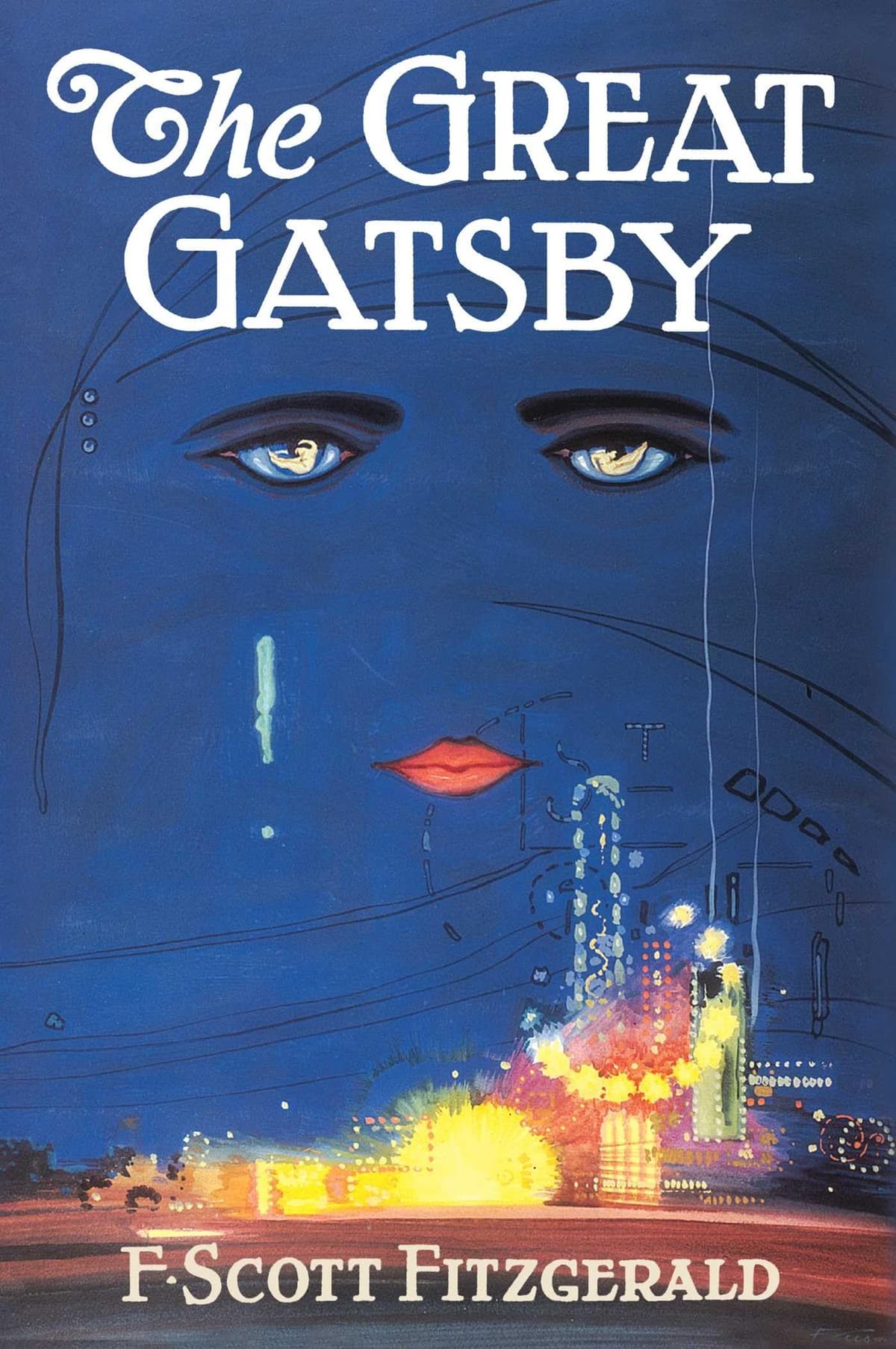 #3View Book
The Great Gatsby
F. Scott Fitzgerald
Accessible•5-6 hours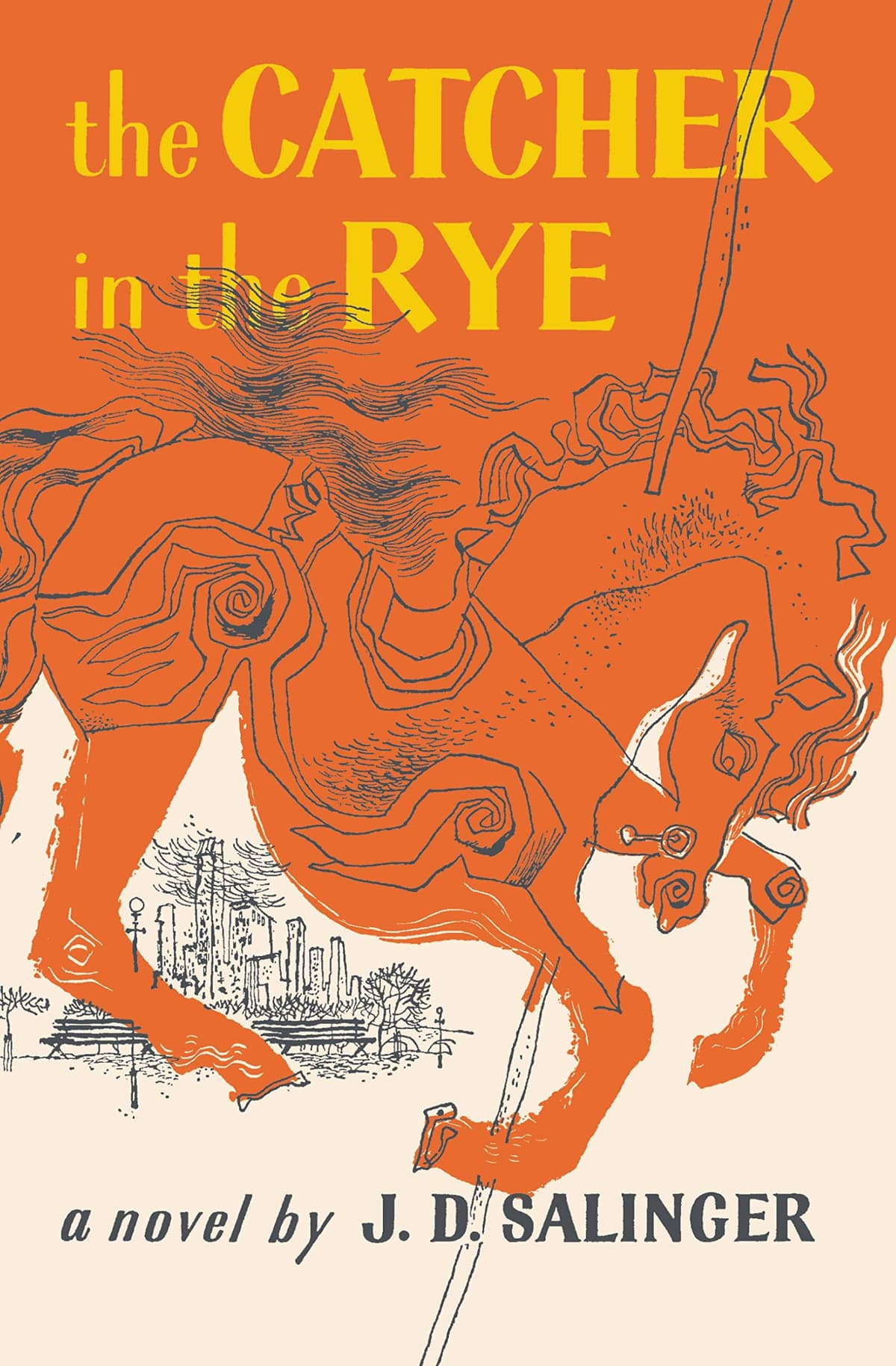 #4View Book
The Catcher in the Rye
J. D. Salinger
Accessible•6-8 hours #13View Book
Lolita
Vladimir Nabokov
Challenging•12-15 hours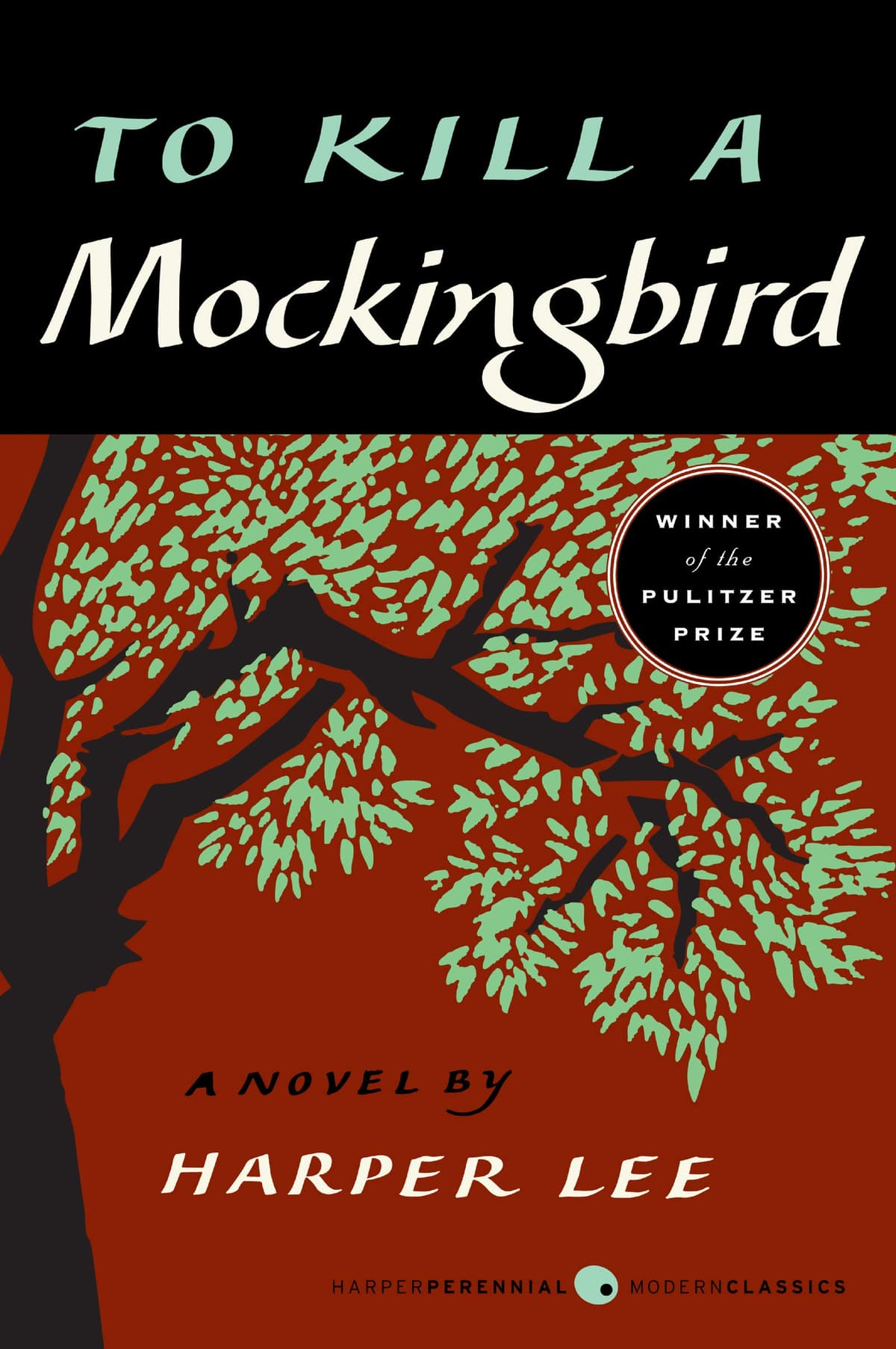 #17View Book
To Kill a Mockingbird
Harper Lee
Accessible•8-10 hours
Browse more collections